IN Brief:
- The 30,000-square-metre hub is 15 times larger than the previous Clark facility and cost more than US$80 million.
- UPS expects average throughput of 46,000 packages daily, against a maximum processing rate of 15,000 per hour.
- Specialist temperature-controlled facilities and RFID-assisted handling support healthcare and time-sensitive industrial shipments.
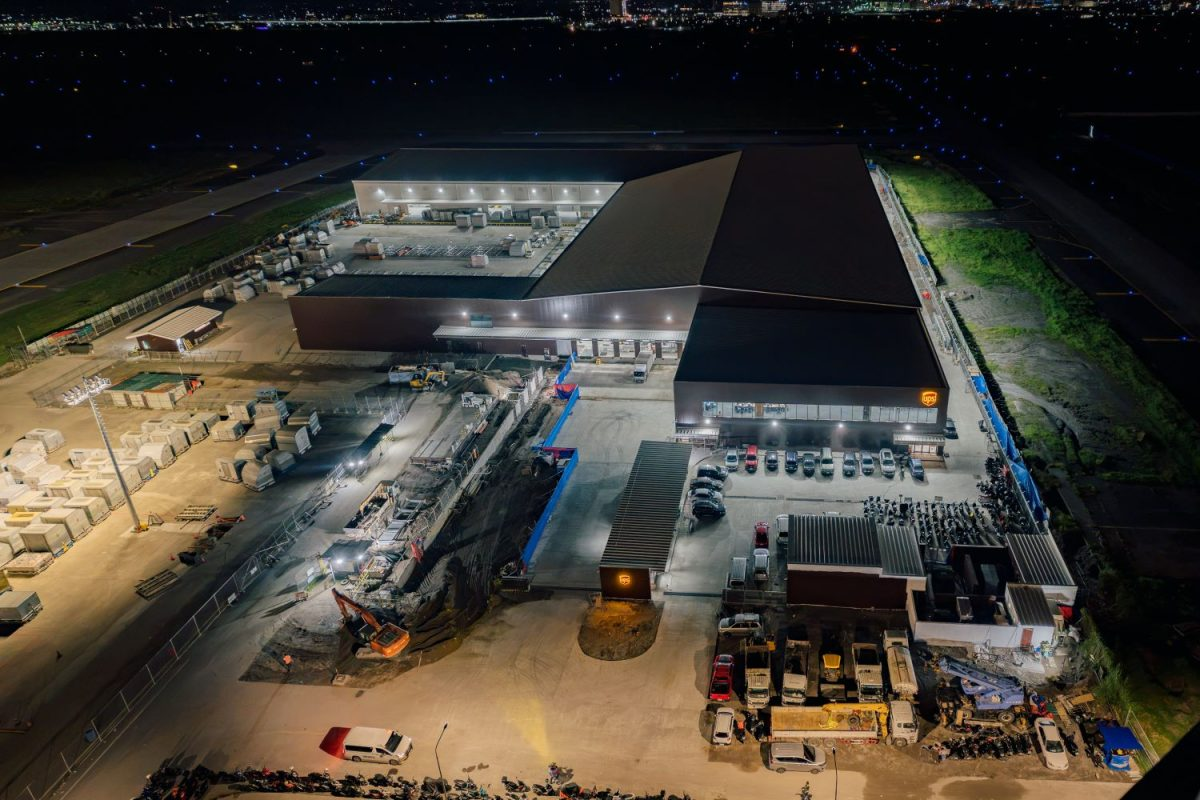
UPS has opened its new international air hub at Clark International Airport in the Philippines, bringing into operation a facility built through investment of more than US$80 million. The 30,000-square-metre building is 15 times larger than its predecessor and is intended to increase sorting capacity, improve international connections and provide more specialised handling of time-sensitive goods. The opening on 15 October marks an operating milestone rather than another announcement of construction plans.
UPS gives the Clark hub a maximum processing capacity of 15,000 packages per hour but expects it to handle an average of 46,000 packages per day. The hourly rating describes potential peak processing throughput, not a level sustained throughout every hour of operation. The daily figure is UPS’s expected operating volume, rather than a measured average since the 15 October opening. Aircraft arrival patterns, staffing and transfers constrain actual package flows even where sorting machinery can operate at its rated speed.
At the previous Clark facility, average daily package volume was around 5,000. The new 46,000 figure would represent an increase of more than nine times if the expected level is reached. The older hub’s stated processing rate was 1,250 packages an hour, compared with 15,000 an hour at the new building. Arriving consignments still need unloading, scanning, sorting and transfer to an aircraft or road movement in time for scheduled connections; capacity at one stage of that sequence does not guarantee throughput across the complete air freight operation.
An automated small-package sorter can handle up to 9,000 items an hour, according to UPS. That subsystem forms part of the larger facility’s quoted 15,000-packages-per-hour rating; the two numbers are not additive. Philippine government information specifies packages below three kilograms for the automated sorter. Irregularly shaped freight and other consignments require different handling arrangements, while aircraft schedules, customs clearance, staffing and ground transfers set further practical limits on how much cargo moves through the hub.
Clark now supports 170 UPS flight segments into and out of the airport each week. The network connects businesses with markets across Asia Pacific, India, Europe and the United States. UPS says service improvements extend to more than 1,100 international trade lanes, including reductions of up to two days on some routes involving eastern China, other Asia Pacific markets and India. These are route-specific service enhancements, not a uniform two-day improvement for every shipment.
Extended pickup cut-off times and earlier deliveries are also part of the revised service proposition. A later collection can give a manufacturer more time to finish an order before the day’s air network closes, while earlier arrival can shorten the interval between receipt of a component and its use. The realised benefit depends on the particular origin and destination, customs clearance, customer location and the express product selected; UPS directs users to its service calculator for actual transit commitments.
Temperature-sensitive shipments can pass through three refrigeration and freezer units with operating temperatures spanning minus 20°C to 25°C. The facility also provides re-icing capability and UPS Premier radio-frequency identification technology for priority handling and improved shipment visibility. These capabilities support healthcare freight that requires tighter custody and temperature control than ordinary packages. The announcement does not specify validation data for every temperature-controlled lane or establish that every medicine can move through the service under identical conditions.
Electric ground-service equipment has been introduced for ramp operations, including cargo tractors, belt loaders, cargo loaders, ground processing units and forklifts. Aircraft ground handling and package sorting operate on different schedules, so increased building capacity must be matched with sufficient ramp equipment and predictable transfer times. UPS has not disclosed a measured reduction in ground emissions or the total proportion of electrically powered equipment at Clark.
UPS reports that the expanded hub has created nearly 600 jobs. It has operated at Clark since 2002, while plans for the new building preceded the October opening. The company’s earlier Clark development timetable described a project approaching completion rather than a facility already handling the increased traffic. The facility opened on 15 October; routine operating records are still needed to establish actual daily volumes and the performance of advertised service enhancements.
The Clark opening follows the start of operations at a new UPS logistics centre in Taiwan, construction of a Hong Kong air hub and an expansion at Incheon airport in South Korea. Those investments affect different parts of the Asia Pacific network. At Clark, UPS has specified floor area, handling equipment, 170 weekly flight segments and advertised changes to selected transit times, but it has not yet supplied a sustained post-opening record of packages processed, on-time connections or temperature-controlled shipment performance.