IN Brief:
- WFS has won a five-year Brussels Airport contract from GEODIS.
- The agreement covers e-commerce and freight forwarder handling, including consolidation, deconsolidation, screening, labelling, and road transfer.
- The operation includes GDP-certified pharma handling and temperature-controlled cool-room capacity.
Worldwide Flight Services, a SATS company, has secured a five-year contract with GEODIS at Brussels Airport to provide e-commerce and freight forwarder handling services.
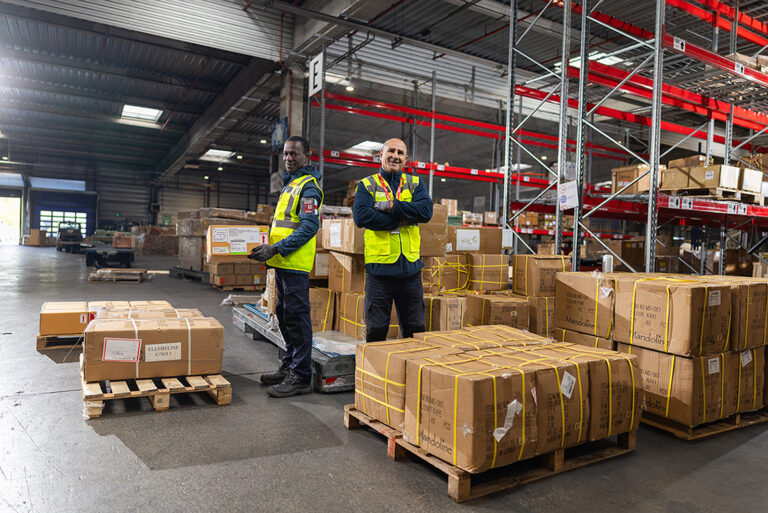
The agreement covers freight consolidation and deconsolidation at Brussels, supported by 24/7 operations, pharmaceutical handling, and operational visibility. WFS will make freight ready for carriage, capture weight and measurements, crate, repack, screen, consolidate, label shipments, and move cargo between forwarders and handling agents.
Import work will include deconsolidation, sorting, preparation for customs clearance, and onward road transport. The contract extends an existing relationship between WFS and GEODIS, which has used WFS for import and export cargo handling at Paris Charles de Gaulle since 2021.
Brussels expands WFS’ European e-commerce and freight forwarder handling network, which already includes Amsterdam, Dublin, Frankfurt, Liège, Madrid, Stockholm, and 12 French airports including Paris CDG. The Brussels operation also includes GDP-certified pharmaceutical capability and 300m² of temperature-controlled cool-room capacity.
Air cargo handling in Europe has become more demanding as freight forwarders manage smaller consignments, higher data requirements, healthcare volumes, ecommerce flows, and tighter road-feeder connections. The airport warehouse is no longer a passive transit shed. It is a control point for cargo condition, documentation, security, measurement, temperature integrity, and release timing.
Brussels has a particular strength in pharmaceutical logistics. Belgium’s central location, airport cargo capability, road network, and healthcare cluster have made it a strong European gateway for temperature-sensitive cargo. Movianto’s recent expansion at Aalst added further healthcare logistics capacity nearby, increasing Belgium’s role in specialist pharma distribution.
For GEODIS, the Brussels arrangement creates a structured handling platform for consolidation and deconsolidation. Consolidation quality affects flight readiness, cargo presentation, documentation, and onward handling. Deconsolidation quality affects import release, customs preparation, sorting discipline, and road transfer. In ecommerce and healthcare, weak performance at either stage can rapidly affect service commitments.
The contract also reflects the convergence of ecommerce and freight forwarding. Cross-border parcel and small-shipment flows have increased the need for rapid measurement, sorting, labelling, and customs preparation. Traditional forwarder handling is being reshaped by higher consignment counts, more demanding data flows, and shorter customer lead times.
Pharmaceutical cargo raises the operating standard further. GDP-certified capability requires trained staff, documented procedures, temperature management, quality controls, and secure handling. Cool-room capacity provides the physical buffer, but product integrity depends on acceptance, monitoring, dwell-time control, handover, exception management, and release discipline.
Visibility is now part of handling performance. Forwarders and shippers need to know where cargo is, who has custody, whether it has cleared, and when it will move. That demand has increased as customs data, security rules, and customer service expectations have become more detailed. A handler that cannot provide reliable operational status can weaken an otherwise strong transport plan.
The agreement also fits a wider move toward integrated logistics arrangements. Automotive, retail, healthcare, and industrial customers are increasingly asking providers to combine transport, warehousing, customs, handling, and data visibility into linked service models. Chery’s global logistics arrangement with CMA CGM and CEVA showed the same direction at a larger network scale, bringing multiple transport and logistics functions into one operating framework.
WFS’ Brussels contract strengthens its role in a specialist European air cargo market where handlers are being judged on technical capability as well as throughput. The work brings together ecommerce flows, forwarder requirements, pharma handling, and road onward movement. In that environment, reliability depends on the quality of each handoff, not just the speed of the warehouse floor.