IN Brief:
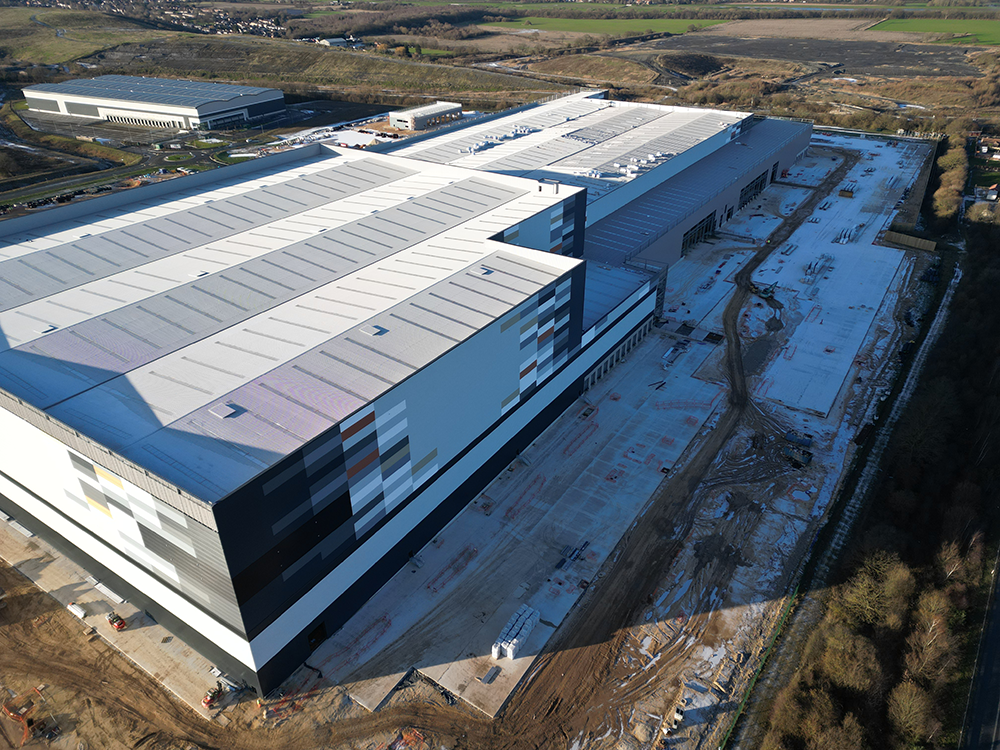
- The steel frame is complete on an 829,000 sq ft distribution centre in Doncaster.
- The £108m scheme includes a 43-metre high-bay, 105 loading bays, and automation-led design.
- Practical completion is targeted for 2026, with automation installation planned as the next major phase.
Construction has reached a key structural point at TJ Morris’ new Doncaster distribution centre, a major addition to the retailer’s UK logistics footprint and a project designed to underpin expansion capacity for Home Bargains. The facility, delivered within the Unity Yorkshire development, is intended to serve more than 300 stores and is being built as a highly automated operation, reflecting the retailer’s wider shift toward high-bay storage and mechanised order handling.
Project specifications released by the steelwork contractor Caunton Engineering describe a steel-framed warehouse with low-bay, intermediate-bay, and high-bay areas, with mezzanine floors and integrated office accommodation, covering approximately 829,000 square feet. The high-bay section rises to 43 metres, and the design includes 105 loading bays, positioning the site for high-volume trunking and store replenishment cycles.
The scheme’s cost has been put at £108m in project materials published by Caunton and the main contractor McLaren Construction, and employment estimates indicate around 1,000 new jobs linked to the site once operational. Those figures place the Doncaster build among the larger single-site retail logistics investments currently underway in the North of England, particularly in a market where labour availability, land pricing, and power capacity have become increasingly material constraints on warehouse development.
Beyond scale, the design intent is clear: a tall, dense storage core supported by extensive dock capacity, enabling higher throughput without a linear increase in footprint. In practice, that is the architecture required for modern retail distribution, where case-pick and split-case operations increasingly depend on automation to maintain service levels while containing labour exposure.
Statements issued by the Unity Yorkshire development team indicate the project is expected to complete in October 2026, aligning practical completion with a subsequent phase of technology and fit-out works. That sequencing is typical for highly automated sites, where handover to automation specialists can extend the delivery timeline well beyond the point the building becomes weather-tight and structurally finished.
The project’s local framing has also focused on economic impact. Doncaster mayor Ros Jones described the development as part of the area’s “growth story”, while TJ Morris logistics lead Neil Kelson said, “the steel signing ceremony for the new Distribution Centre represents a key step in our logistics strategy.”
For the UK warehousing market, the Doncaster build is another example of where retail logistics investment is landing: large-format sites with high-bay storage, automation readiness, and enough loading capacity to support rapid store replenishment. The underlying driver is not novelty, but the need to keep unit costs under control while maintaining availability in a market where both consumer demand and transport conditions can shift quickly.