IN Brief:
- Corvus One for Cold Chain is engineered for continuous autonomous cycle counting in sub-zero facilities.
- The platform targets barcode capture and flight stability despite frost, glare, condensation, and strong airflow.
- Retailers and cold-chain operators are pushing toward higher-frequency inventory visibility as SKU counts rise and labour exposure windows tighten.
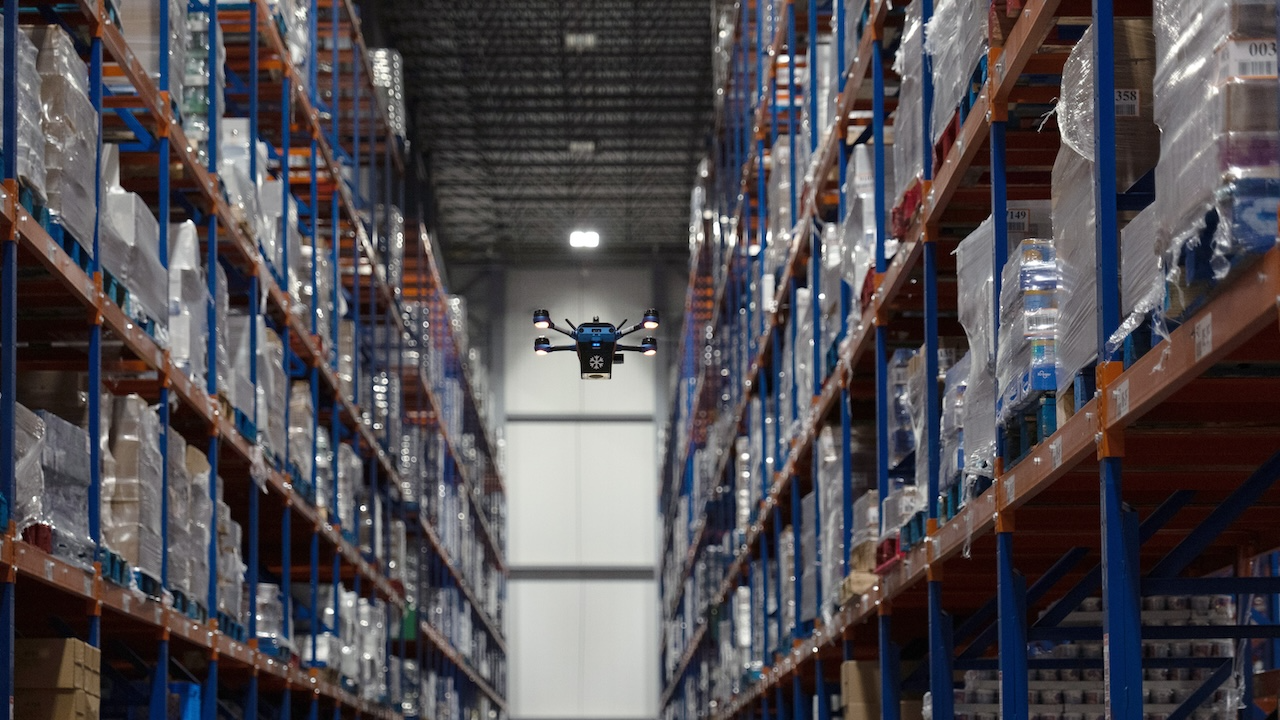
Corvus Robotics has launched Corvus One for Cold Chain, an autonomous inventory drone system designed to operate continuously in freezer environments down to minus-20°F (minus-29°C). The company is targeting a well-known operational headache in cold storage: inventory accuracy is costly to maintain, but manual cycle counts impose real constraints due to safety protocols, exposure limits, and productivity loss when people and equipment are pulled into sub-zero zones.
The company’s design focus is not simply flight in cold air, but reliable data capture under the conditions that typically break scanning performance. Ice buildup, condensation, glare, damaged labels, and variable airflow from blowers and door openings can degrade conventional barcode reads and destabilise small aerial platforms. Corvus says the system uses industrial-grade barcode scanners with adaptive control over focus and exposure, and stabilises itself to compensate for strong airflow so freezer equipment and door activity can continue during operating shifts.
Jackie Wu, Chief Executive Officer at Corvus Robotics, said: “Operating autonomous aerial systems continuously in freezer environments is an engineering challenge most robotics platforms were never designed to handle.” The company says it reworked thermal management, sensing, and onboard perception to maintain autonomy and accuracy through extreme temperature swings and reflective surfaces.
Corvus is also leaning into deployment practicality. It says the system operates without Wi-Fi, localisation markers, lighting modifications, or special barcodes, and is designed to fly autonomously during active shifts. That claim matters because cold stores are often among the least forgiving facilities for retrofit projects — particularly multi-temperature sites where changing infrastructure in one zone can create knock-on compliance work elsewhere.
In its launch materials, Corvus said Kroger is already using the system in live freezer operations, with the drones reducing reliance on manual cycle counts in sub-zero environments. Beyond labour exposure reduction, the commercial case is tied to frequency: higher-rate cycle counts can tighten FIFO execution, improve replenishment decisions, and reduce write-offs by shrinking the gap between physical reality and WMS records. For frozen operations with rising SKU velocity and tighter service expectations, that lag is often where cost accumulates.
The product is offered under a robots-as-a-service model, bundling hardware, automated battery and health management, and ongoing support into an operating-cost structure. That approach has become increasingly common in warehouse automation categories where uptime, maintenance, and software evolution are as decisive as the robot itself.
Cold-chain automation often attracts attention through large capex projects — new-build freezer capacity, refrigeration upgrades, or expanded last-mile networks — but inventory accuracy remains one of the quieter, persistent drags on performance. Corvus is betting that the next wave of gains comes from treating inventory visibility as a continuous data stream rather than a periodic audit, even in the harshest parts of the warehouse.