IN Brief:
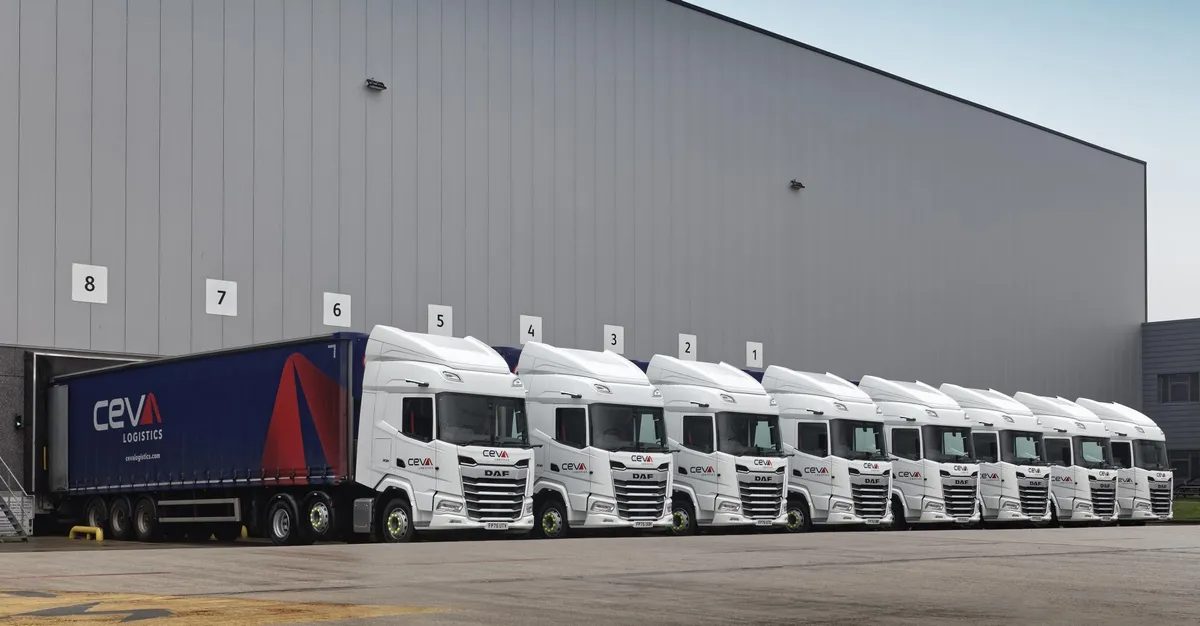
- CEVA has added 165 new DAF trucks to its UK fleet.
- The vehicles run predominantly on HVO and include telematics and updated safety systems.
- The move combines added road capacity with a lower-emission operating model.
CEVA Logistics has expanded its UK transport network with the addition of 165 new DAF trucks, a fleet investment that increases domestic road capacity while pushing further into lower-emission operations through the use of hydrotreated vegetable oil.
The new trucks will operate predominantly on HVO and form part of a wider UK fleet strategy that CEVA says is intended to strengthen resilience, increase service capability, and reduce the carbon intensity of road transport. The company said the vehicles are equipped with advanced drivetrains, aerodynamic cab design, telematics, and updated safety technology, while the wider ground and rail network in the UK is now fully powered by HVO.
The combination is notable. Additional vehicles alone would make this a straightforward capacity story, but the fuel choice and onboard systems pull it into a different category. HVO has become one of the more practical transition fuels for operators that need emissions reductions now but cannot yet move large sections of their heavy fleet onto battery-electric or hydrogen platforms without operational compromises. It offers a route to significant carbon savings while preserving familiar vehicle formats, fuelling patterns, and route structures.
That does not make it a permanent answer. Availability, cost, and feedstock scrutiny remain part of the HVO debate, and fleet operators still face a longer-term shift towards deeper vehicle and infrastructure change. Yet the appeal in the current market is obvious. Road freight businesses are under pressure to improve emissions performance without weakening service reliability, stretching depot footprints, or locking themselves into technology pathways that do not yet fit every lane.
In that respect, the CEVA move sits squarely within the current direction of large contract logistics networks. Customers increasingly want transport providers to show measurable progress on emissions, but they also expect the same levels of availability, visibility, and delivery performance. The result is that sustainability measures are being chosen less as standalone statements and more as operational decisions that can be folded into existing networks without service disruption.
The telematics element also deserves attention. Fleet digitisation has moved well beyond simple tracking. Operators now use telematics to tune routes, monitor utilisation, improve driving behaviour, reduce fuel use, and identify maintenance issues earlier. When layered onto a large national fleet, that creates a more disciplined network at the same time as it sharpens performance reporting for customers and procurement teams.
For the UK haulage market, the message is less about one company’s truck order than about the shape of the transition. The sector is still working through labour pressure, higher equipment costs, and growing sustainability demands, all while shippers continue to push for resilience and service precision. Fleet decisions are therefore carrying more weight than they did a few years ago. A truck is no longer just rolling capacity; it is now part of a wider calculation around fuel strategy, emissions reporting, network resilience, and commercial credibility. CEVA’s latest intake fits that pattern closely.