IN Brief:
- The UK has confirmed a wider advanced manufacturing package worth more than £700 million, including a £380 million DRIVE35 grant for Agratas.
- The Somerset site is expected to support about 4,200 jobs and supply batteries to Jaguar Land Rover.
- The wider programme also includes support for innovation across the automotive and battery ecosystem.
Agratas has secured a £380 million government grant for its Somerset gigafactory as part of a wider UK advanced manufacturing package that ministers say will support 4,200 jobs and strengthen domestic automotive supply chains. The award sits within the government’s broader DRIVE35 programme and was confirmed alongside a larger investment package of more than £700 million aimed at electrification, battery production, and associated manufacturing capability.
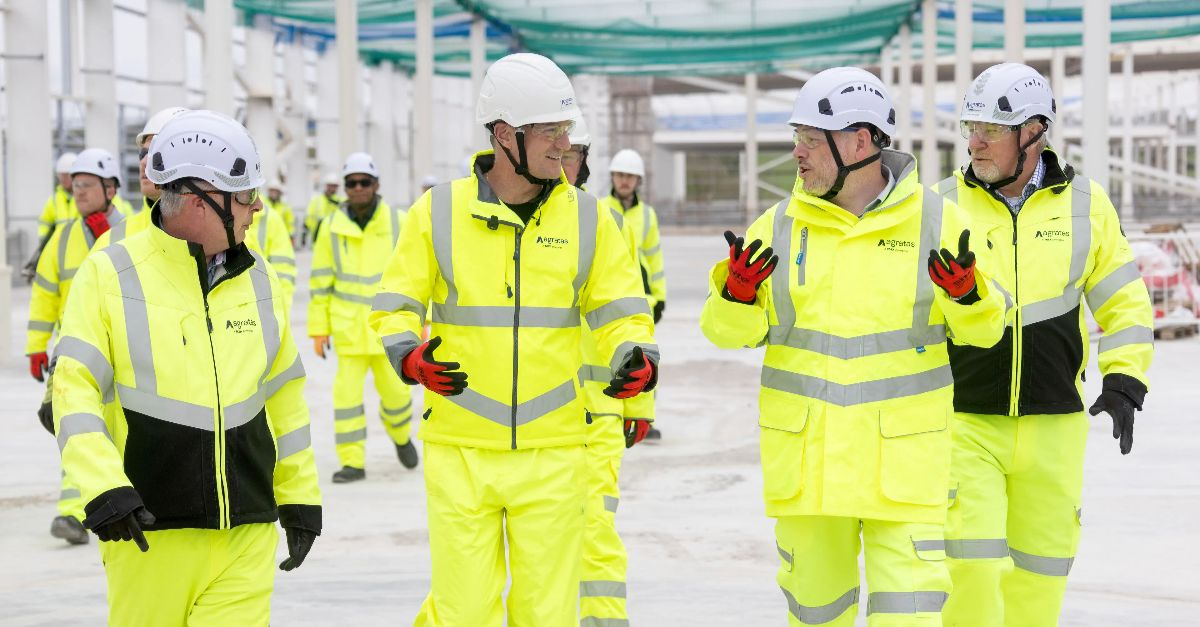
The Somerset site, now rising on a steel frame built with British steel, is expected to become one of Europe’s largest gigafactories. Government and company statements said the facility will supply batteries to Jaguar Land Rover, support thousands of supply-chain jobs beyond the plant itself, and anchor a significant share of future UK battery manufacturing capacity. Agratas has also linked the project to 300 apprenticeships and a dedicated training pipeline for battery manufacturing and engineering skills.
The wider package is not limited to one site. Ministers said the DRIVE35 programme also includes around £90 million across four research and development competitions supporting the automotive and battery ecosystem, including power electronics, software-defined vehicles, and adjacent innovation programmes. That broadens the significance of the announcement beyond a single factory build. It is an attempt to connect cell production, engineering capability, component development, and future vehicle platforms inside one industrial framework.
For supply chains, the strategic issue is not only capacity, but proximity. Battery production has become one of the clearest examples of how electrification is redrawing logistics maps. Vehicle assembly, battery manufacturing, precursor materials, recycling, and specialist equipment all work better when they are closer together, both physically and contractually. Distance in these chains can still be managed, but it adds time, cost, and exposure to disruption at the very point where manufacturers are trying to secure cleaner, more predictable volume.
The UK is hardly alone in chasing gigafactory investment, but the competition has become sharper as Europe, the United States, and Asia all push to capture more of the battery value chain. In that environment, public funding is increasingly being used to secure not just a plant, but a surrounding industrial base: engineering services, materials handling, site infrastructure, workforce development, and long-term customer relationships. The practical test, as ever, comes later, when projects move from announcement to sustained production.
What the Agratas package shows is that battery manufacturing is no longer being treated as a narrow automotive issue. It is now being handled as supply-chain infrastructure in its own right, with implications for sourcing, transport, workforce planning, energy use, and industrial resilience. That is a larger brief, and it will be judged on delivery rather than headline value.