IN Brief:
- Panattoni has agreed a 10-year lease for 200,000 sq ft at Panattoni Park Crawley.
- The unit has been taken by the world’s largest e-commerce retailer, completing full occupation of the scheme.
- Premium logistics space near Gatwick remains in demand where operators need speed, labour access, and dense consumer reach.
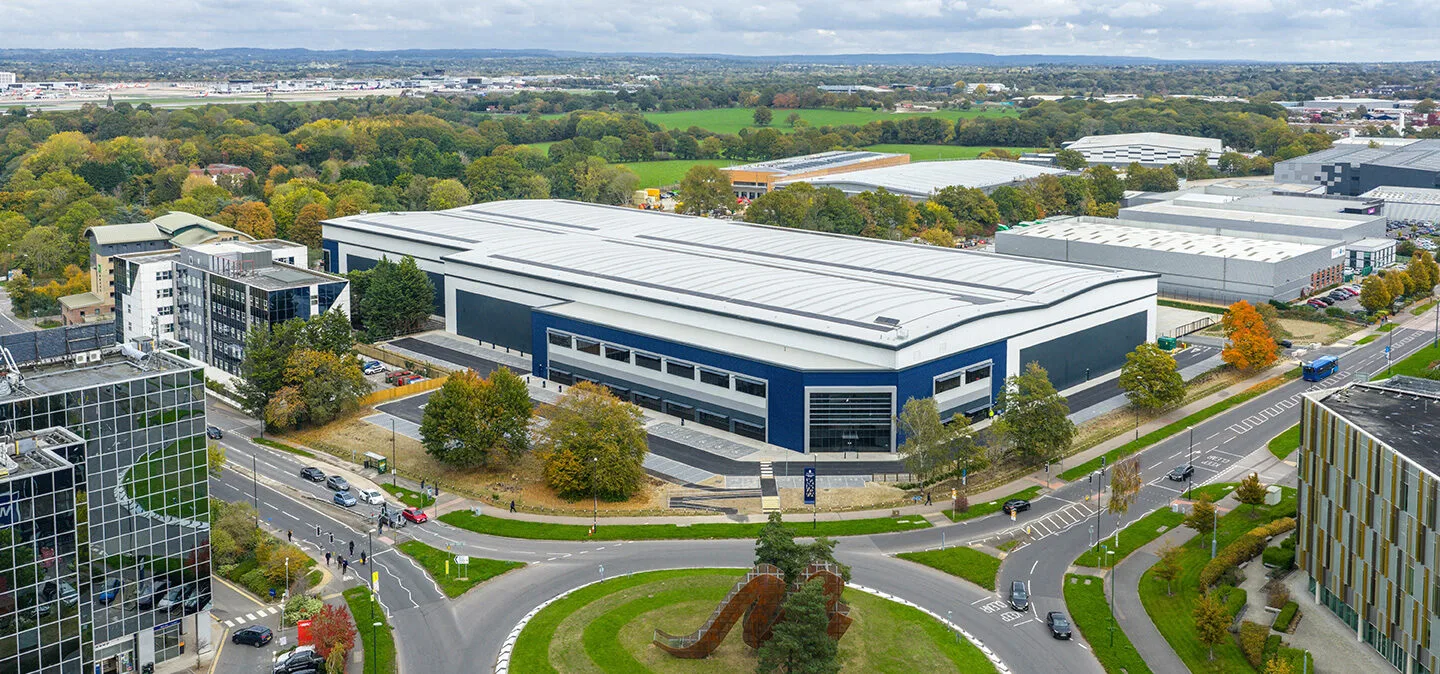
Panattoni has secured a 10-year lease for 200,000 sq ft at Panattoni Park Crawley, with the space taken by the world’s largest e-commerce retailer in what the developer described as the largest Grade A logistics letting in the South East so far this year.
The transaction completes occupation of the scheme, which was developed as two units before being taken by a single occupier. Located around five minutes from Gatwick Airport and close to Junction 10 of the M23, the site offers unusually strong access to airfreight infrastructure, regional motorway links, and a dense South East consumer base. That mix continues to make Crawley one of the more competitive submarkets for fast-moving ecommerce and parcel-led operations.
Panattoni has pitched the development around both location and building performance. The scheme carries a BREEAM Excellent rating and EPC A, and includes solar PV together with design features intended to support lower operational energy demand. The building also provides 15m clear internal height, which is increasingly important for occupiers trying to improve cube efficiency while keeping future automation options open.
Property deals do not always translate neatly into operational stories, but this one does. A 200,000 sq ft commitment on a 10-year term tells its own story about how occupiers are weighing network resilience against cost discipline. In a market where rates remain sensitive and build costs have not exactly become forgiving, long-term commitments tend to cluster around sites that can serve several functions at once — not just storage, but rapid sortation, returns handling, airport-linked replenishment, and last-mile support.
The South East remains a difficult logistics market precisely because it offers those advantages. Land is constrained, power availability can be a limiting factor, and planning remains uneven. That means occupiers are often forced to choose between location quality and modern building specification. Sites that can offer both are still attracting attention, even as some operators take a harder look at footprint rationalisation.
The deal also reinforces the split emerging across the warehouse market. Commodity space is facing closer scrutiny on cost and utilisation, while high-specification, high-connectivity assets continue to command stronger interest where service performance matters more than a marginal rent saving. For occupiers under pressure to shorten delivery windows without carrying excessive stock across too many sites, strategically placed logistics buildings near airports and motorway corridors remain difficult to replace.