IN Brief:
- Menzies has opened Auckland Airport’s first dedicated airside cargo terminal, doubling its operating footprint in New Zealand.
- The 32,000m² site serves 18 airline cargo partners and is being equipped for CEIV Pharma handling and faster landside processing.
- The investment reflects stronger pressure on airport cargo operators to support time-critical, data-led, and export-intensive freight flows.
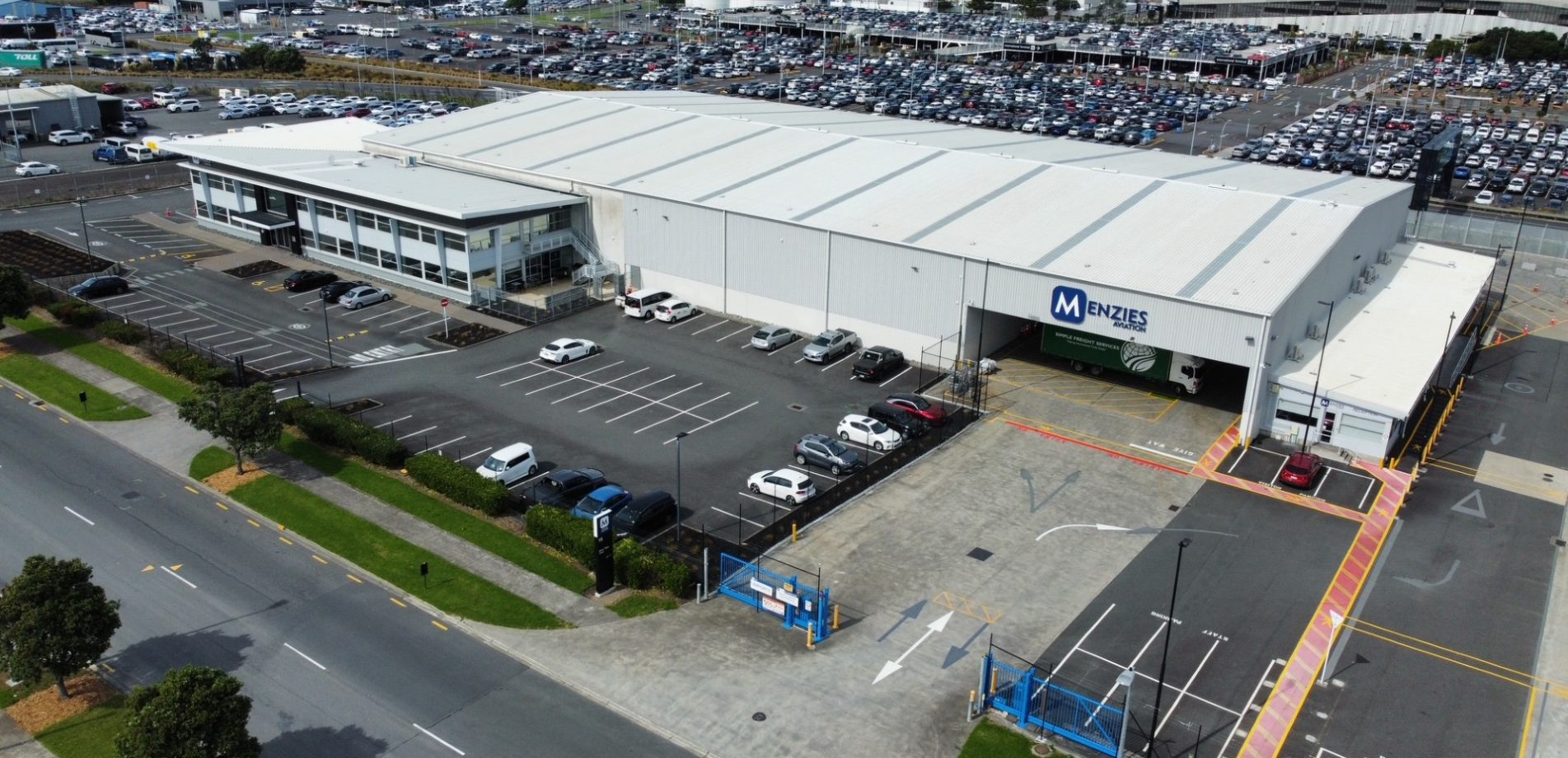
Menzies Aviation has opened a new dedicated airside cargo terminal at Auckland Airport, giving the company a larger operating base in New Zealand’s main international freight gateway. The facility sits within the airport’s cargo precinct and is intended to handle a wider mix of time-sensitive and general cargo, while improving access between the terminal and the apron through a direct airside connection.
The new site doubles Menzies’ operating footprint in Auckland and spans 32,000 square metres under a 15-year agreement. It serves 18 airline cargo partners and has been built with modern material handling equipment and a layout designed for higher throughput. Menzies said the terminal will become its primary cargo gateway in New Zealand and is due to gain IATA CEIV Pharma accreditation by the end of the year, extending its capability in temperature-sensitive and higher-value freight handling.
The company is also rolling out Nallian’s truck visit management system to improve landside efficiency for freight forwarders and trucking partners, while the operation is integrated with its MACH cargo management system. Cargo terminals are now judged as much on gate processing, digital flow control, and shipment visibility as on internal handling speed. Congestion at the handoff points between road and air can quickly erode the value of investment inside the building.
Auckland Airport handles the vast majority of New Zealand’s international air freight, and the cargo mix is placing increasing pressure on operators. Pharmaceuticals require tighter control and more disciplined process management, while e-commerce and perishables depend on faster cut-off performance and closer coordination across onward transport. Menzies said fresh produce exports through the airport have been rising sharply, adding another layer of demand to a site that must also keep general freight moving efficiently.
Airport cargo operations are increasingly being shaped by the need for larger facilities that combine physical scale with system integration and stronger compliance standards. Capacity alone no longer settles the problem. Operators also need cleaner data, smoother vehicle throughput, and better support for sectors where product condition, timing, and chain-of-custody controls all sit under closer scrutiny.
The Auckland investment reflects that shift. New terminals are being designed less as simple freight sheds and more as specialised logistics infrastructure, where airside access, digital coordination, and quality accreditations determine how competitive a gateway can be. In export-heavy markets, performance at a single cargo node has immediate consequences for growers, manufacturers, freight forwarders, and airlines, which makes the quality of that infrastructure central to the wider supply chain rather than a back-end airport concern.