IN Brief:
- DKSH is replacing its current Bangkok medical device distribution centre with a larger facility due for completion in 2027.
- The site doubles storage capacity, adds automation-ready zones, and is designed around urgent-care responsiveness and GDP-compliant healthcare logistics.
- The project reflects a broader move across Asia to harden healthcare supply chains with larger, more specialised distribution infrastructure.
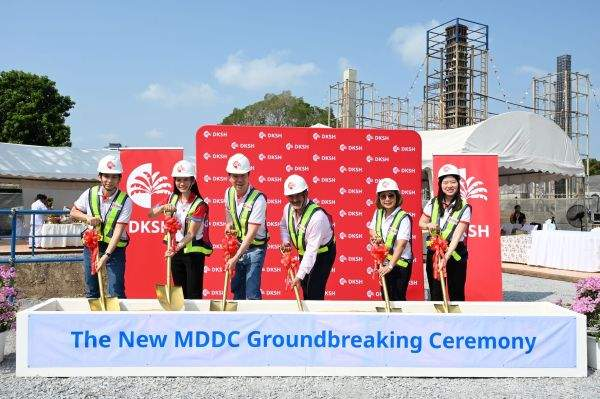
DKSH has broken ground on a new medical device distribution centre in Bangkok, starting work on a larger replacement facility intended to strengthen healthcare logistics capacity in Thailand. The site is scheduled for completion in 2027 and will take over from the company’s current medical device distribution centre, with a design built around higher throughput, larger product profiles, and faster service response.
The new facility is being developed on Rama 3 Road in Bangkok, close to major hospitals and healthcare institutions. DKSH said the site will provide 2,438 cubic metres of storage capacity, doubling the capacity of the current centre. The layout is also being designed to support a more efficient internal workflow and dedicated zones for automation, allowing it to handle a broader mix of medical devices, including larger equipment.
The building will operate to a wide set of healthcare and quality standards, including GDP, WHO GMP/GDP, ISO 9001, ISO 13485, ISO 14001, and ISO 45001. DKSH has also set out plans to introduce automated storage and picking through a robot climb picking system, covering inbound put-away through to outbound fulfilment. The aim is to improve picking accuracy, reduce manual handling, and create more headroom for rising order volumes and more complex inventory profiles.
Healthcare distribution networks across Southeast Asia are carrying a heavier operational load as populations age, treatment pathways become more device-intensive, and service expectations tighten. Warehouses originally configured around smaller, faster-turning product lines are increasingly being asked to manage a wider range of devices, more frequent replenishment cycles, and a greater share of urgent and scheduled hospital deliveries. That is pushing providers toward facilities that can cope with compliance, speed, and product complexity in the same operating model.
Bangkok has become an important node in that shift. Transport access, hospital density, and the need to support both routine distribution and time-sensitive delivery make the city a logical location for healthcare logistics investment. Facilities serving medical devices now need more than storage volume alone. They require disciplined quality systems, cleaner process design, and warehouse layouts that can absorb automation without disrupting service during periods of higher demand.
DKSH already supports more than 10,000 hospitals, clinics, and pharmacies across Thailand, and the new centre suggests that healthcare warehousing in the region is moving toward larger, more specialised hubs. Capacity still matters, but the pressure is now on operators to combine compliance, responsiveness, and flexibility in one site. Projects of this kind are becoming less about simple expansion and more about building distribution networks that can stay reliable under tighter performance requirements.