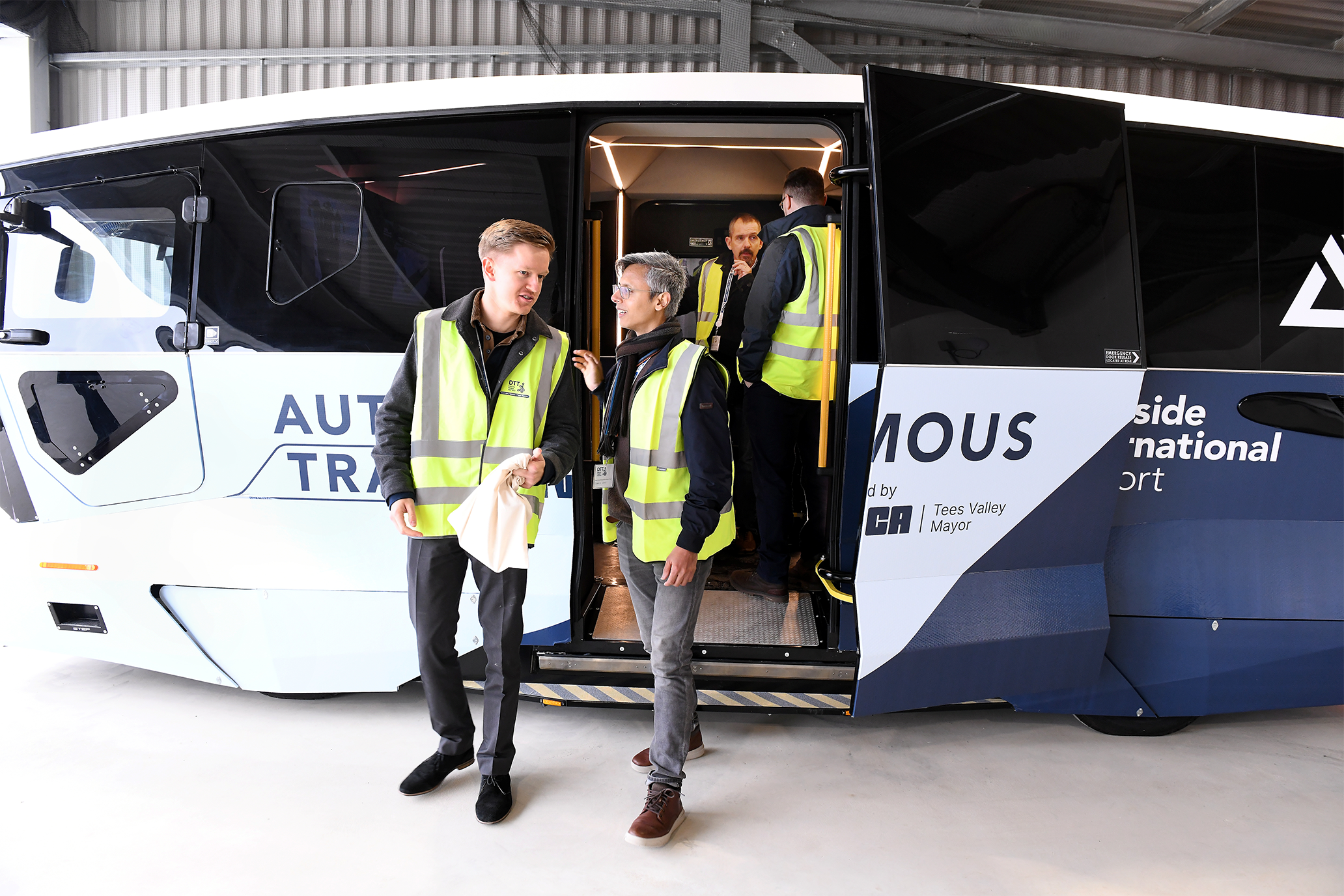
IN Brief:
- Project TACTIC will assess driverless freight between Teesport and Teesside International Airport.
- The six-month feasibility study is being led by iC4DTI with Cenex as project partner.
- The work will examine commercial viability, regulation, insurance, remote operations, and digital trade compliance.
The International Centre for Digital Trade and Innovation is leading a six-month feasibility study into driverless freight operations along the Teesport–Teesside International Airport corridor.
Project TACTIC, short for Teesside Autonomous Corridor for Trade Integration and Clearance, is being developed within Teesside Freeport. Cenex is the project partner, with funding from the UK Government’s Connected and Automated Mobility Pathfinder programme, delivered by the Department for Business and Trade in partnership with Innovate UK and Zenzic.
The study will produce an investment-ready business case for a driver-out connected automated mobility freight service. The proposed corridor would connect controlled sites in the Teesside area, including Teesside International Airport, Teesworks, Wilton International, and Teesport.
The initial deployment area gives the project a practical test environment. Ports, airports, industrial sites, and Freeport zones create repeatable freight movements across defined routes, with tighter operational control than open-road long-haul transport.
Project TACTIC will also examine how trusted vehicle data can support digital trade processes. Real-time information such as location, secure seals, and weight could be linked with digital documents, allowing checks to be prepared while freight is moving. That approach could reduce dwell time and improve clearance at handover points.
The study will assess vehicle technology, remote operations requirements, control-room functions, regulation, insurance, business models, and supply chain opportunities for UK companies working in sensors, connectivity, cyber security, software, and autonomous systems.
Driverless freight trials have often focused on vehicle autonomy alone, but commercial deployment depends on a wider operating system. Vehicles need safe routes, reliable connectivity, weather and incident procedures, approved operating domains, clear liability rules, trained remote operators, and integration with site management and compliance systems.
Teesside’s industrial geography is well suited to that model. A controlled corridor serving port, airport, and manufacturing locations can support shuttle-style freight movements where routes, cargo types, security requirements, and delivery points are known in advance.
The digital trade element gives the project added significance. Automated vehicles will not deliver major productivity gains if freight still waits for manual paperwork, duplicate checks, or disconnected systems. Pairing autonomous movement with trusted digital documentation could reduce friction across controlled logistics networks.
If the business case is proven, Teesside could become an early UK location for automated freight linked directly to Freeport and digital trade operations. The corridor would test not only whether freight vehicles can move without onboard drivers, but whether automated movement can be integrated into trade clearance and industrial logistics.