IN Brief:
- Dental City has integrated Locus Robotics AMRs with Infios Warehouse Management.
- The project tripled pick rates and doubled capacity at a 40,000 sq ft distribution centre.
- The deployment extended the facility’s life without a building expansion.
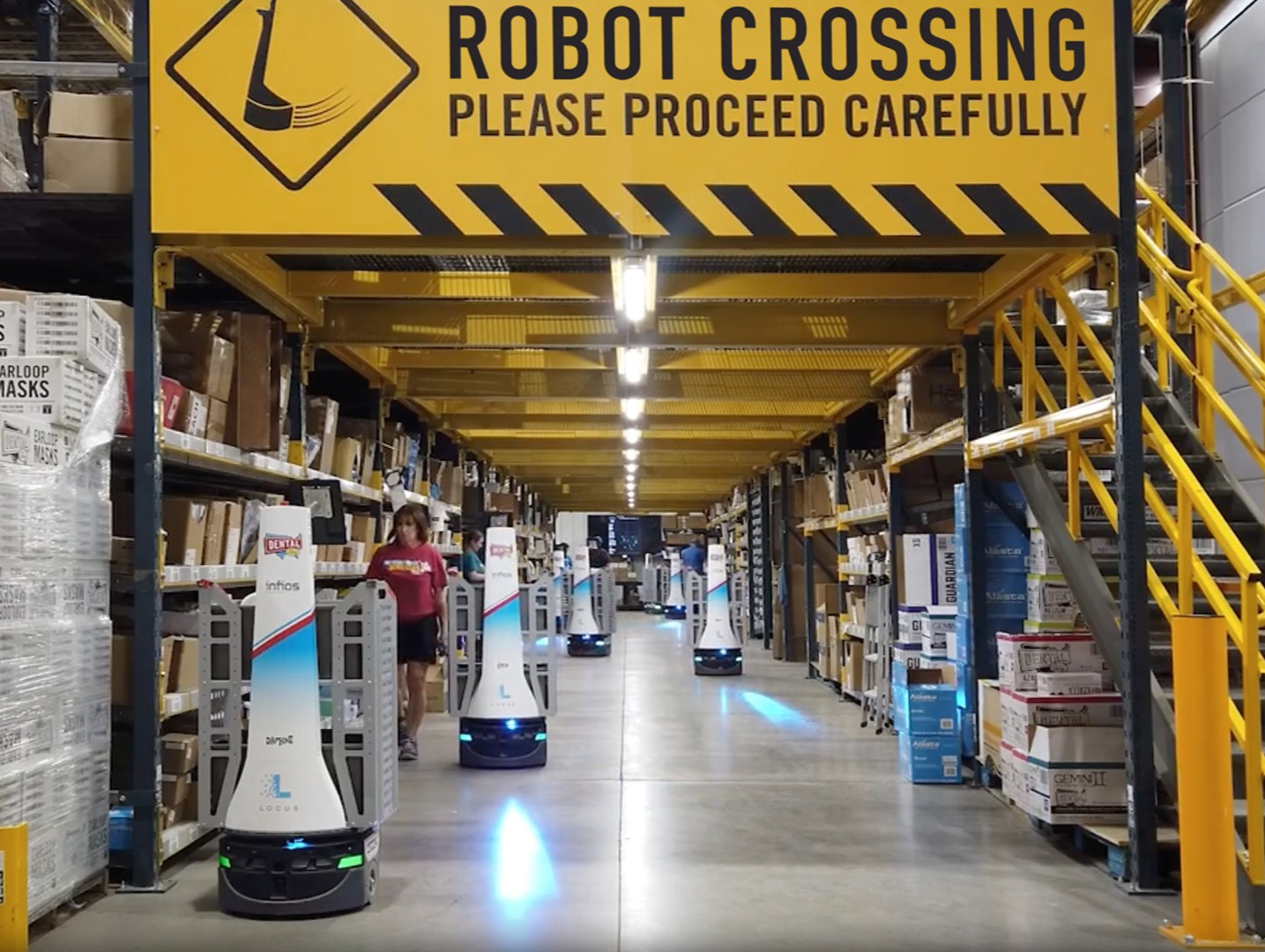
Dental City has expanded robotic fulfilment at its 40,000 sq ft distribution centre in Green Bay, Wisconsin, using autonomous mobile robots integrated with Infios Warehouse Management.
The project was delivered with Infios and Locus Robotics and has tripled pick rates, doubled operational capacity, improved order accuracy, and extended the facility’s useful life without expanding the building footprint.
Dental City supplies independent dentists, dental service organisations, and buying groups across the United States. Its catalogue includes nearly 500 brands and tens of thousands of products, supported by same-day shipping and a two-day nationwide delivery commitment.
The automation system integrates Locus Origin and Vector robots with Infios Warehouse Management, which Dental City has used since 2008. The system supports cartonisation, zone picking, and QR-code navigation inside the facility.
Dental City president John Mathys said the system delivered immediate productivity gains, including tripled pick rates and a projected return on investment closer to just over a year rather than the original three-year expectation. Infios reported order accuracy of 99.85% following the deployment.
The project shows how warehouse robotics is being adopted beyond large ecommerce sites. Mid-sized distribution centres often face the same labour, space, and service constraints as larger operations, but with fewer options to absorb inefficiency. Expanding a facility can be expensive, slow, and disruptive. Robotic picking can increase throughput inside an existing footprint when inventory, order profile, and process design are suitable.
Autonomous mobile robots reduce unnecessary walking and help direct labour towards productive picking activity. That is especially useful in facilities with large SKU counts, small item profiles, and high order accuracy requirements. Dental supply operations need fast fulfilment, but they also need controlled handling and reliable item-level accuracy because substitutions and delays can affect clinical workflows.
The integration between the robots and the warehouse management system is central to the result. AMRs provide movement and task execution, but the WMS controls order priority, inventory location, cartonisation logic, and fulfilment workflow. Productivity gains depend on the way those systems coordinate people, robots, stock, and orders.
The deployment also supports a broader trend towards modular automation. Operators can add AMRs without rebuilding the warehouse around fixed conveyor or shuttle infrastructure. That lowers the barrier to automation for distributors that need capacity gains but cannot justify a full facility redesign.
Dental City’s project gives a practical model for distribution centres seeking capacity growth before committing to property expansion. The result combines warehouse software, mobile robotics, and process redesign to extend the performance of an existing site.