IN Brief:
- Kuehne+Nagel has added a 248m² temperature-controlled healthcare logistics facility in Hyderabad.
- The site operates +2°C to +8°C and +15°C to +25°C zones under the company’s HealthChain standard.
- Hyderabad’s pharmaceutical manufacturing base makes the location a strategic cold-chain node for India and export markets.
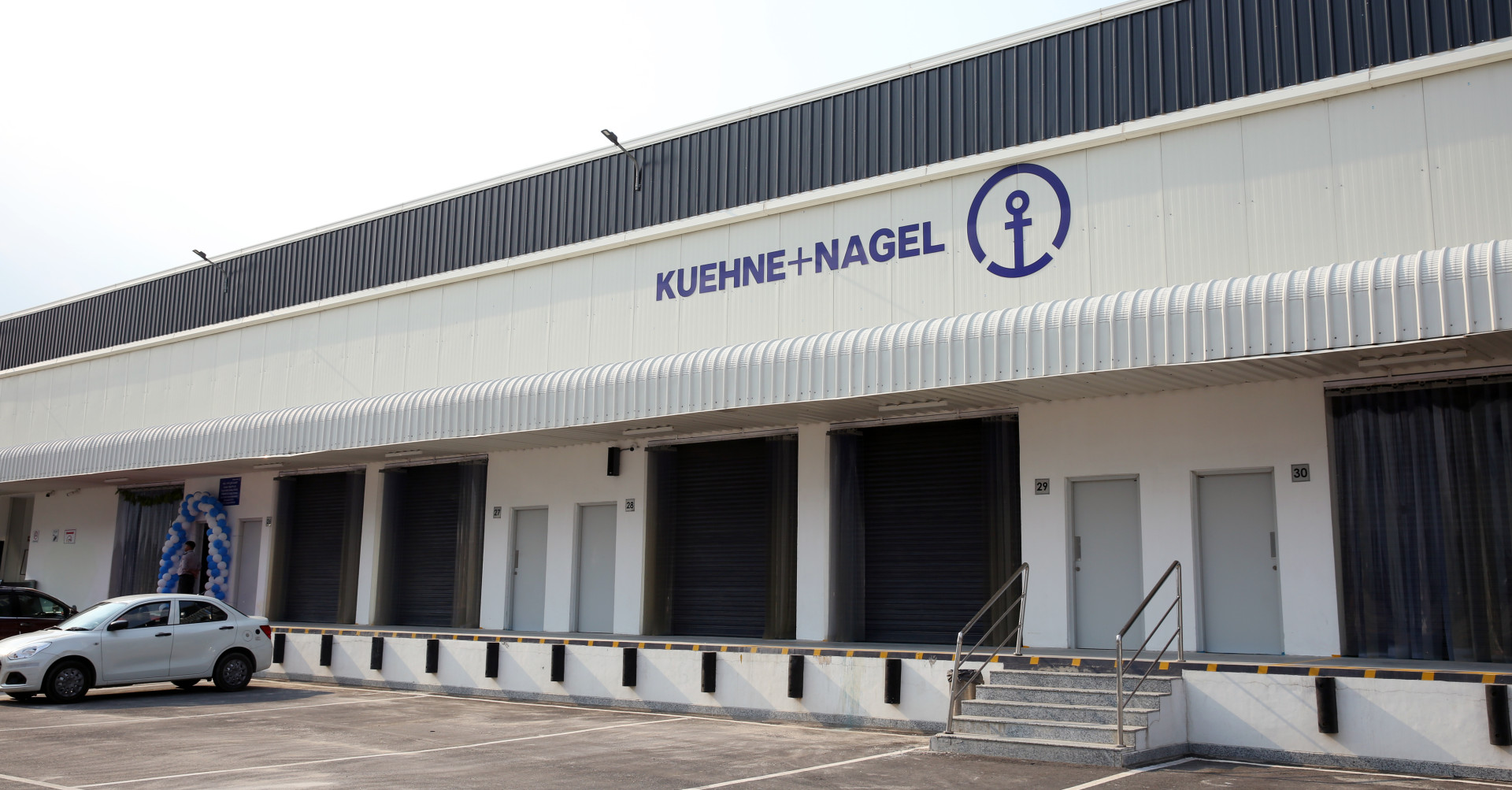
Kuehne+Nagel has expanded its healthcare logistics network in India with a new temperature-controlled airfreight cross-dock facility in Hyderabad.
The 248m² site has been developed to handle pharmaceutical and medical shipments across dedicated temperature zones, including +2°C to +8°C and +15°C to +25°C. It operates under Kuehne+Nagel’s HealthChain quality standard, supporting GxP-aligned handling for healthcare supply chains.
The Hyderabad facility strengthens the company’s ability to support compliant movement of healthcare products through one of India’s most important pharmaceutical manufacturing regions. Hyderabad contributes a significant share of India’s active pharmaceutical ingredient and vaccine production, making proximity to manufacturing sites a practical advantage for cold-chain performance.
The new site follows the launch of Kuehne+Nagel’s Bengaluru Cool Zone facility in December 2025, giving the company two HealthChain-certified facilities in India. The structure adds capacity in two major life sciences clusters and improves access to airfreight-linked, temperature-controlled handling for domestic and international shipments.
Healthcare logistics networks are becoming more specialised as biologics, vaccines, clinical materials, diagnostics, and advanced therapies place tighter demands on handling conditions. Cross-dock infrastructure is central to these networks because it reduces the time products spend in transitional environments while maintaining controlled conditions between production, airfreight, and onward distribution.
Hyderabad’s pharmaceutical concentration gives the facility a role beyond standard logistics capacity. Shorter distances between production sites and certified handling infrastructure can reduce exposure to uncontrolled environments, simplify handovers, and improve the predictability of export flows. These advantages are particularly valuable where products require narrow temperature bands, documented process control, and fast intervention when excursions occur.
The development also fits a wider shift in healthcare logistics across Asia. Global forwarders are building specialist infrastructure close to manufacturing clusters rather than relying only on large airport gateway sites. That creates more controlled first-mile and cross-dock options for manufacturers exporting into regulated markets.
India’s pharma supply chain has grown in global importance as drug, vaccine, and API production have expanded, but logistics capability must keep pace with manufacturing scale. Temperature-controlled warehousing, airport-linked handling, and quality-assured processes are now part of the competitive infrastructure needed to support international healthcare flows.
Kuehne+Nagel’s Hyderabad facility adds another controlled node to that network. The site gives pharmaceutical and medical shippers an additional route into compliant airfreight handling from one of India’s core life sciences regions, while strengthening the country’s ability to support higher-value and more sensitive healthcare exports.