IN Brief:
- Hapag-Lloyd and Kuehne+Nagel are collaborating on lower-emission ocean freight using Ship Green.
- The agreement covers around 3,300 TEU on the East Asia–North Europe trade lane from April to December 2026.
- The initiative uses waste- and residue-based sustainable marine fuels and a book-and-claim mechanism.
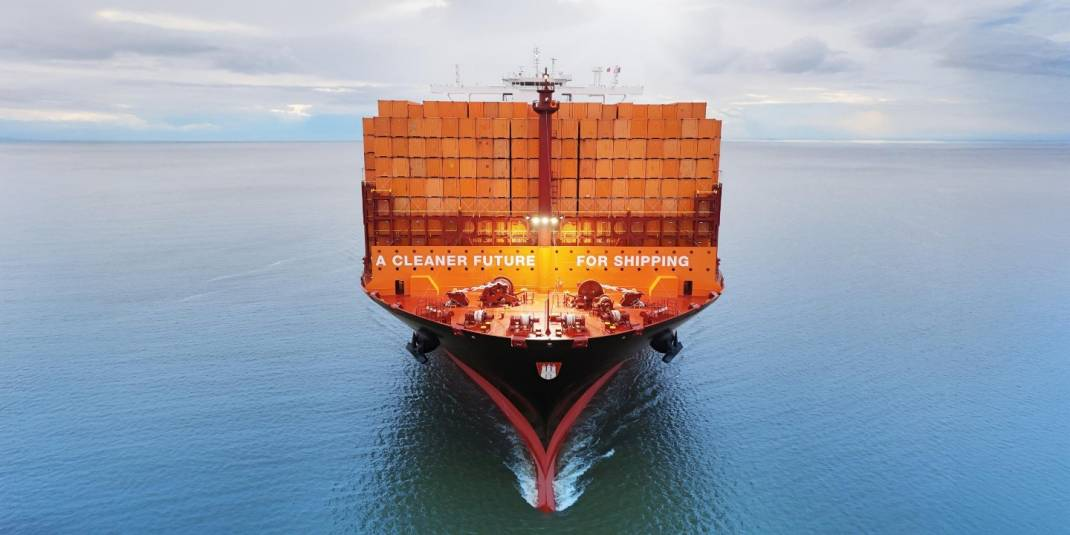
Hapag-Lloyd and Kuehne+Nagel have agreed their first joint lower-emission ocean freight collaboration, using Hapag-Lloyd’s Ship Green product to reduce the carbon footprint of container movements.
The agreement covers approximately 3,300 TEU moving on the East Asia–North Europe trade lane between April and December 2026. The companies expect the initiative to avoid around 2,979 tonnes of CO₂e emissions on a well-to-wake basis through the use of certified waste- and residue-based sustainable marine fuels.
The pilot volume includes around 1,000 tonnes of RED III-compliant waste-based sustainable marine fuel. The emissions reduction will be allocated through a book-and-claim chain-of-custody model, allowing verified reductions to be attributed to Kuehne+Nagel’s freight even where the physical fuel is not used on the exact vessel carrying each shipment.
Book-and-claim models are becoming more common in maritime decarbonisation because alternative fuel availability remains uneven across routes, ports, and vessel deployments. The mechanism allows lower-emission freight products to operate before sustainable marine fuel infrastructure is available at every bunker location and on every trade lane.
The collaboration adds to a growing set of freight decarbonisation measures across different modes. IN Supply recently covered Nivalis Energy Europe’s electrified refrigerated transport platform and Masters Logistical’s addition of electric trucks for British Sugar flows. Those road-based projects differ from ocean fuel switching, but all three point to a market seeking emissions reductions tied to real freight activity rather than detached corporate commitments.
Ocean freight remains one of the harder logistics sectors to decarbonise. Container shipping is energy-intensive, globally distributed, asset-heavy, and dependent on fuel infrastructure that cannot be rebuilt quickly. Sustainable marine fuels offer one route to reducing emissions before zero-emission vessels and global clean-fuel networks reach commercial scale, although supply remains limited and cost premiums remain a barrier.
The structure of the Hapag-Lloyd and Kuehne+Nagel agreement gives shippers a clearer operating frame than broad low-carbon shipping statements. A defined volume, a named trade lane, a fixed period, and a quantified well-to-wake reduction provide a stronger basis for reporting and procurement decisions. The East Asia–North Europe lane also connects Asian manufacturing with European retail, industrial, automotive, electronics, and consumer goods networks, making it one of the most relevant corridors for emissions-focused freight buyers.
Pressure around Scope 3 reporting is sharpening demand for these products. Manufacturers and retailers rarely control the vessels, trucks, aircraft, and warehouses used across their logistics networks, yet freight emissions increasingly sit inside customer reporting, supplier assessments, tender scoring, and regulatory disclosure. Carriers and forwarders are therefore being pushed to provide auditable reductions alongside price, capacity, transit time, and service reliability.
Using waste- and residue-based fuel also places more emphasis on the quality of the reduction. Buyers have become more cautious about offset-heavy claims and certificates that do not affect transport activity inside the value chain. Insetting through a carrier’s fleet is designed to keep the reduction within the freight system, although customers will still need robust evidence, allocation rules, and reporting consistency.
The agreement will not decarbonise container shipping at scale on its own. It does, however, show how carrier-forwarder partnerships are beginning to convert alternative fuel availability into customer-facing freight products. Wider adoption will depend on fuel supply, verification standards, cost acceptance, and the willingness of shippers to commit volumes early enough to support a larger sustainable marine fuel market.