IN Brief:
- South Carolina Ports Authority plans to expand roll-on/roll-off cargo operations at North Charleston Terminal.
- The project will include rail infrastructure and vessel parking improvements for automotive cargo.
- Work is expected to be completed in 2028, with demolition of an adjacent former paper mill site beginning this summer.
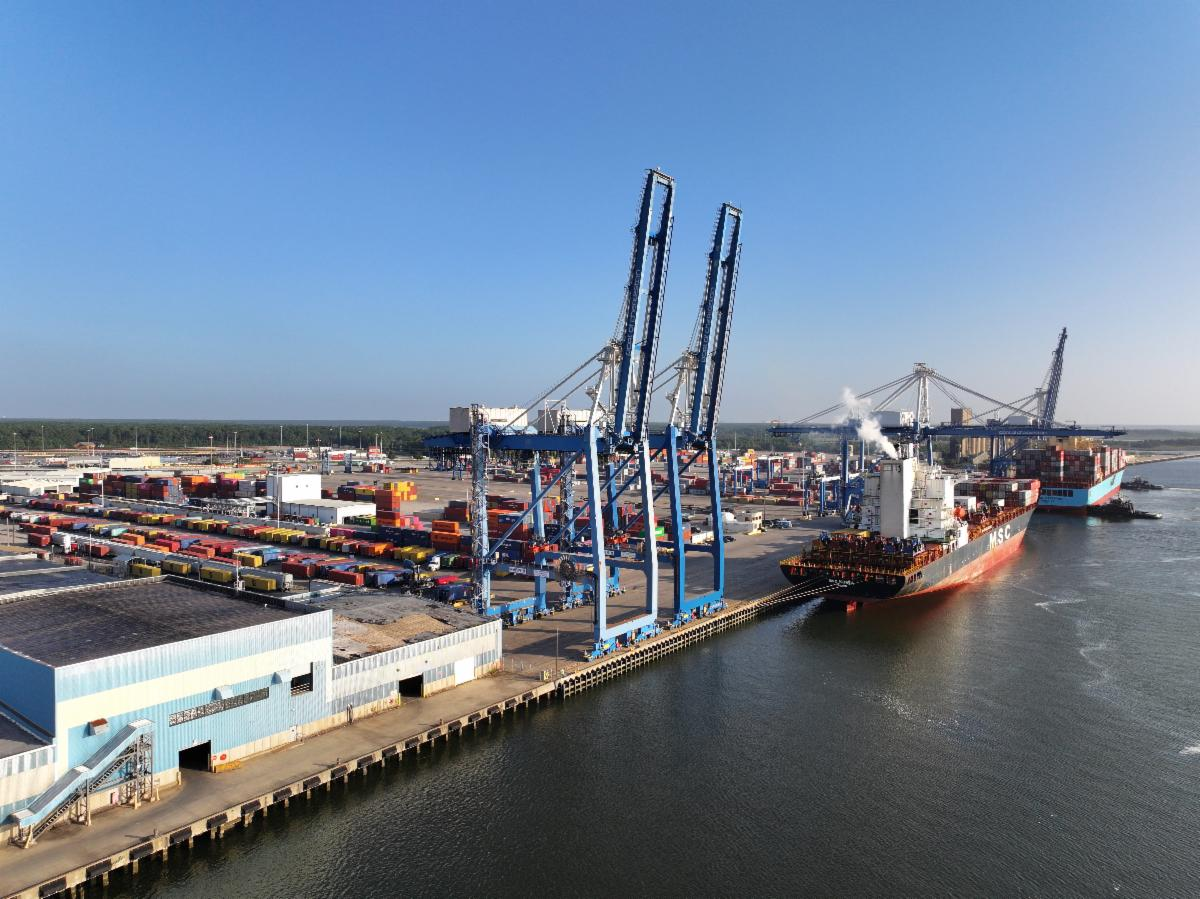
South Carolina Ports Authority is preparing to expand automotive cargo capacity at the Port of Charleston, with planned improvements at North Charleston Terminal to support roll-on/roll-off operations and automotive supply chains.
The port authority intends to enhance rail infrastructure and vessel parking areas at the terminal, with completion expected in 2028. Demolition of the adjacent former paper mill site, acquired by the port in 2024, is scheduled to begin this summer.
The expansion is designed to support South Carolina’s automotive sector. The Port of Charleston already handles vehicles, construction equipment, oversized vehicles, buses, trailers, and automotive parts. Breakbulk and ro-ro operations are currently handled at Columbus Street Terminal, which has capacity to move more than 250,000 vehicles annually.
South Carolina’s automotive supply chain includes major global manufacturers, with BMW, Mercedes-Benz Vans, and Volvo Cars all operating in the state. These manufacturers depend on imported and exported parts, finished vehicle movements, rail connections, and just-in-time supply chains. Port reliability therefore feeds directly into production continuity.
The planned expansion comes as Southeast US ports compete for automotive cargo, inland manufacturing flows, and larger vessel calls. Georgia Ports Authority has also been investing in roll-on/roll-off operations, including berth and storage projects for vehicles and heavy machinery. The competition is not simply about port volume; it is about which gateways can connect automotive manufacturing, rail networks, yard capacity, and vessel handling without creating delay points.
Automotive cargo is especially sensitive to disruption because production is heavily sequenced. Parts shortages, delayed imports, yard congestion, or missed vessel connections can quickly affect plant schedules. Finished vehicles also require specialist handling, storage, inspection, and onward transport. A port serving this sector must manage both inbound components and outbound product with minimal dwell time.
Rail access is central to that model. Moving vehicles and parts efficiently through the port requires more than quay space and parking areas. Inland connectivity must link manufacturers, suppliers, and distribution points across the Southeast and beyond. Enhancing rail infrastructure at North Charleston Terminal should therefore support wider automotive supply chain resilience as well as port-side vehicle handling.
The former paper mill site adds a strategic land component. Industrial waterfront land adjacent to an active terminal is difficult to replicate. Bringing that site into port use gives SC Ports room to stage, park, and process cargo close to existing maritime infrastructure. That proximity can reduce unnecessary drayage, improve vessel-to-yard flows, and give the port more flexibility as automotive and container demand evolves.
The 2028 completion target also lands within a period of structural change for automotive logistics. Electrification, battery components, nearshoring, and shifting trade policy are altering vehicle and parts flows. Vehicle platforms are becoming more complex, and manufacturers are reassessing regional supplier networks. Ports that can handle finished vehicles, components, heavy equipment, and industrial cargo will be better placed to serve that transition.
Charleston’s investment shows how port infrastructure is becoming part of manufacturing competitiveness. Automotive plants do not operate in isolation. They rely on ports, rail lines, yards, roads, customs processes, and logistics providers to keep production moving.
As Southeast manufacturing continues to expand, cargo capacity at the port edge will remain a defining constraint. North Charleston’s ro-ro expansion gives SC Ports more room to serve that growth, while freeing capacity at Columbus Street Terminal for additional waterborne commerce.