IN Brief:
- Barcelona and Shanghai have established a formal sister-port relationship through a strategic cooperation agreement.
- The agreement covers digitalisation, port security, green ports, alternative fuels, intermodality, and sustainable maritime corridors.
- The partnership supports wider work on a Green Shipping and Digital Corridor between the Far East and the Mediterranean.
Port de Barcelona has signed a strategic cooperation agreement with the Shanghai Municipal Transportation Commission and Shanghai International Port Group to strengthen port links between Europe and China.
The agreement formalises a sister-port relationship between Barcelona and Shanghai. It will support cooperation in digitalisation, security of port operations, green port development, alternative fuels, intermodality, and sustainable maritime corridors between the Far East and the Mediterranean.
The agreement was signed by José Alberto Carbonell, president of the Port of Barcelona; Xiao Hui, general director of the Shanghai Municipal Transportation Commission; and Yang ZhiYong, vice president of Shanghai International Port Group. The signing took place during a visit by a Shanghai institutional and business delegation to Barcelona.
The new agreement builds on a preliminary agreement signed in July 2025 and a technical visit by a Shanghai delegation in September 2025. That earlier work focused on advancing a Green Shipping and Digital Corridor between the two ports, including knowledge-sharing around decarbonisation, digital processes, and port-to-port coordination.
The practical value of the agreement is in its breadth. Port cooperation is often framed around vessel calls and trade volumes, but the operating requirements of modern ports are now much wider. Cargo owners and logistics providers need digital documentation, reliable data exchange, efficient customs and security processes, lower-emission fuels, and stronger intermodal links from port gates into inland distribution networks.
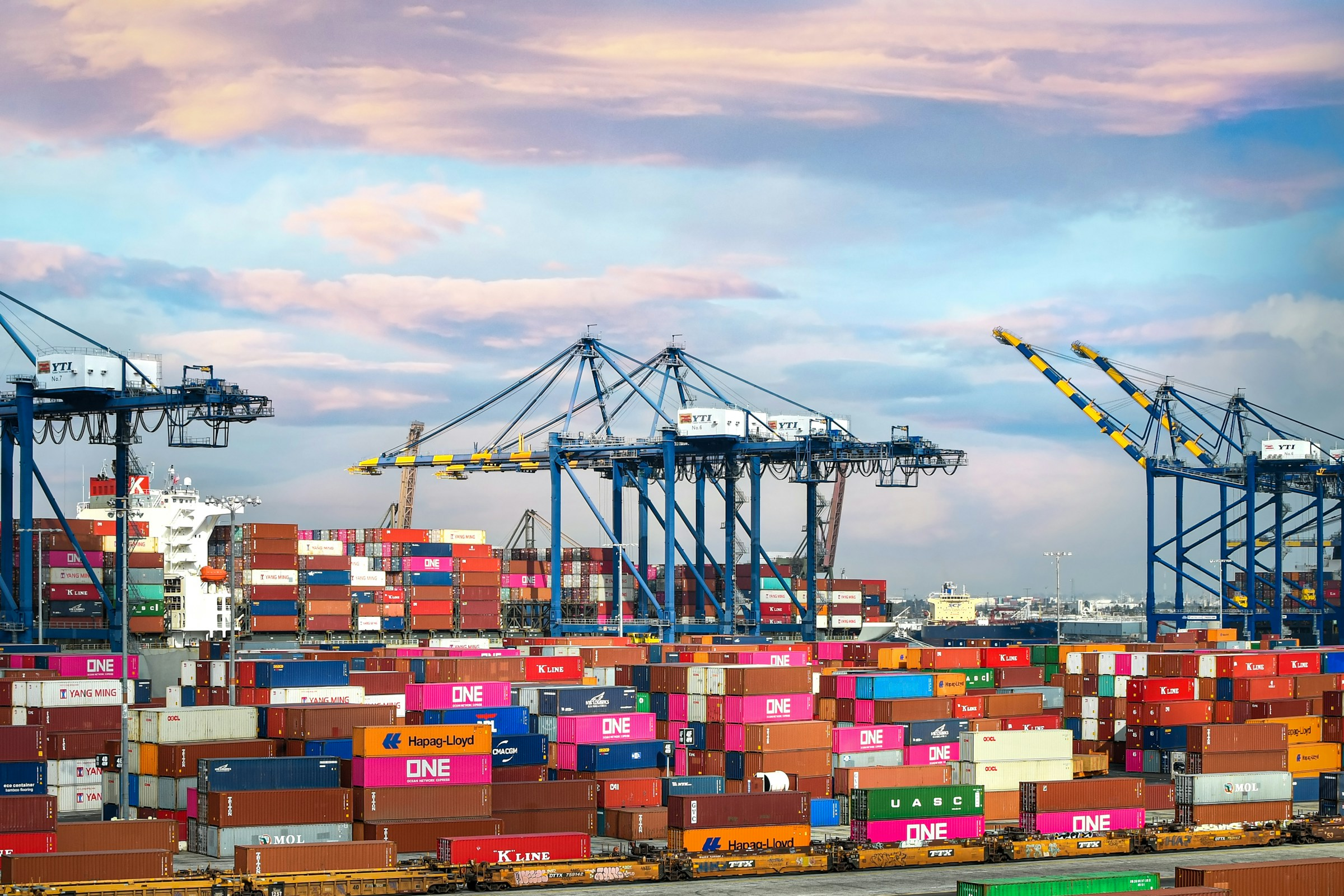
Barcelona’s role in Mediterranean logistics makes the agreement commercially important. The port connects Asian maritime flows with Spain, southern France, and wider European inland markets. Shanghai, as one of the world’s largest container ports, sits at the origin end of many industrial, retail, electronics, automotive, machinery, and consumer goods flows moving into Europe. Better coordination between the two gateways can support more predictable movement across long-distance supply chains.
The sustainability element is also becoming more material. Alternative marine fuels, green corridors, and port energy systems are moving from strategy documents into infrastructure planning. A corridor approach allows ports, carriers, shippers, fuel suppliers, and public authorities to concentrate investment along specific routes rather than waiting for global adoption to happen evenly. That is particularly important for fuels and digital systems that need compatibility across multiple nodes in the chain.
Recent IN Supply coverage of Brussels Airport expands cargo logistics estate showed a similar pattern in air cargo infrastructure, where building performance, specialist logistics capability, and environmental standards are now becoming competitive factors. Port infrastructure is moving in the same direction: the gateway is judged not only by vessel capacity, but by the quality of the systems that move cargo through it.
Digitalisation is likely to be one of the most practical workstreams. Port calls, customs processes, gate moves, rail connections, container availability, and documentation all create points where poor data can slow cargo. If cooperation between Barcelona and Shanghai improves standardisation, visibility, or data exchange along the corridor, the benefit will be felt in fewer manual interventions and better exception management.
Security also sits within the same operating frame. Ports handling high-value and regulated cargo need stronger visibility of cargo status, secure access controls, and reliable information exchange between operators. Digitalisation without security creates new vulnerabilities; security without digitalisation can leave processes slow and fragmented. The agreement’s inclusion of both areas reflects the way modern port competitiveness is now tied to data integrity as much as berth productivity.
Intermodality gives the agreement its inland dimension. Container gateways are only as effective as their road, rail, barge, and logistics-park connections. For Barcelona, stronger corridor development needs to support movement beyond the port itself, into manufacturing regions, retail distribution networks, and cross-border European routes. For Shanghai-linked trade, that means better alignment between ocean schedules and onward distribution capacity.
The agreement does not, on its own, decarbonise Asia-Europe shipping or digitise an entire corridor. It does create a formal structure for two major ports to coordinate practical work across fuel, data, security, and inland movement. In a freight market shaped by cost shocks, fuel uncertainty, and congestion risk, that kind of structured cooperation is becoming part of the infrastructure itself.