IN Brief:
- APSEZ will deploy Kaleris’ N4 terminal operating system and optimisation tools across 15 container terminals.
- The rollout spans nine domestic and international ports, building on an earlier six-port deployment.
- The platform is expected to lift RTG crane productivity by up to 20% and terminal truck productivity by up to 14%.
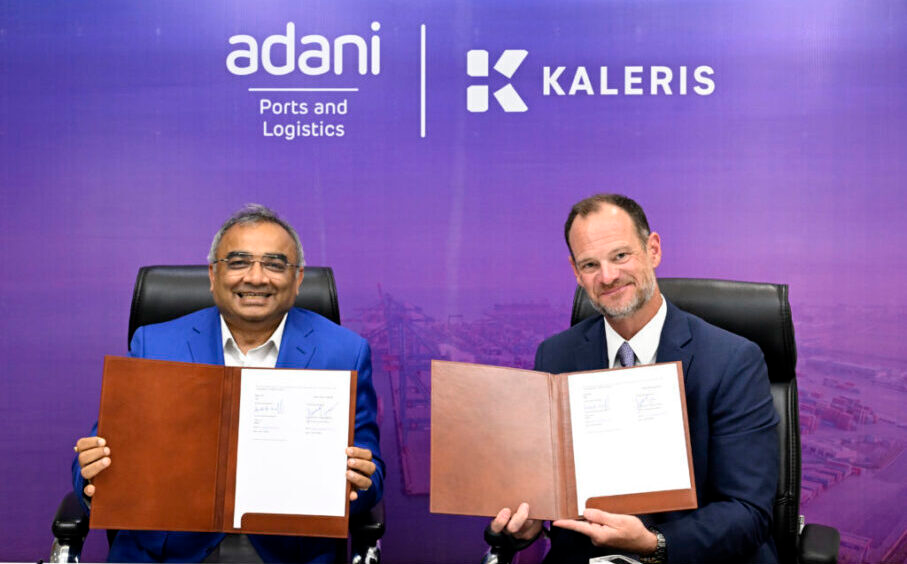
Adani Ports and Special Economic Zone is extending its partnership with Kaleris to deploy AI-enabled terminal operating and optimisation systems across 15 container terminals, creating a common digital operating layer across nine domestic and international ports.
The multi-year rollout will bring Kaleris’ N4 Terminal Operating System and advanced optimisation tools into wider APSEZ container operations, following earlier deployment across six ports. The system will support berth, yard, equipment, and truck planning, with the operator targeting higher asset utilisation and more consistent cargo flow across its port network.
APSEZ expects the optimisation platform to increase rubber-tyred gantry crane productivity by up to 20% and terminal truck productivity by up to 14%. In high-volume container environments, those gains can quickly alter vessel turnaround, yard density, gate performance, and inland transport planning, particularly when peak arrivals or disruption compress operating windows.
The investment forms part of a broader APSEZ 2030 programme covering digital infrastructure, decarbonisation, and cargo handling capacity. The company is working towards a one billion-tonne annual cargo handling target by 2030, increasing the pressure on planning systems, equipment deployment, and operational discipline across its terminal estate.
Ashwani Gupta, whole-time director and chief executive officer of APSEZ, said: “AI-enabled automation will define the next frontier of competitiveness in ports and logistics. While APSEZ has already deployed an end-to-end digital platform from shore to door, which provides seamless track-and-trace and integrated command and control capabilities, the Kaleris integration will enhance productivity, improve turnaround time, and consistently deliver a superior customer experience.”
Port operators are moving away from isolated software upgrades and towards network-level control. A single terminal can improve crane moves or reduce truck waiting, but larger gains emerge when yard planning, vessel schedules, equipment sequencing, and inland movements are managed through a consistent operating model. That is especially valuable for port groups managing different terminal layouts, labour models, customer requirements, and cargo flows.
Terminal productivity has become inseparable from downstream supply chain performance. Container dwell times affect transport scheduling, demurrage exposure, warehouse labour planning, production replenishment, and customer delivery promises. A more predictable port operation gives shippers and logistics providers better control over the stages that follow vessel discharge.
Geopolitical disruption has already shown how quickly port and route reliability can move into wider network planning. As DHL has had to adjust cargo flows around blocked sea routes and closed airspace, operators with clearer visibility and stronger execution systems are better placed to manage altered schedules, compressed calls, and equipment imbalance.
The Kaleris rollout also reflects a more mature phase of automation in maritime logistics. AI is being applied to real operating constraints — equipment deployment, yard sequencing, gate flow, and terminal truck utilisation — rather than only to forecasting dashboards. Its value depends on how successfully planners, supervisors, equipment operators, shipping lines, and hinterland partners can work from the same operational picture.
Kirk Knauff, president and chief executive officer of Kaleris, said: “APSEZ is demonstrating the real impact of an AI-enabled port network at scale. Expanding to all 15 terminals reflects the results already achieved and the trust behind this partnership.”
As container terminals compete on reliability, emissions performance, inland connectivity, and customer visibility, digital control is becoming part of core port infrastructure. APSEZ’s expanded rollout places terminal software alongside cranes, yards, gates, and berths as a central determinant of capacity.