IN Brief:
- ICTSI handled 8.116 million TEU in the first half of 2026, 16% more than a year earlier.
- New operations in Durban and Batam supported revenue growth, while underlying volume increased by only 1% after portfolio changes.
- The terminal group plans US$740 million of 2026 capital expenditure across expansions, equipment, upgrades, and maintenance.
International Container Terminal Services, Inc. handled 8.116 million twenty-foot equivalent units during the first half of 2026, with newly added terminals in South Africa and Indonesia driving much of the reported 16% volume increase.
Revenue from port operations rose 27% year on year to US$1.92 billion, while earnings before interest, tax, depreciation, and amortisation increased 24% to US$1.23 billion. Net income attributable to equity holders reached US$589.98 million, up 22%, and recurring net income rose 25% to US$604.69 million after excluding a non-recurring charge linked to the sale of Yantai International Container Terminal.
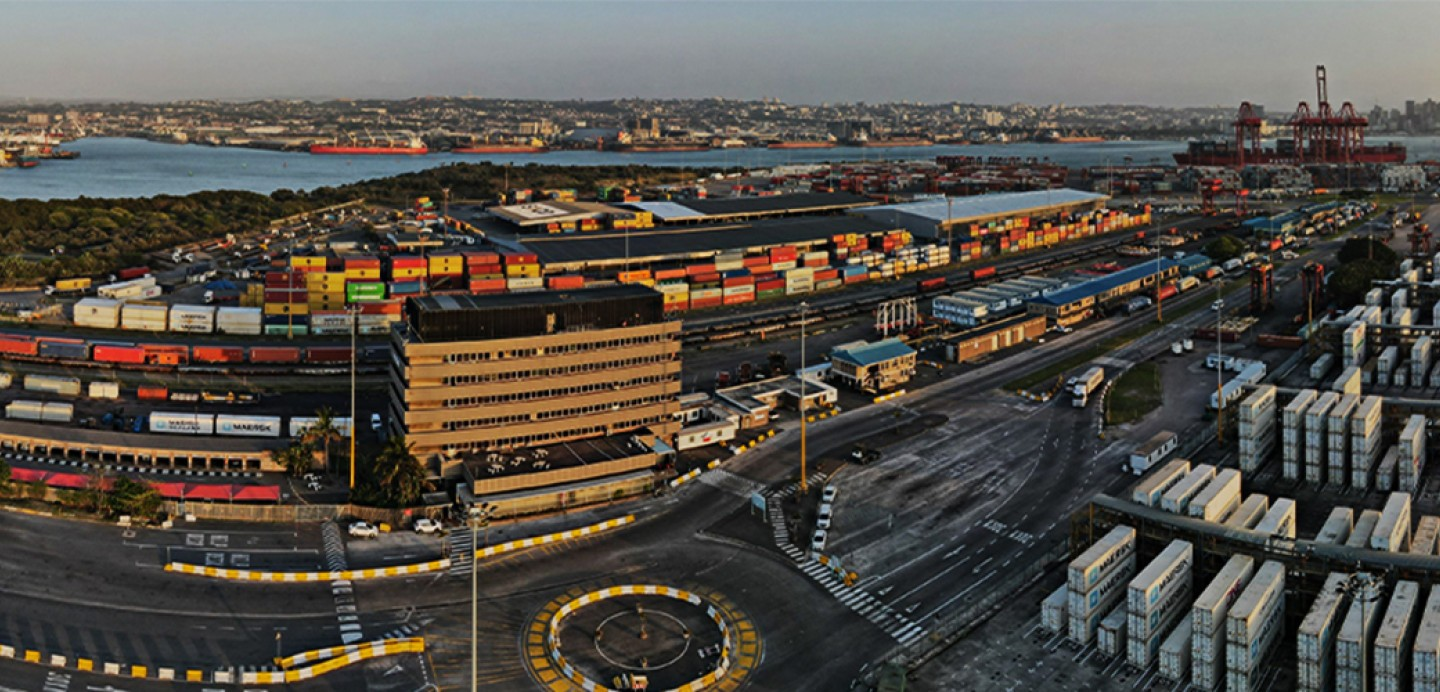
The headline growth reflects a substantially enlarged operating portfolio. Durban Gateway Terminal took over operations at Durban Container Terminal Pier 2 in January 2026, while Batu Ampar Container Terminal in Batam began contributing after taking over operations in September 2025.
Those additions helped raise consolidated throughput from 6.989 million TEU in the first half of 2025 to 8.116 million TEU this year. Excluding the new Durban and Batam operations and the discontinued Yantai business, however, ICTSI’s consolidated volume would have increased by 1%.
Portfolio growth changes the operating picture
The difference between reported and underlying growth is central to the results. Acquisitions and new concessions add immediate scale, but they also introduce different cost structures, tariff regimes, customer mixes, labour arrangements, and investment requirements. Integration performance therefore matters as much as the initial volume contribution.
Trade activity improved in Asia and the Americas, while volumes declined in Europe, the Middle East, and Africa as conflict in the Middle East affected activity and Yantai was removed from the consolidated portfolio. The geographical spread offered some protection, but it did not eliminate weaker markets or disruption at individual terminals.
Revenue growth was supported by a favourable container mix, higher ancillary-services income at certain terminals, tariff adjustments, and foreign-exchange movements. Appreciation of the Mexican peso, Australian dollar, and Brazilian real strengthened translated revenue, while depreciation of the Philippine peso had an adverse effect on revenue reported from Philippine operations.
Enrique K. Razon Jr., chairman and president of ICTSI, said: “ICTSI delivered a strong first half, with double-digit growth in volumes, revenues and earnings supported by contributions from recently added terminals and stable performance across our existing portfolio. Despite a more challenging operating backdrop in some markets during the period, our diversified footprint continued to provide resilience and support strong financial and operational performance.”
The financial results also show the cost of that broader footprint. Consolidated cash operating expenses increased 39% to US$529.34 million, reflecting the addition of Durban, higher activity and ancillary-service costs, fuel-price increases, salary adjustments, and foreign-exchange effects.
EBITDA rose strongly, but the margin declined from 66% to 64%, primarily because of newly acquired operations. Excluding new and discontinued businesses, EBITDA would have increased 18% and the margin would have edged up to 66%, suggesting that established terminals remained profitable even as integration diluted the consolidated percentage.
Capital spending follows the network
ICTSI spent US$320.05 million on capital projects during the first half, excluding capitalised borrowing costs, against an estimated full-year programme of US$740 million. The planned expenditure covers terminal expansions, equipment purchases, upgrades, and maintenance across a network operating on six continents.
Major projects include the phase 3B expansion at Contecon Manzanillo in Mexico and continuing work at Manila International Container Terminal, Manila North Harbour, Mindanao Container Terminal, and South Luzon Container Terminal in the Philippines. Spending is also planned at ICTSI Rio in Brazil and Matadi Gateway Terminal in the Democratic Republic of Congo.
Further expansion projects are scheduled in Honduras, Australia, Ecuador, and Mexico. That breadth creates procurement opportunities for cranes, yard equipment, power systems, civil works, digital platforms, and maintenance services, but it also increases the need for consistent project controls and equipment standards across markets.
Established terminals delivered resilient margins while the enlarged network absorbed new operations and capital commitments. Reported throughput rose by more than one million TEU, yet the like-for-like increase was modest, making successful integration the more useful measure of progress over the next reporting periods.
ICTSI’s US$740 million programme should add capacity and service capability, but the return will depend on how quickly new and expanded terminals reach stable operating performance. Container volume can be acquired through concessions; dependable productivity, cost control, and customer retention still have to be built at each location.