IN Brief:
- Four converted A321 freighters remain grounded after Lufthansa CityLine discontinued flight operations in April.
- Lufthansa Cargo is discussing future operations with potential external operators and has removed the aircraft’s branding.
- The review tests dedicated narrowbody capacity against belly space, road-feeder services, and contracted regional lift.
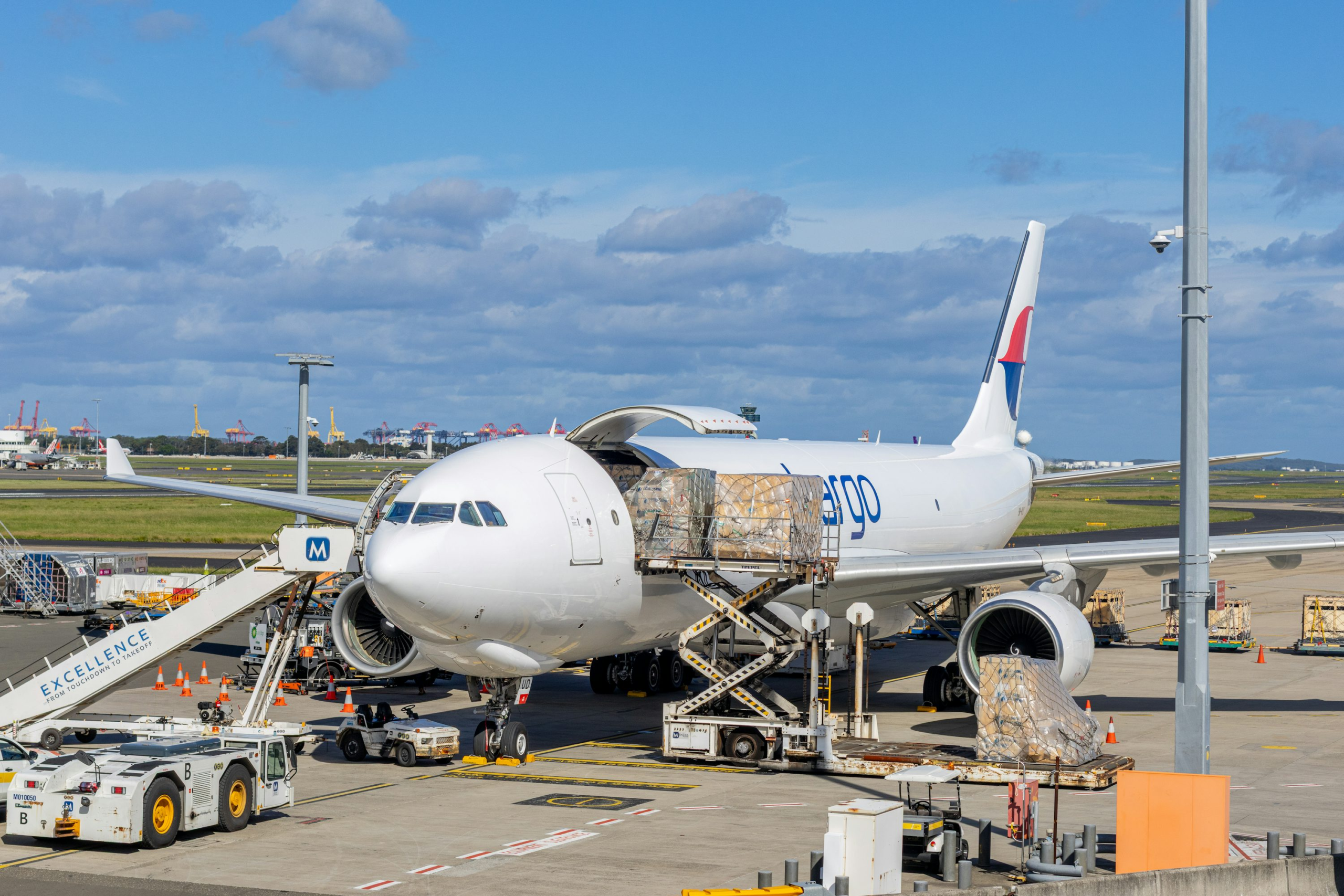
Lufthansa Cargo is reviewing how its four grounded Airbus A321 converted freighters could return to operation after the closure of Lufthansa CityLine removed the crews and operating structure behind the regional fleet.
The aircraft have remained parked at Frankfurt since CityLine flights were discontinued in April. Lufthansa Cargo says it is discussing options with potential operators outside the Lufthansa Group, but has not confirmed when the suspension will end or whether the aircraft will resume flying on its own network.
The A321s have also been moved into a neutral exterior appearance while the evaluation continues. Removing Lufthansa Cargo branding has intensified speculation about a fleet exit, although the company’s stated position remains that several operating scenarios are under consideration.
That distinction matters. A search for an external operator is confirmed; the return of the aircraft to their lessor, a sublease to another carrier, or permanent withdrawal from Lufthansa Cargo service has not been announced.
CityLine closure broke the operating model
Lufthansa Cargo received the four converted freighters during 2022 and 2023 and used CityLine to provide crews and flight support. The aircraft served short- and medium-haul routes in Europe, the Middle East, and North Africa, with e-commerce and time-critical industrial cargo among the target markets.
The arrangement depended on a passenger-airline subsidiary supplying the operating certificate, crews, and day-to-day aviation capability. Lufthansa Group permanently removed CityLine’s 27 operating aircraft from its flight programme on 18 April as part of a wider restructuring, leaving the cargo division to find another structure for the A321s.
Changing operator is more complicated than assigning another supplier to a transport lane. The replacement must have the necessary approvals, trained crews, maintenance arrangements, insurance, operating procedures, and commercial terms, while the aircraft themselves remain compliant and ready to fly.
Lufthansa Cargo has said it wants a solution that improves stability and flexibility rather than merely restoring flights for a short period. An external operator could preserve dedicated narrowbody capacity without rebuilding that capability inside the Group, but contract economics and operational control would determine whether the model is sustainable.
The grounded aircraft have not caused a significant break in customer service. Lufthansa Cargo continues to use 12 Boeing 777 freighters, belly capacity across Lufthansa Group passenger airlines, and European road-feeder services, allowing much of the regional demand to move through alternative channels.
That network flexibility changes the case for a dedicated A321 fleet. Narrowbody freighters can provide direct schedules, main-deck capacity, and faster regional movements for consignments that do not fit passenger services. They also carry fixed lease, crew, maintenance, and positioning costs whether demand fills the aircraft or not.
The A321s had supported automotive movements as well as e-commerce. Earlier this year, the fleet operated urgent component charters within Europe and a series of flights from Casablanca for Mercedes-Benz, demonstrating the aircraft’s value when production cargo required speed and direct routing.
Narrowbody economics face scrutiny
The wider converted-freighter market has become less forgiving since the pandemic. High airfreight demand encouraged owners and conversion providers to add narrowbody aircraft, but softer demand and the recovery of passenger belly capacity have left some operators with more dedicated lift than their networks can use profitably.
Market data supplied by Aerodynamic Advisory indicates that 38% of 82 converted A321 freighters are inactive, compared with 14.8% of 283 Boeing 737-800 freighters. The figures do not prove that every A321 operation is uneconomic, but they show a much higher level of parked capacity around the type.
Aircraft weight, fuel consumption, maintenance, lease cost, and utilisation all influence the comparison. The A321 offers useful volume for parcels and other lower-density cargo, yet that advantage is harder to monetise when routes do not generate enough regular demand or when freight is dense enough to reach weight limits before the available space is filled.
Lufthansa Cargo’s own network has also broadened. Its 2025 capacity growth included additional belly space through ITA Airways, giving the carrier more options to route regional and connecting cargo without relying solely on four dedicated narrowbody aircraft.
For shippers, a partner-operated A321 service could still offer predictable regional lift and main-deck capability. The commercial question is whether enough customers will commit recurring volumes at rates that cover the aircraft’s higher fixed operating burden.
Removing the livery reduces the visible connection with Lufthansa Cargo, but it does not settle the contractual or operating outcome. The aircraft are leased from BBAM-managed interests, and any return, sublease, or revised operation would require agreement between the relevant parties.
The fleet review is therefore less a referendum on regional air cargo than a test of ownership and utilisation. Lufthansa Cargo can continue serving many customers through widebody freighters, passenger aircraft, trucks, and contracted capacity; the four A321s must prove that a permanent dedicated operation adds enough service value to justify its cost.