IN Brief:
- Batangas Integrated Port has been named the first READY port for disaster response logistics.
- The programme was developed with the World Food Programme and the wider Logistics Cluster.
- The resulting Port Readiness Action Plan is intended to support wider replication in the Philippines and globally.
DP World and Asian Terminals’ Batangas Integrated Port has been designated the world’s first READY port, following a disaster response and humanitarian logistics programme involving the World Food Programme Philippines.
READY stands for Resilience, Emergency Action, and Disaster-ready. The designation positions Batangas as a pilot site for strengthening port readiness during emergencies, with the work focused on operational protocols, emergency response capability, stakeholder coordination, and continuity of logistics activity when disruption affects transport networks.
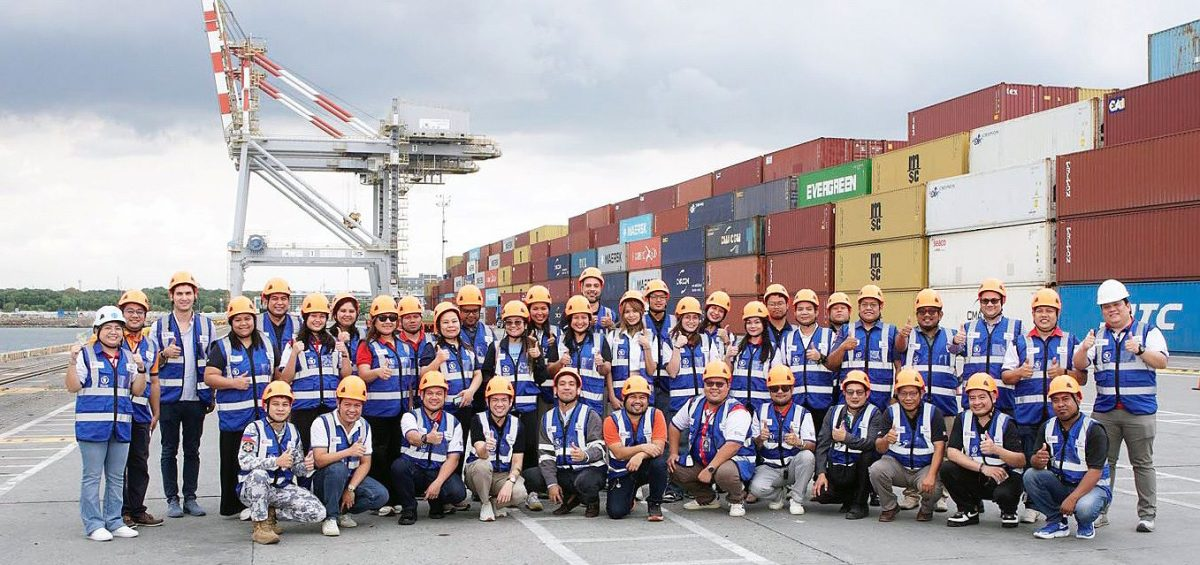
The programme followed a three-day, multi-stakeholder workshop at Batangas Port, bringing together government agencies, humanitarian organisations, port operators, logistics providers, and private-sector partners. Participants reviewed response procedures and worked through scenario-based exercises, with the outcomes consolidated into a Port Readiness Action Plan for further capacity-building at other ports in the Philippines and internationally.
The Philippines’ exposure to typhoons, flooding, earthquakes, and other climate-linked disruption gives the programme practical force. In island and coastal economies, ports are not simply trade gateways; they can become lifelines for relief cargo, food, fuel, medical supplies, construction materials, and emergency equipment when inland movement is damaged or delayed.
Batangas Integrated Port handles international and domestic cargo, rolling cargo, and passenger traffic, with links to nearby islands and major destinations across the Visayas and Mindanao. Those connections give the site a dual role in commercial freight and emergency response, particularly when regional disruption pushes cargo through whichever gateway remains operational.
Disaster logistics places a different set of demands on port systems from normal commercial freight. Cargo may arrive without the usual planning horizon, documentation can be incomplete, priorities may shift quickly, and storage areas can be needed for relief goods rather than routine commercial consignments. Personnel, fuel, handling equipment, security, communications, customs processes, and landside access still have to function under abnormal conditions.
The READY programme gives those pressures a formal operating framework. Scenario planning, role clarity, information sharing, and emergency protocols can strengthen everyday disruption management as well as humanitarian response, since ports facing weather shocks, cyber incidents, labour shortages, vessel schedule disruption, or sudden cargo surges need the same core capabilities: coordination, visibility, decision authority, and the ability to keep critical freight moving.
Port resilience has become a more visible part of infrastructure competitiveness as climate risk, geopolitical disruption, and supply chain concentration expose weak points in freight networks. DP World’s wider work at Mundra, where expanding port capacity is tied to Indian export growth, underlines the economic role that gateway assets play beyond the quay. Batangas extends that logic into emergency readiness, treating continuity and response capability as part of port performance.
The involvement of the World Food Programme and the Logistics Cluster gives the initiative an international framework, but its performance will be judged locally. A readiness plan only becomes useful when stakeholders continue to train together, emergency contacts remain current, equipment is available, and procedures are tested before a real disruption exposes gaps.
There is also a commercial dimension to the designation. Cargo owners, manufacturers, food producers, healthcare suppliers, and industrial operators are placing more weight on resilient infrastructure, particularly in climate-exposed markets where a single port failure can delay production inputs or essential supplies. Ports able to demonstrate preparedness may become more attractive to companies that need continuity as well as capacity.
That shift changes how port development is measured. Throughput, berth capacity, storage space, and landside access remain central, but resilience, emergency coordination, energy continuity, digital visibility, and stakeholder readiness are moving into the same conversation. A port that can move cargo efficiently in normal conditions but struggles under stress carries hidden risk across every supply chain that depends on it.
Batangas now becomes the first test case for a READY framework that could spread across other disaster-exposed gateways. If the model is replicated successfully, disaster preparedness may become a more formal part of port development strategy, especially in island and coastal markets where trade, humanitarian response, and climate exposure meet at the same infrastructure nodes.