IN Brief:
- Barges passing the Kaub bottleneck are operating with sharply reduced payloads.
- Rotterdam–Karlsruhe freight rates have risen as cargo is divided among additional vessels.
- Road, rail, storage, and production planning face greater pressure while river capacity remains restricted.
Falling Rhine water levels are reducing barge payloads and raising freight costs, tightening the movement of chemicals, fuel, grain, minerals, and industrial materials through Germany and neighbouring European markets.
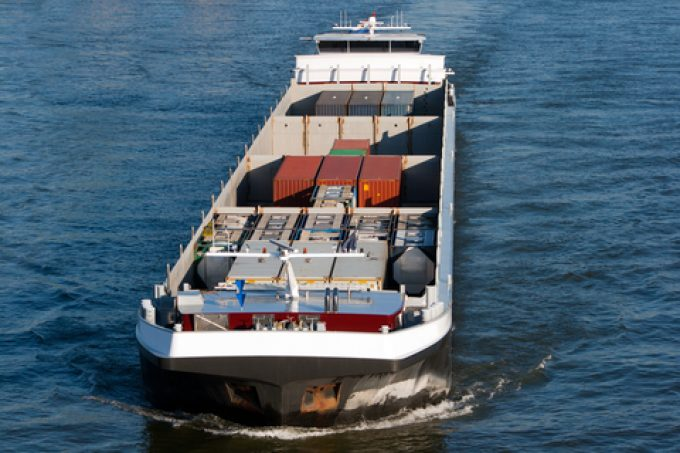
Conditions are particularly restricted around Kaub, the shallow middle-Rhine section used as a commercial reference point for navigation. Some vessels are operating with around one-fifth of their maximum capacity as crews preserve sufficient clearance beneath the hull.
Tanker barges able to carry approximately 1,200 tonnes near Duisburg have been limited to roughly 460 tonnes through Kaub. Cargo that previously moved on one vessel must consequently be divided among several part-loaded barges, while the total number of vessels available to the market remains broadly unchanged.
Rates for Rotterdam-to-Karlsruhe movements have climbed into the €60–€70 per tonne range, compared with approximately €45 in late June. Low-water surcharges compensate operators for lost payload and additional sailings, but a higher price does not guarantee that sufficient vessels will be available.
The Central Commission for the Navigation of the Rhine oversees a corridor that links North Sea gateways with major industrial centres across Germany, France, Switzerland, and the Benelux region. Its efficiency rests on the volume a single barge can move relative to road or rail, and that advantage contracts quickly as draught restrictions deepen.
Chemical plants are particularly exposed because they use the river for raw materials, intermediates, fuel, and finished products. Production schedules can be affected before inventories are exhausted, as planners ration remaining stocks against uncertain replacement volumes and avoid committing output that cannot be transported away.
Steel, energy, agricultural, and mineral supply chains face similar constraints. Individual barge consignments are too large to transfer easily onto other modes, and replacing several thousand tonnes with trucks requires substantial driver, vehicle, loading, and receiving capacity.
Rail can absorb part of the displaced freight, although wagon availability, terminal capacity, locomotives, and train paths impose their own limits. When river disruption coincides with maintenance or closures on parallel rail routes, manufacturers are left competing for a narrow pool of alternative capacity.
Rain briefly improved conditions earlier in the year, but the temporary recovery in navigable Rhine levels did not remove the structural exposure created by repeated dry periods. Water can rise quickly after rainfall and fall again just as sharply when high temperatures and limited precipitation return.
Manufacturers have responded to recurrent restrictions by carrying more safety stock, contracting barge capacity earlier, diversifying transport modes, and improving hydrological forecasting. Each response introduces cost: larger inventories consume storage and working capital, while alternative modes often involve more handling and a higher price per tonne.
Shallow-draught vessel designs can preserve more payload during difficult conditions, although replacing or modifying a fleet is capital intensive and slow. River engineering may improve particular bottlenecks, but extensive work along an international waterway encounters environmental, political, and regulatory constraints.
Forecasting offers earlier decisions rather than additional physical capacity. More accurate gauge predictions allow cargo owners to advance a shipment, reduce a load, secure another mode, or alter production before conditions deteriorate, but the same vessels and rail paths remain available once every operator acts on the warning.
Inventory policies are therefore becoming more closely tied to transport resilience. A plant supplied by regular high-volume barge movements may need additional storage or contractual alternatives even when average river capacity appears ample, because the operational risk is concentrated in shorter periods when the water falls below efficient levels.
Low-water restrictions also complicate emissions planning. Shifting cargo from a well-loaded barge onto multiple trucks increases fuel use, while part-loaded vessels consume energy to move substantially less product. A company can record higher logistics emissions despite making no change to its underlying production or customer demand.
Rain across the wider catchment will determine how quickly conditions improve, and the effect will not be immediate at every gauge. Freight rates may remain elevated after water levels recover as operators clear accumulated cargo and restore disrupted sailing schedules.
The Rhine remains one of Europe’s most productive freight corridors, but manufacturers can no longer treat its usable capacity as constant through the summer. Production, inventory, and transport plans must increasingly accommodate a river whose commercial depth can change within days.