IN Brief:
- Rhine water levels in Germany have risen after rain, improving cargo vessel loading conditions.
- Vessels are generally sailing around 70% to 90% full, although full loading remains limited at Kaub.
- The Rhine remains a critical route for grains, minerals, ores, chemicals, coal, and oil products.
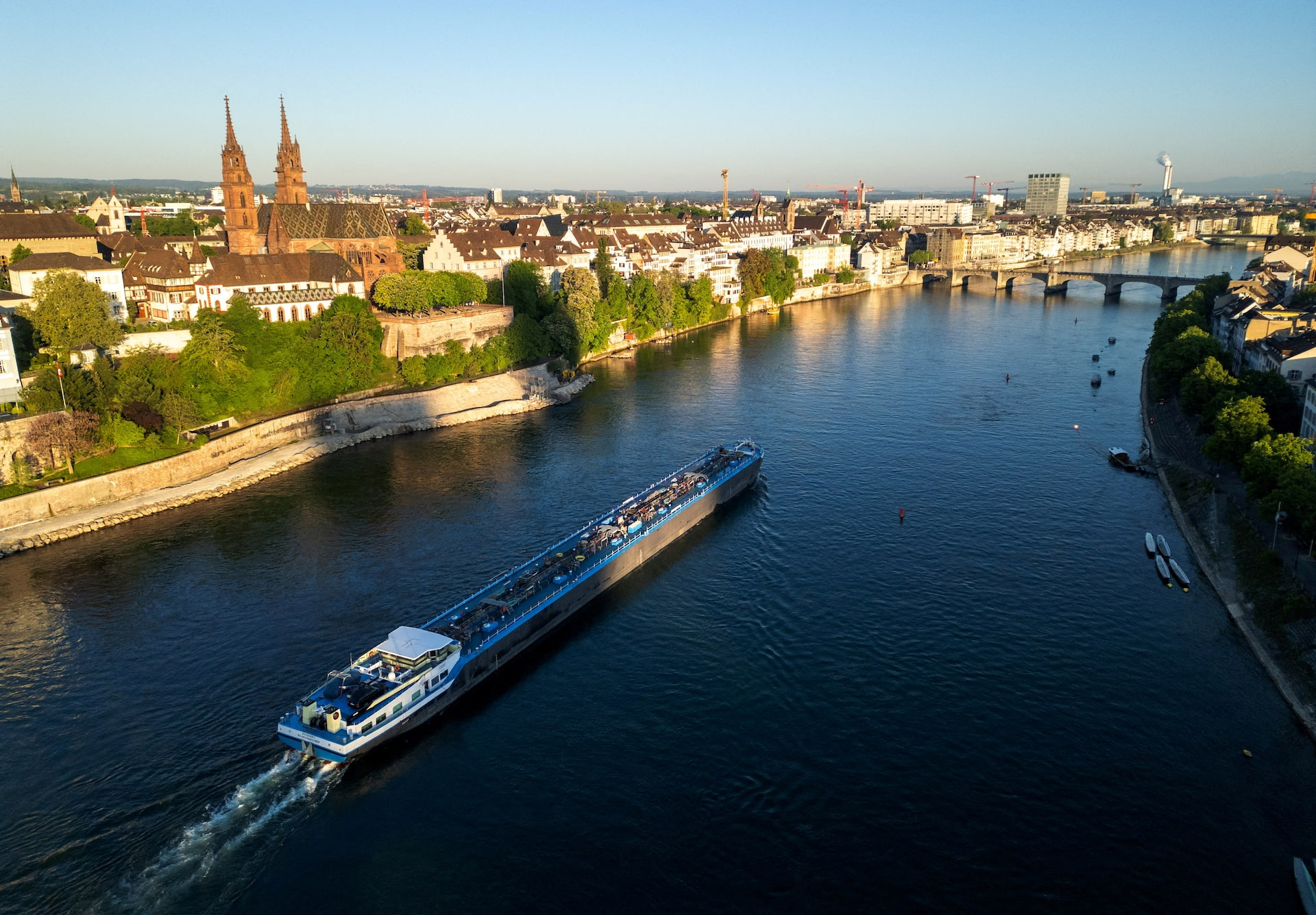
Rain has lifted water levels on the Rhine in Germany, allowing cargo vessels to carry more freight after shallow-water restrictions reduced loading capacity and increased costs for shippers.
Vessels are now generally sailing around 70% to 90% full, compared with around half full earlier last week. Conditions are close to normal in some northern river sections, including around Duisburg and Cologne, although restrictions remain at Kaub, where vessels are still moving at about 70% of capacity.
Water levels at Kaub may improve further as recent rainfall continues to feed into the river system. Until full loading returns across the route, cargo owners remain exposed to higher transport costs, tighter barge availability, and scheduling uncertainty.
The Rhine is one of Europe’s most important inland freight corridors. It carries grains, minerals, ores, chemicals, coal, heating oil, and other oil products through a route that links inland production and consumption centres with ports and wider European supply chains. When water levels fall, vessels cannot sail fully loaded, forcing operators to spread cargo across more sailings or apply low-water surcharges.
Reduced barge capacity also lands in a freight system already managing other inland constraints. IN Supply recently covered Maersk’s warning over temporary Rotterdam rail disruption, with merchant haulage rail services from APM Terminals Rotterdam unavailable for around six months from July 2026. Rail disruption and low river levels are separate problems, but together they show how European inland logistics can narrow quickly even when ocean services continue operating.
German industry is particularly exposed to Rhine variability because the river is deeply embedded in bulk and semi-bulk movement. Chemical producers, steel users, energy suppliers, agricultural traders, fuel distributors, and industrial manufacturers all rely on barge capacity for cost-efficient movement of high-volume cargo. Lower water levels do more than raise freight rates; they affect inventory timing, production planning, vessel scheduling, and the balance between river, road, and rail.
The 2022 drought remains the strongest recent warning. That period disrupted movement on the river and contributed to supply bottlenecks across Germany, with industrial users forced to adapt production and logistics plans around reduced transport capacity. Current conditions are far less severe, but the same underlying exposure remains.
Climate volatility is making that exposure harder to treat as an occasional operational nuisance. Industrial supply chains have already had to build resilience around port congestion, geopolitical disruption, energy price swings, driver shortages, rail disputes, and container imbalances. Water-level risk adds another constraint to the same planning environment, especially where inland waterways are built into both cost models and emissions strategies.
Alternative modes cannot always absorb the displaced volume. Road transport offers flexibility for urgent loads but carries higher cost, greater emissions, and driver availability limits. Rail can provide capacity where terminals, wagons, and paths are available, yet infrastructure works and network congestion often limit short-notice switching. Barge remains efficient and comparatively low-carbon when water levels allow vessels to load properly, which is why interruptions on the Rhine are felt so widely.
The improvement in water levels will help shippers restore some flow, particularly if Kaub returns to a level that allows full loading. Longer-term planning is likely to place more emphasis on multimodal contracts, alternative terminal access, safety stock, forecasting tools, and earlier route decisions when water levels begin to fall.
The Rhine is moving cargo, but the latest restrictions underline how weather, infrastructure, and freight capacity now sit together inside European supply chain risk. For industrial shippers, the efficiency of inland waterway transport remains compelling, but dependence on any single corridor is becoming harder to defend without a tested fallback plan.