IN Brief:
- A fast-growing European retailer has ordered a large automated Ocado CFC.
- The centre will use 600 Series robots and automated picking.
- Existing online volumes should fill over half its capacity immediately.
Ocado Group has agreed to build a large automated customer fulfilment centre for an unnamed, fast-growing European national retailer, with the operation scheduled to enter service during the 2028 financial year.
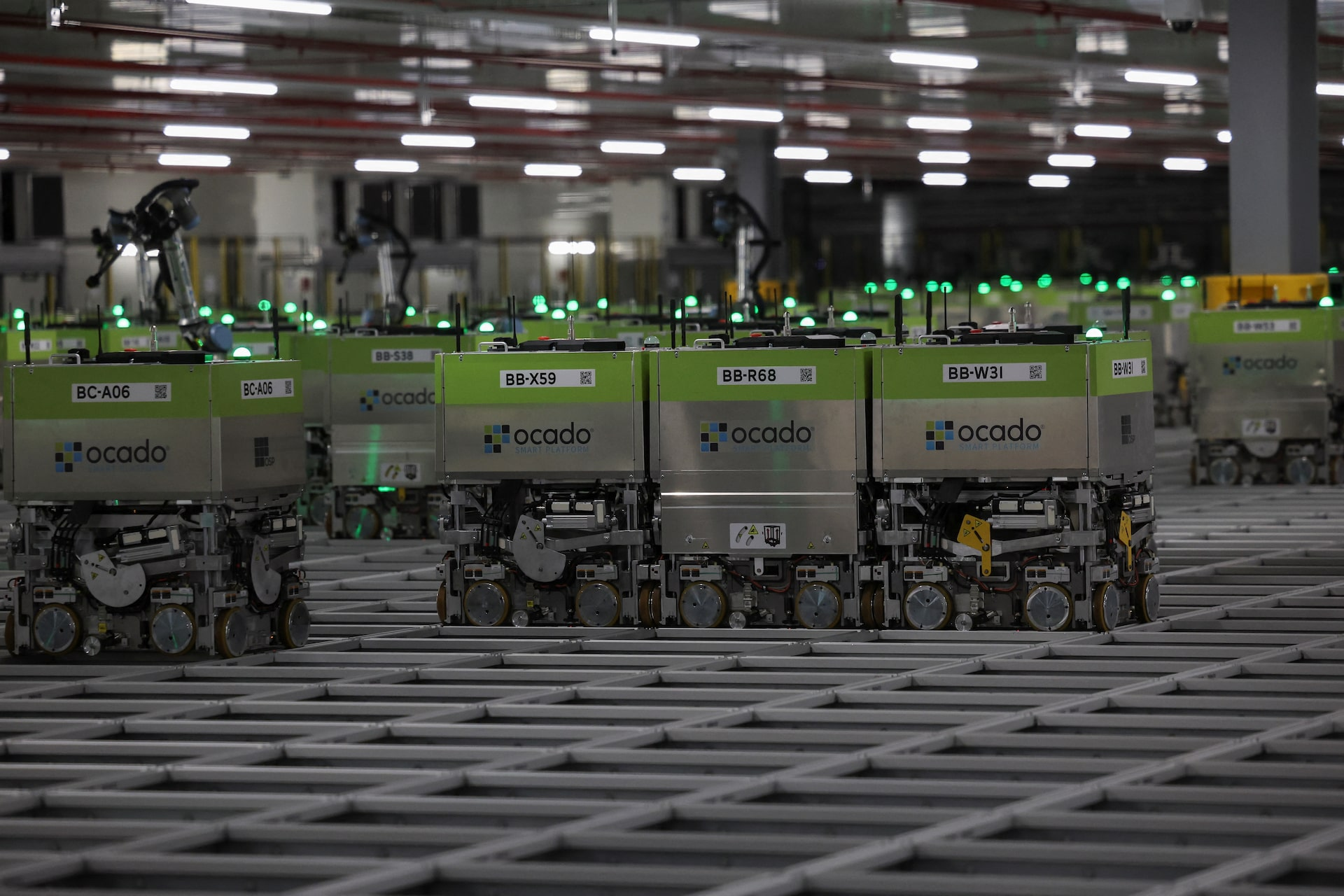
The facility will use Ocado’s Re:Imagined technology suite, including its lightweight 600 Series robot, On-Grid Robotic Pick system, and automated freezer capability. Neither the retailer’s identity nor the commercial terms of the agreement have been disclosed.
Existing online order volumes will transfer into the new centre, allowing it to begin operations at slightly more than half of its designed capacity. The established demand base should support a more controlled ramp-up while retaining room for ecommerce growth without another immediate construction project.
Ocado developed the 600 Series robot as a lighter and less complex successor to earlier grid machines. A lower component count is intended to reduce manufacturing and maintenance costs, while the reduced weight can cut the amount of structural material required in a large storage grid.
On-Grid Robotic Pick places automated item handling directly above the grid, reducing the proportion of suitable products that must travel to conventional picking stations. The automated freezer system extends similar principles into an area where low temperatures constrain manual productivity, shift duration, maintenance access, and equipment choice.
The deal follows a difficult period for Ocado’s technology operation, after North American partners Kroger and Sobeys closed or cancelled several large fulfilment centres when online volumes did not support earlier network assumptions. Those decisions placed renewed scrutiny on the fixed costs and demand density required by highly centralised grocery automation.
Large automated centres can provide dense storage, high throughput, consistent picking, and extensive product range, but they need enough concentrated volume to absorb property, engineering, software, maintenance, and depreciation costs. Smaller systems installed closer to stores or local demand require less initial scale, although they operate within more constrained buildings and may sacrifice some efficiency.
Ocado has therefore widened its deployment model rather than relying solely on large greenfield centres. Smaller US automation agreements are placing technology closer to existing retail estates, while the developing Asda partnership combines software, fulfilment technology, and store-based capacity.
Mixed networks are becoming more common across grocery ecommerce, with central automation handling dense, predictable volume while stores or regional facilities support rapid delivery, collection, and thinner catchments. The balance changes by market, because population density, labour cost, property availability, product range, and customer delivery expectations differ substantially.
Transferring existing volume into the new European centre reduces one of the principal risks associated with greenfield automation. Facilities become expensive quickly when demand has to be created after commissioning, because engineering support, software, labour, energy, and property costs begin before utilisation reaches an efficient level.
Migration nevertheless requires careful control. Product master data, inventory records, supplier packaging, storage dimensions, order-routing rules, customer substitutions, and delivery promises must transfer without destabilising the existing operation. Parallel inventory and phased order migration may be required while the new system reaches dependable throughput.
Frozen automation will receive particular scrutiny, because freezing environments make manual intervention slower and more difficult. Automated storage and picking can reduce employee exposure and improve consistency, yet reliability becomes more critical when maintenance access is constrained and a system interruption threatens temperature-controlled stock.
Grocery product variation adds further complexity. Packaging dimensions change, promotional lines arrive at short notice, fragile goods require different handling, and seasonal assortments alter the storage mix. Automation must accommodate those changes without allowing exceptional products to overwhelm manual workstations.
The 2028 operating date provides a substantial period for design, construction, installation, integration, testing, and employee training. It also commits both companies to network assumptions several years before launch, during which energy prices, labour availability, customer ordering patterns, and retail margins may shift.
Flexibility will consequently carry as much weight as maximum throughput. The centre must handle present volumes efficiently while allowing the retailer to modify its range, order profile, and service proposition throughout the building’s operating life.
The agreement gives Ocado another large-format reference project while its wider strategy expands across several fulfilment models. Large robotic centres remain commercially credible where substantial demand arrives with the machinery, rather than being expected to materialise after the fixed costs are already in place.