IN Brief:
- Asda and Ocado will roll out Ocado Smart Platform across Asda ecommerce operations from 2027.
- The partnership covers stores, dark stores, webshop, in-store fulfilment, last-mile planning, and aggregator orders.
- The deal strengthens the role of fulfilment software in UK grocery competition.
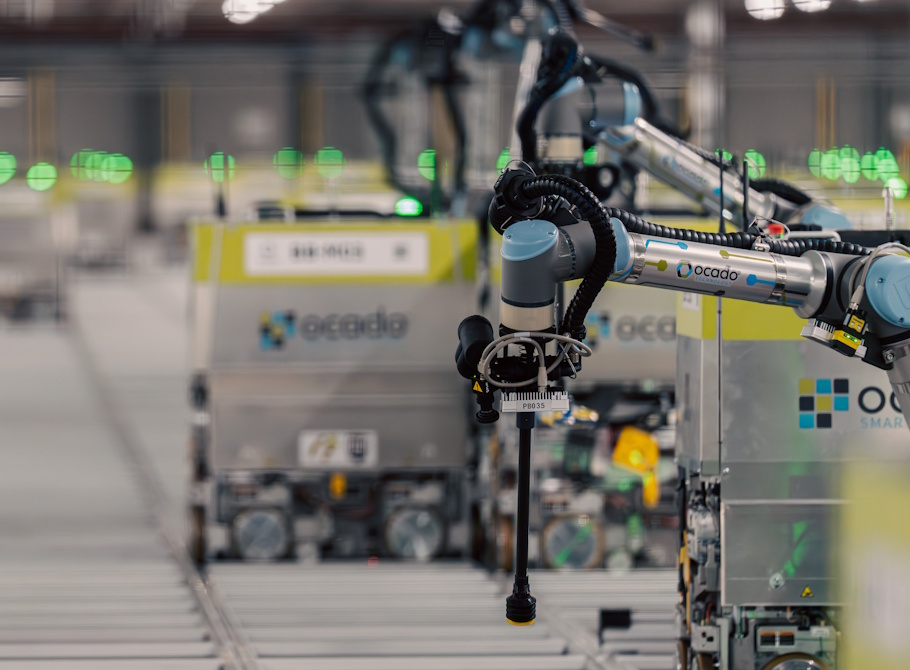
Asda and Ocado Group have agreed a partnership that will see Ocado’s Smart Platform used to upgrade Asda’s online grocery operations across the UK from 2027.
The partnership will replace and modernise Asda’s existing ecommerce infrastructure, with Ocado solutions rolled out across stores and dark stores. The deployment will cover Asda’s webshop, in-store fulfilment, last-mile planning, route efficiency, click-and-collect, scheduled delivery, short lead-time orders, and orders placed through aggregator platforms including Uber Eats, Deliveroo, and Just Eat.
Asda operates around 1,100 stores and fulfils more than 700,000 ecommerce orders each week through stores and dark stores. Total 2025 sales were more than £21bn, giving the retailer one of the largest grocery distribution footprints in the UK. The move puts fulfilment software at the centre of Asda’s online growth plan, rather than treating ecommerce as a separate channel bolted onto store operations.
Ocado Group chief executive Tim Steiner said: “We’re delighted that Asda has chosen Ocado to support the next phase of their online growth. The UK remains one of the world’s most competitive and fast-evolving online grocery markets, where technology, scale and continuous innovation are increasingly important for retailers looking to maintain leadership positions.”
Allan Leighton, Executive Chairman, Asda, said: “We know that continued success in this highly competitive market is dependent on providing a positive experience for customers every time they shop. Partnering with Ocado will strengthen our online offer and provide a consistent and high-quality experience for millions of shoppers, from order through to delivery, while supporting our Formula for Growth.”
UK grocery logistics is being rebuilt around scale, automation, and tighter fulfilment economics. Aldi’s £500m Bardon distribution centre shows the physical infrastructure side of that shift, with temperature-controlled capacity, automated storage, solar generation, and high pallet throughput. Asda’s move sits on the digital side, connecting order capture, picking, inventory, and delivery planning.
Online grocery is operationally difficult because demand is fragmented across baskets, delivery windows, store picking, dark store capacity, substitution rules, vehicle routing, and customer service expectations. Rapid delivery and third-party aggregator orders add more pressure, particularly where the same estate has to support weekly shops, top-up missions, and short-lead-time orders.
A single platform that connects ordering, fulfilment, and last-mile planning can reduce friction, but store teams, transport operations, inventory systems, and customer promises still need to align. The strongest gains are likely to come where the platform helps choose the right fulfilment node for each order, balancing stock availability, picking cost, delivery density, and service speed.
The deal also shows how grocery retailers are moving beyond one-size-fits-all fulfilment. Large weekly shops, rapid top-up orders, click-and-collect, and aggregator baskets all create different picking, packing, and delivery requirements. The ability to route those orders through the most appropriate store or dark store is becoming a competitive capability rather than a back-office function.
For suppliers, improved ecommerce infrastructure may sharpen demand signals, order rhythms, and stock availability requirements. Better fulfilment visibility can support forecasting, but it can also expose weaknesses in inbound compliance, product data, substitution planning, packaging consistency, and shelf-life control.
The operational challenge will be transition. Replacing ecommerce infrastructure across a major grocery network requires phased deployment, staff training, system integration, and careful protection of live service levels. Customers will judge the result through delivery availability, product accuracy, freshness, substitutions, and reliability, while logistics teams will be watching pick rates, vehicle utilisation, store disruption, and fulfilment cost.
Asda’s partnership with Ocado gives the retailer a route to upgrade ecommerce capability without building an entirely new technology stack. From 2027, the test will be whether the platform can turn scale into better fulfilment performance across stores, dark stores, and last-mile operations at the same time.