IN Brief:
- Yale’s dashboard consolidates pedestrian detections from equipped lift trucks across sites and fleets.
- Records include event time, proximity, position, vehicle movement, and detections by machine.
- Repeated patterns can inform layout changes, traffic separation, coaching, and system configuration.
Yale Lift Truck Technologies has introduced a dashboard that consolidates pedestrian-detection events across equipped lift trucks, giving warehouse managers a fleet-level view of where, when, and how frequently vehicles and people come into close proximity.
The Pedestrian Detection Event Dashboard uses data generated by the Yale Reliant pedestrian-awareness camera and the advanced tier of Yale Vision Wireless Verification telemetry. Customers already operating both technologies can access the dashboard without an additional charge.
Yale’s camera can identify pedestrians at ranges of up to five metres through a 110-degree field of view. Depending on the selected configuration, the system can provide visual, audible, and traction-related alerts while leaving the operator in control of the truck.
Each event can be recorded with its date and time, pedestrian proximity, position around the vehicle, truck identity, and whether the machine was stationary or moving. Managers can compare detections across sites, shifts, tasks, and individual machines rather than reviewing each warning as an isolated incident.
A single alert may reflect controlled activity around a stationary truck, whereas repeated detections at the same crossing or aisle end can indicate poor segregation, restricted visibility, or an operating route which repeatedly places pedestrians in the vehicle path.
Comparisons between trucks also require context because one machine may generate more events simply because it serves a busy pedestrian area. Linking the event with vehicle movement and location helps distinguish a route-design issue from operator behaviour.
The camera identifies physical human features rather than relying solely on body heat, allowing it to work across varying lighting and environmental conditions. Sites can configure alerts around their application and risk profile, although sensitivity must be balanced against the likelihood of excessive warnings.
Yale positions the system as an additional operator-support layer rather than a substitute for training, barriers, traffic rules, speed controls, or pedestrian responsibility. The information becomes most useful when it leads to a physical or procedural change rather than a larger collection of alerts.
Near misses become a leading indicator
Warehouse safety programmes often rely on accidents, damage reports, and formally recorded near misses, all of which depend on an event occurring and being documented. Routine close interaction may remain invisible when employees do not report every incident or no contact occurs.
Automated detections create a larger pool of leading indicators, although raw volume can be misleading without operational context. Managers need to distinguish expected proximity from uncontrolled exposure before using the data for performance reviews or disciplinary action.
A person passing close to a stationary truck during an authorised task presents a different risk from someone stepping into the path of a travelling vehicle. Time, proximity, movement, and location data allow supervisors to reconstruct the circumstances more accurately before deciding on intervention.
Repeated patterns may justify changes to barriers, one-way routes, mirrors, lighting, crossings, staging areas, or speed zones. Physical redesign can remove the source of conflict more effectively than repeated reminders delivered to employees working within an unchanged layout.
Detections may also reveal a productivity and safety conflict which has encouraged unofficial shortcuts. A pedestrian route adding excessive distance, or stock staged in a way that forces trucks to reverse across foot traffic, can create unsafe behaviour even when rules appear adequate on paper.
Coaching becomes more precise when supervisors can discuss a particular task, location, and operating condition. Generic safety messages lose force when they are repeated across an entire workforce without reflecting where the actual interaction occurs.
Alert fatigue presents a corresponding risk because operators who receive frequent warnings during normal work may become less responsive to the event which requires immediate action. Configuration should reflect aisle width, travel speed, visibility, pedestrian density, and the separation already provided by the site.
Workforce consultation and data governance will also require attention, since telemetry linked to a particular truck, operator, or shift can become employment-performance information. Businesses need clear rules on access, retention, investigation, and how the records will be used.
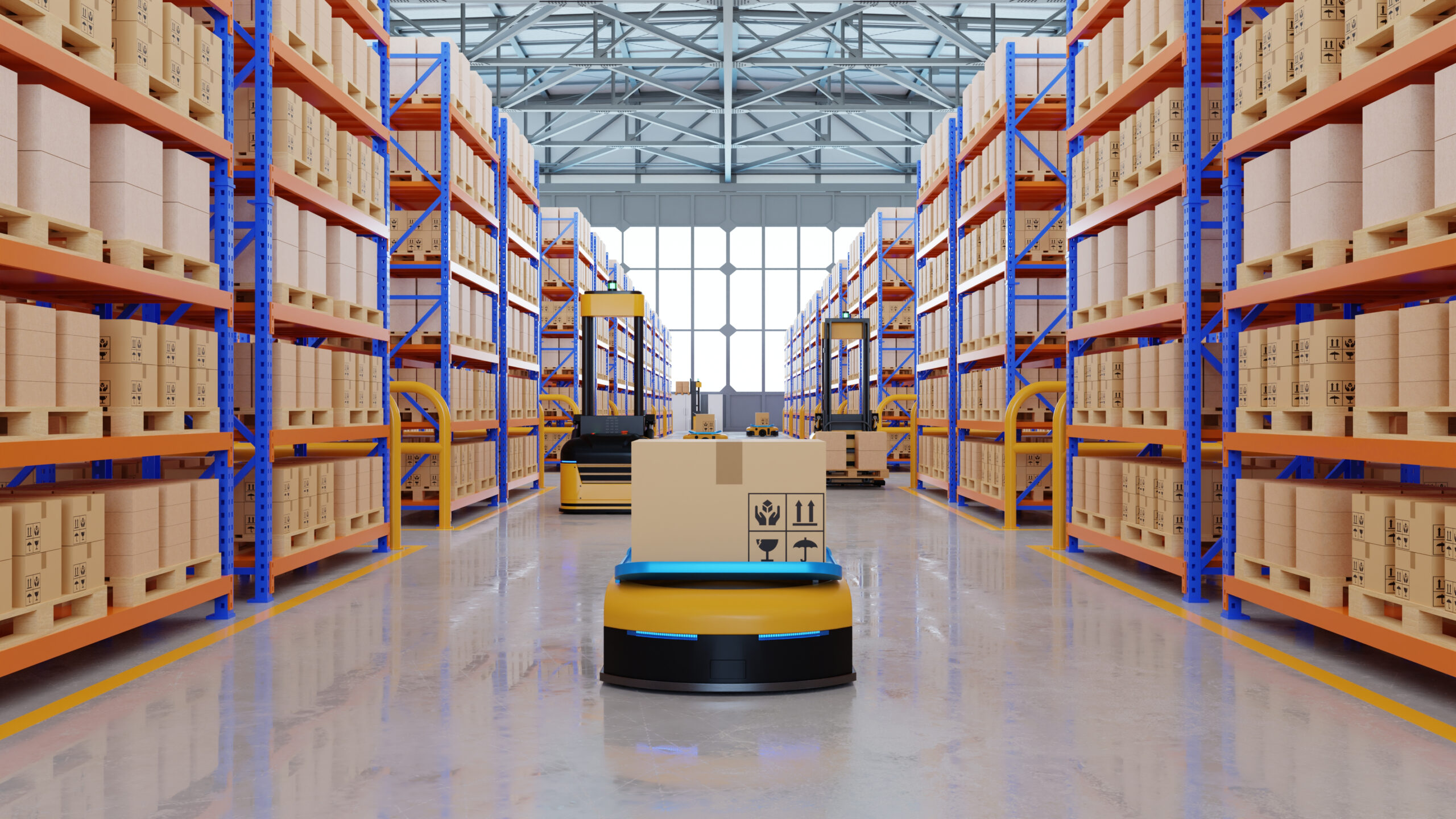
As autonomous mobile robots, conveyors, manually operated trucks, and pedestrians increasingly share warehouse space, safety systems will need to exchange information across equipment types. The integration challenges already visible in pallet-moving automation projects involving robots and established warehouse systems will extend to traffic management and risk controls.
A camera mounted on one forklift cannot manage the movement of every robot or pedestrian around it, but the event data can contribute to a broader map of interaction across the floor. Future integration with location systems and warehouse controls could allow speed limits or route rules to respond dynamically to recurring risk.
The dashboard gives supervisors evidence that previously disappeared when an operator slowed, stopped, and continued without incident. That visibility creates an obligation to act when the same location or behaviour continues generating warnings.
Reduced detections should not be treated automatically as proof of improved safety, since routes, workloads, or sensor configuration may have changed. The strongest measure will combine fewer high-risk events with collision data, observations, employee feedback, and checks that work has not simply moved outside the monitored area.
Yale’s dashboard shifts pedestrian detection from a cab-level warning towards a fleet-management tool. Its value will emerge through better traffic design, proportionate coaching, and earlier intervention before repeated close interaction develops into an injury or damaging collision.