IN Brief:
- transport logistic Shanghai 2026 hosted 939 exhibitors and 47,031 trade visitors across more than 52,000 sq m.
- The event brought together air cargo, rail, road, warehousing, AI, project logistics, and multimodal freight systems.
- Asia’s logistics market is moving from capacity expansion toward more connected, data-led network design.
transport logistic Shanghai closed its 2026 edition with record participation, reinforcing the speed at which Asia’s logistics market is moving into multimodal freight, air cargo, digital supply chain systems, and higher-value infrastructure.
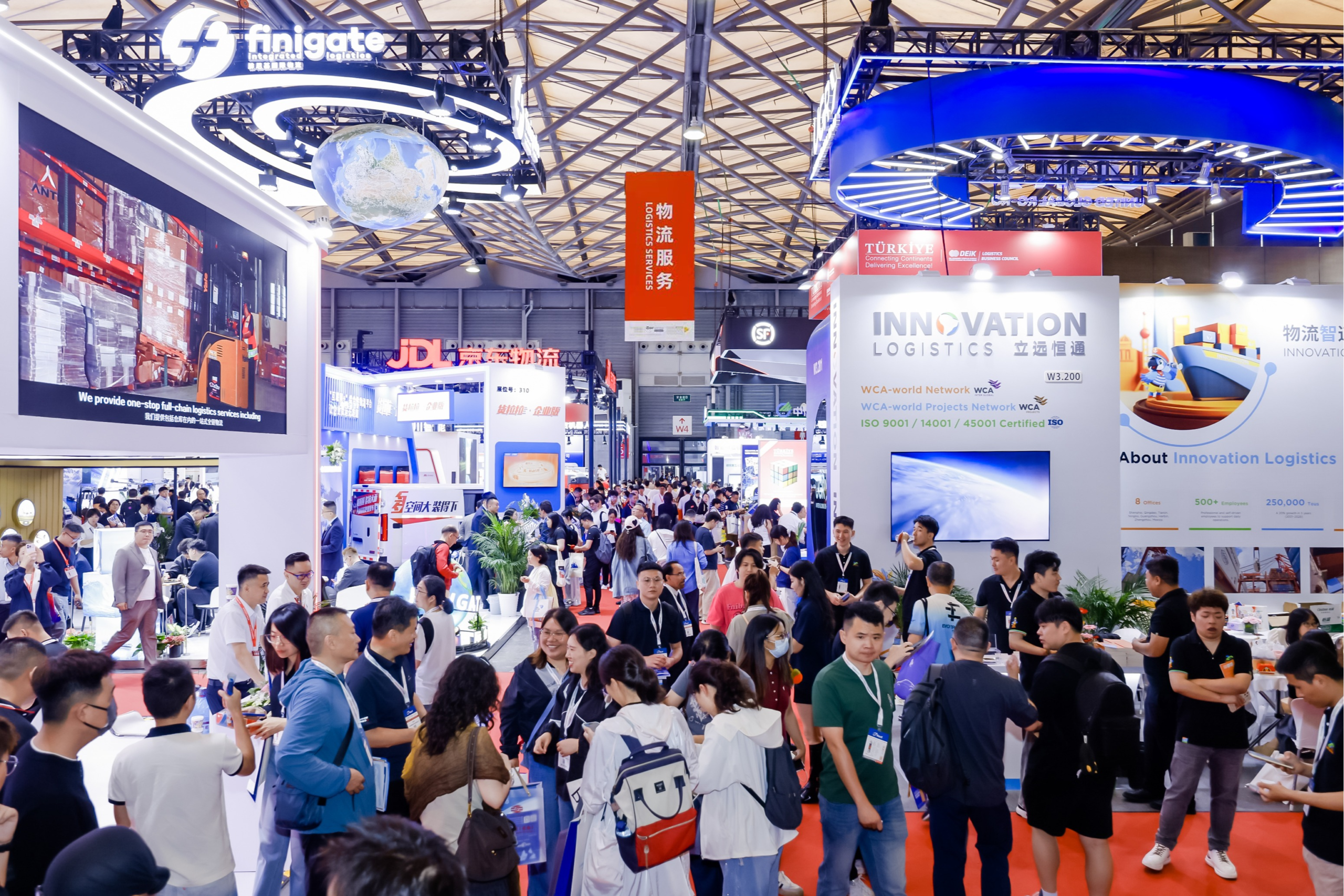
The event ran from 24 to 26 June at the Shanghai New International Expo Centre, covering more than 52,000 sq m and bringing together 939 exhibitors from 57 countries and regions. Visitor numbers reached 47,031 from 121 countries and regions, giving the show its strongest performance to date and placing Shanghai at the centre of a broader conversation about how goods will move through Asia’s next phase of industrial growth.
By combining transport logistic Shanghai with air cargo China, the 2026 edition created a platform spanning logistics, mobility, IT, air freight, project cargo, warehousing, road transport, rail, and multimodal supply chain management. Its conference programme included 26 forums across resilience, green transition, artificial intelligence, air cargo, road freight, China-Europe rail, and digital intermodal operations.
That breadth reflects a market moving beyond simple expansion. Warehouses, ports, aircraft, rail terminals, truck fleets, and freight software are being drawn into the same operating model, as shippers seek more routing flexibility and better visibility across increasingly complex networks. The strongest providers are no longer selling capacity alone; they are building systems that can absorb demand swings, disruption, customs friction, and changing customer requirements without losing control of cost or service.
Across Asia, the same pattern is taking shape in different forms. In India, a recent Chennai warehousing event placed automation, robotics, RFID, cold chain, and intralogistics technology at the centre of the country’s logistics growth. China’s platform is larger and more internationally connected, but the direction is closely aligned: physical infrastructure is being paired with digital execution, higher throughput, and more resilient flow between production, storage, and transport.
China’s role remains central because it sits at the intersection of manufacturing scale, export density, e-commerce growth, and logistics technology development. Even as sourcing spreads across Southeast Asia and India, China’s supplier depth and infrastructure continue to anchor large parts of global freight planning. That creates demand not only for more movement, but for more disciplined movement — with better handovers, cleaner data, and fewer blind spots between modes.
Multimodal freight occupied a prominent place because single-route dependency has become a weaker operating assumption. Ocean disruption, air capacity cycles, geopolitical pressure, labour action, and infrastructure congestion have pushed shippers to keep alternative options open. China-Europe rail, inland waterway connections, air cargo gateways, and digital road freight systems all feed into that resilience equation, particularly where lead time and inventory cost have to be balanced carefully.
Air cargo’s presence also showed how premium freight remains embedded in industrial supply chains. High-tech manufacturing, urgent spares, e-commerce peaks, product launches, and time-sensitive components still depend on reliable lift, even as procurement teams work to control cost and emissions. The air cargo market is being shaped by the same forces as warehousing and road transport: better data, tighter booking processes, clearer emissions reporting, and stronger integration with wider supply chain platforms.
The record attendance in Shanghai gives logistics suppliers a clear reading of the market. Asia remains one of the world’s most competitive regions for freight growth, but growth is no longer measured only by square metres, aircraft, terminals, or trucks. The next phase will be judged by how well those assets are connected, how quickly networks can respond to disruption, and how much operational intelligence sits behind each movement.
Shanghai’s 2026 event placed that transition on a record-sized stage. The companies that gain from it will be those able to combine scale with control, because logistics capacity without visibility is becoming a weaker proposition every year.