IN Brief:
- Industrial Labelling Systems is supplying print-and-apply labelling systems for frozen and chilled environments.
- The Evolabel-based systems are designed to operate down to -30°C without heated enclosures.
- Automated labelling supports traceability, consistency, and lower manual exposure inside cold storage operations.
Industrial Labelling Systems is supporting cold-chain operations with print-and-apply labelling systems designed to maintain accuracy and reliability in chilled and frozen environments down to -30°C.
The UK supplier is using Evolabel technology for cold-store applications across logistics, food processing, pharmaceuticals, and distribution. The systems are designed to operate in sub-zero conditions without heated enclosures or additional protective measures, reducing installation complexity and allowing equipment to be specified for constrained warehouse layouts.
Cold storage creates an unforgiving operating environment for labelling. Low temperatures, condensation, frost, moisture, and irregular pallet surfaces can affect label adhesion, print quality, mechanical reliability, and scan performance. Manual labelling can still work in low-volume situations, but it introduces greater variation and keeps operators inside chilled or frozen areas for longer than necessary.
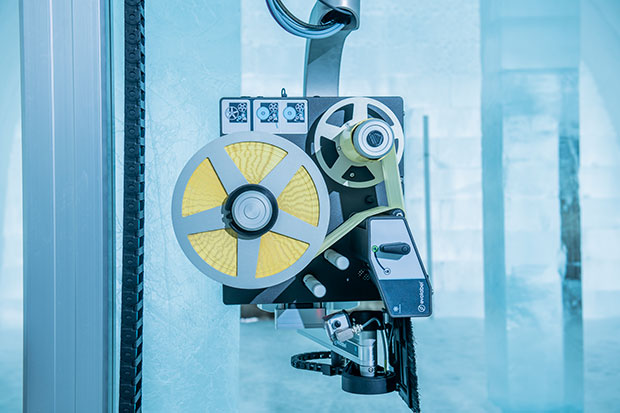
ILS’ cold-storage systems use lightweight, motorised applicator arms to reduce operator interaction in freezing conditions. The company supplies print-and-apply systems, label materials, labelling software, installation, and technical support, allowing applications to be specified around site conditions rather than treated as an ambient warehouse process moved into the cold.
Traceability depends on the physical label as much as the software record behind it. A warehouse management system may hold accurate batch, expiry, location, and destination data, but if the applied label is misaligned, unreadable, detached, or damaged by condensation, the operation loses confidence at the point of scan. That can trigger manual checks, dispatch delays, quarantine decisions, or compliance exposure.
Temperature-sensitive logistics is expanding across food, pharmaceuticals, diagnostics, chemicals, and life sciences, placing more pressure on reliable identification through every handover. The same movement toward package-level assurance can be seen in Holtronic’s cold-chain breach indicators, which move temperature excursion alerts closer to the individual package. ILS addresses a different control point, but both technologies sit inside a broader move toward more granular cold-chain evidence.
Food and pharmaceutical operations place particularly high demands on labelling because products often move through several controlled zones before reaching their final destination. Pallets may be mixed, wrapped, reworked, staged, or relabelled while operators work under time, hygiene, and temperature constraints. A consistent automated process reduces the variability introduced by manual application and supports cleaner scanning through receiving, storage, picking, and dispatch.
Labour exposure is also part of the calculation. Cold-store work is physically demanding, and repetitive manual tasks can become slower and less consistent as operators manage low temperatures and protective clothing. Automating labelling does not remove the need for skilled warehouse teams, but it reduces one process that is poorly suited to long manual execution in frozen zones.
The reliability threshold is higher than in ambient warehouses. Equipment that works well in standard dispatch areas may struggle when exposed to condensation, temperature swings, frost build-up, and reduced maintenance access. Systems designed for cold conditions can reduce downtime and limit the workaround culture that often develops around equipment not built for the environment.
Cold-chain logistics is becoming more data-rich, yet it still depends on practical physical controls. Labels carry the identity of the load across people, systems, vehicles, and facilities. If that identity fails, the digital chain weakens with it. ILS’ sub-zero labelling systems address a basic but critical point of failure: keeping the physical mark aligned with the operational record, even when the warehouse environment is working against both.