IN Brief:
- Yusen Logistics has launched Supply Chain Disruption Radar for predictive disruption intelligence.
- The tool integrates with Yusen Vantage Performance to connect external events with shipment-level risk.
- The launch reflects growing demand for systems that move beyond visibility into operational decision support.
Yusen Logistics has launched Supply Chain Disruption Radar, an AI-powered tool designed to convert global news, carrier advisories, and operational insight into shipment-linked risk intelligence.
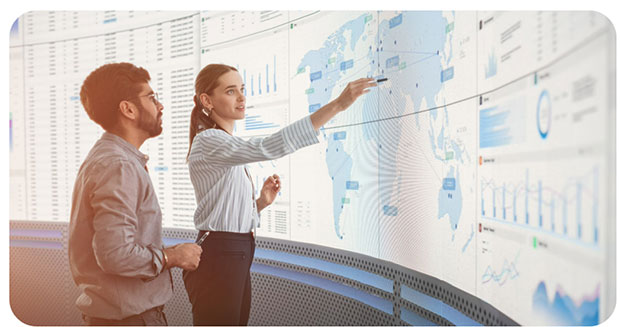
The system integrates with Yusen Vantage Performance, the company’s supply chain visibility platform, and is designed to identify external events, map their possible effect on shipments, and provide alerts and guidance before disruption becomes a missed delivery, production delay, or service failure.
Supply Chain Disruption Radar combines artificial intelligence with Yusen’s operational network, which spans 46 countries and regions. The tool pulls together news, transport advisories, carrier information, and operational context, then reduces that information into alerts tied to actual movement of goods. Its value sits in the link between the event and the shipment, rather than in another stream of general risk updates.
Global supply chains now generate too much disruption data for manual monitoring to remain reliable. Port congestion, labour action, severe weather, customs changes, carrier cancellations, security incidents, geopolitical tension, and infrastructure failures can all affect movements, but not every event requires the same response. Some need rerouting, some need customer communication, some need revised allocation, and some need no action at all.
The pressure on logistics systems is therefore moving from visibility to interpretation. Shipment tracking shows where goods are, but it does not automatically explain what should happen next. Control towers and visibility platforms are being pushed toward decision support, especially where risk is time-sensitive and the cost of late intervention is high.
That shift is visible across other data-heavy logistics functions. The same need to connect shipment-level information with financial and operational action appeared when FedEx tariff refunds became a data problem for shippers managing duty, refunds, and documentation. Different conditions sit behind the two examples, yet both show how supply chain value is being created at the point where fragmented data becomes a specific operational action.
Yusen’s launch also reflects the changing role of third-party logistics providers. Transport execution is no longer enough when customers are dealing with volatile routes, tighter inventory positions, and demanding service commitments. A 3PL with network-wide visibility can see patterns that individual shippers may miss, but the advantage only holds if those patterns are converted into practical interventions.
Inventory strategy is part of the equation. Many businesses increased buffer stock after recent years of disruption, then faced pressure to reduce working capital as costs rose. Better disruption intelligence gives planners more room to make targeted decisions, such as accelerating a specific shipment, switching a supplier route, changing customer allocation, or adjusting production sequencing, without adding broad inventory buffers across the network.
The technology will also have to manage trust. Operators under pressure have little patience for alerts that are vague, late, or repetitive. AI-based tools gain traction when they reduce noise, provide clear reasoning, and connect warnings to real shipment exposure. A useful alert is not one that says an event has occurred; it is one that explains which movements are affected and what options are available.
As disruption becomes a standing condition of global trade, the value of visibility platforms will be judged by their ability to shorten the time between event detection and operational response. Yusen’s Supply Chain Disruption Radar sits in that space, where resilience is built less by broad statements about risk and more by specific decisions made while there is still time to change the outcome.