IN Brief:
- Amazon plans to lift its cumulative India investment to $48bn by 2030.
- The company expects to add more than 20 fulfilment centres and more than 100 last-mile delivery stations in India this year.
- The programme connects fulfilment, marketplace exports, AI infrastructure, cloud capacity, and small-business digitisation.
Amazon has raised its long-term India investment plan to $48bn by 2030, bringing logistics infrastructure, AI, cloud capacity, small-business digitisation, and e-commerce exports into one of the company’s largest regional growth programmes.
The commitment includes a further $13bn investment in India by 2030 for AI and cloud infrastructure through Amazon Web Services. That expands the company’s cumulative India programme across both digital infrastructure and the physical networks required to support marketplace fulfilment, parcel movement, seller services, and export growth.
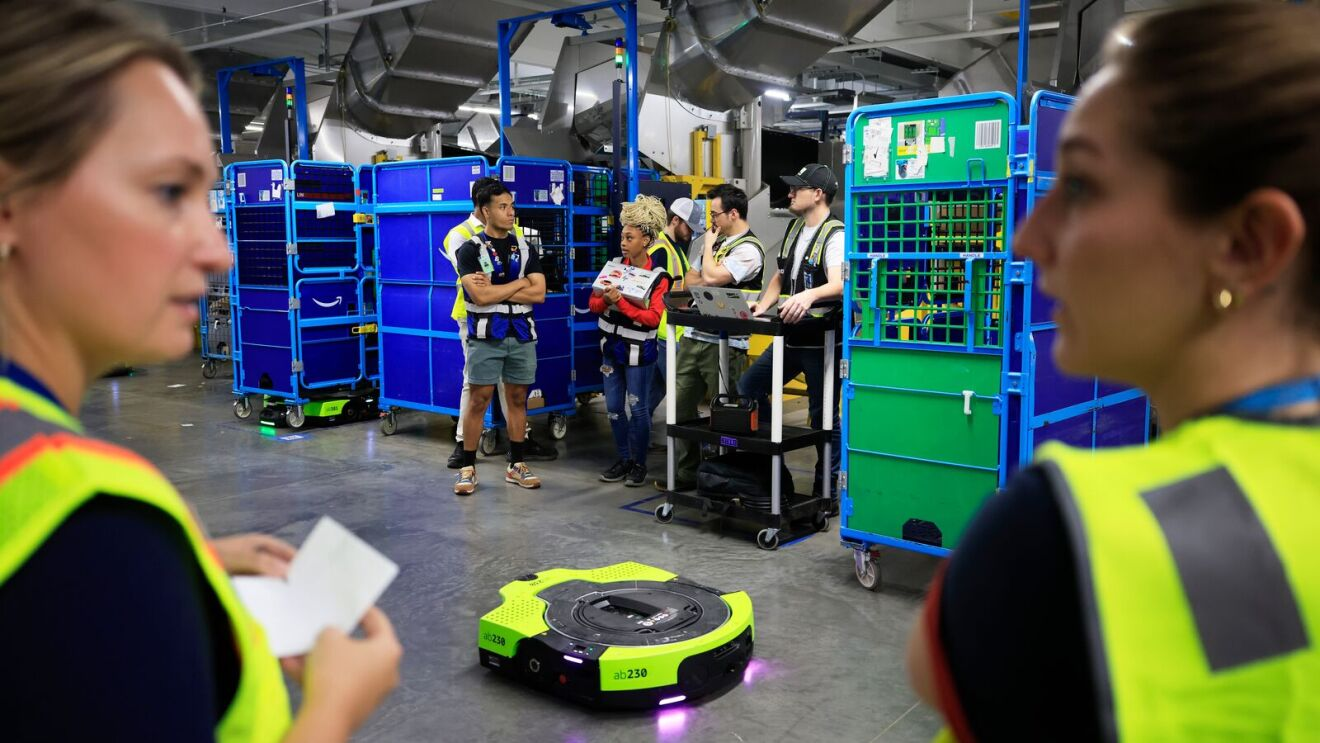
More than 20 fulfilment centres and more than 100 last-mile delivery stations are expected to form part of Amazon’s India operating base this year, extending a distribution footprint already shaped by dense urban demand, marketplace seller growth, and cross-border retail flows. The company has also set targets linked to 3.8m supported jobs, $80bn in cumulative e-commerce exports from India, and AI benefits for 15m small businesses by 2030.
India is becoming less a consumer-market expansion project and more a logistics, technology, and export platform. Warehouse construction, digital payments, manufacturing policy, parcel networks, and cross-border seller infrastructure are developing in parallel, giving large e-commerce operators a more scalable base than the fragmented distribution networks that dominated earlier growth cycles.
Amazon’s separate ₹2,800 crore operations investment in India already showed how fulfilment, safety, associate training, and seller support are being deepened across the network. The enlarged $48bn programme widens that frame, adding a stronger cloud and AI layer to the warehouse, parcel, and marketplace infrastructure beneath it.
Additional fulfilment capacity shortens the distance between inventory and demand, while a denser last-mile network improves route planning, delivery resilience, and peak-period flexibility. When cloud infrastructure and AI capability sit alongside those assets, the practical uses extend into demand forecasting, inventory placement, replenishment planning, route optimisation, returns processing, and customer service automation.
India’s logistics market is also becoming more competitive because modern warehousing and transport infrastructure are being built around higher service expectations. Multi-client logistics parks, automated handling systems, and improved regional distribution nodes give retailers and manufacturers more options for balancing speed, stock availability, and cost-to-serve.
The export target may prove the more demanding part of the programme. Reaching $80bn in cumulative e-commerce exports requires more than international demand for Indian sellers. It depends on compliant product data, reliable packaging, carrier integration, cross-border documentation, customs readiness, returns handling, and fulfilment processes that can meet overseas delivery expectations.
The same pressure is visible in India’s accelerating warehouse automation market, where suppliers are targeting faster picking, higher inventory accuracy, and more efficient fulfilment for retail and industrial operators. Amazon’s next investment phase will raise those expectations further by combining delivery speed, system visibility, and technology-led execution at national scale.
The programme places India at the centre of a more integrated e-commerce supply chain model, with storage, transport, digital infrastructure, and seller capability developed as one operating system. The challenge now is execution across a market where scale is attractive, but logistics complexity remains unforgiving.