IN Brief:
- Scott Elliott has been appointed Maersk Regional President for Asia-Pacific.
- Elliott had held the role on an interim basis since January after previously serving as regional CFO.
- The appointment gives Maersk permanent leadership across a region central to manufacturing, shipping, fulfilment, and cross-border trade.
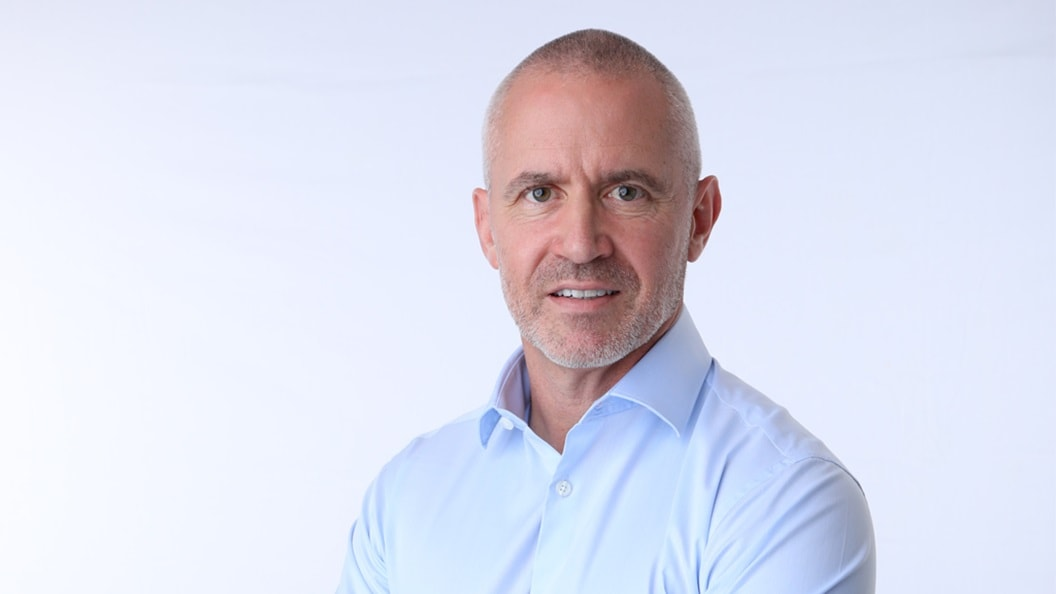
Maersk has appointed Scott Elliott as Regional President for Asia-Pacific, placing a finance and logistics executive with experience across Maersk, Toll Global Logistics, and CEVA Logistics in charge of one of the group’s most complex operating regions.
Elliott had served as interim Regional Managing Director for Asia-Pacific since January. He joined Maersk in 2020 and previously worked as Regional Chief Financial Officer for Asia-Pacific, giving him direct exposure to the group’s investment priorities, customer base, and operating structure across the region.
Asia-Pacific remains central to global production, ocean freight, air freight, contract logistics, and integrated supply chain services. China, India, Southeast Asia, Japan, South Korea, and Australia each carry different weight across manufacturing, consumption, export activity, and distribution, requiring logistics networks that can absorb very different levels of volume, regulation, infrastructure maturity, and customer expectation.
Leadership changes at major container and logistics groups rarely sit apart from operating strategy. Maersk has spent recent years reshaping itself from a container shipping business into a broader logistics provider, adding capacity and capability across warehousing, fulfilment, customs, air freight, and landside services. Asia-Pacific is one of the main regions where that integrated model is tested at scale.
The demands on the region are broad. Mature manufacturing corridors need reliable international freight and inland connection. High-growth consumer markets require last-mile density and e-commerce fulfilment. Export-led economies need customs, air cargo, and ocean services that can flex around trade cycles. Customers moving goods across Asia-Pacific increasingly want fewer handovers between ocean freight, customs, warehousing, and final delivery.
That pressure can be seen in other recent regional developments, including Asendia and SingPost’s APAC parcel gateway and SingPost’s automated parcel spine. Both point to a logistics market moving toward denser networks, more integrated data flows, and stronger cross-border parcel execution.
At the freight-network level, manufacturers and retailers are still managing the consequences of disrupted ocean services, alternative sourcing strategies, China-plus-one decisions, inventory policy changes, and regional trade complexity. Effective Asia-Pacific leadership now depends on how well procurement shifts, customer demand, port capacity, inland transport, and digital visibility can be joined into a coherent service model.
Decarbonisation adds a further operational test. Carriers are investing in lower-emission vessels, alternative fuels, improved network design, and landside emissions reduction, yet customers still need predictable lead times and competitive service levels. Regional management has to balance carbon, cost, capacity, and reliability without turning sustainability targets into service weakness.
Elliott’s finance background gives the appointment a particular tone. Integrated logistics requires capital discipline as well as operational expansion. Warehouses, fulfilment centres, air freight capacity, customs tools, and digital platforms all require investment, but the value depends on whether those assets improve resilience and customer service rather than simply add overhead.
The formal appointment gives Maersk continuity after Elliott’s interim period and sets a permanent leadership structure for the group’s Asia-Pacific strategy. Network reliability, landside capability, warehousing capacity, customs support, and digital visibility will determine how much of that strategy converts into operating advantage across the region.