IN Brief:
- Goliath is promoting a permanent pallet racking upright repair system for UK warehouse operators.
- The system is designed to reduce repeat damage, replacement steel consumption, and operational disruption.
- The launch sits within wider pressure on warehouses to improve safety, cost control, and sustainability performance.
Goliath is positioning its pallet racking upright repair system as a way for warehouse operators to reduce repeat damage, extend racking life, and cut steel consumption while maintaining safety compliance.
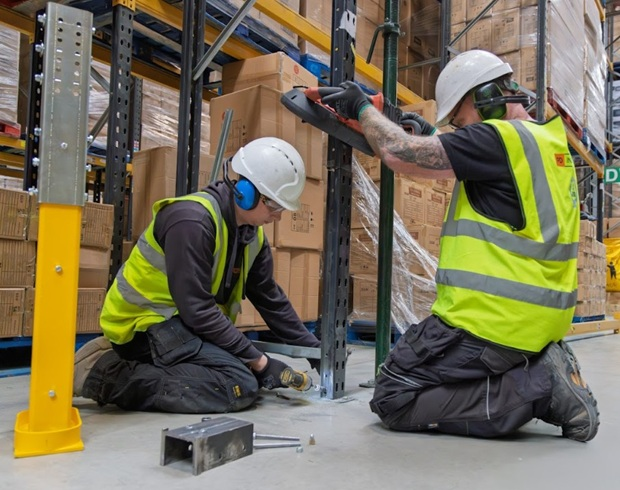
The system has been proven over two years with a zero-warranty-claim record and is aimed at damaged legacy pallet racking that might otherwise be written off, replaced, or repeatedly repaired. Goliath describes the product as a permanent upright repair that can be installed in minutes and is designed to withstand repeated impact in operational warehouse environments.
Damaged racking is a familiar warehouse problem. Forklift impacts, poor aisle discipline, rushed putaway, and congested picking environments can leave uprights weakened or visibly distorted. Operators then face a choice between temporary repair, component replacement, rack reconfiguration, or taking positions out of use. Each option carries cost, downtime, and safety consequences.
Goliath’s proposition is that permanent repair can reduce the cycle of recurring damage and replacement. The company says the system helps prevent legacy racking from becoming obsolete, reduces steel consumption, and supports health and safety performance. Its published product information points to a lifetime warranty, 30-minute installation, and potential cost savings compared with conventional replacement approaches.
The sustainability argument is practical rather than decorative. Racking is a major steel asset inside the warehouse, and replacing damaged components carries embodied carbon, procurement cost, transport cost, installation work, and possible disruption to storage capacity. Repairing and reinforcing an existing upright can reduce the volume of new steel needed, provided the repair meets safety requirements and is properly inspected.
Materials handling and ESG are increasingly converging at equipment level. Warehouses are under pressure to report carbon, reduce waste, improve energy performance, and extend asset life, yet many of the gains sit in ordinary operating decisions. Racking, forklifts, conveyors, chargers, lighting, dock equipment, and packaging benches often determine how much waste and inefficiency sits inside daily operations.
The same gap between sustainability ambition and operational action appeared in GXO’s transport research, covered at GXO exposes the gap between green transport ambition and action. Racking repair brings that argument inside the warehouse, where asset life, maintenance data, and equipment resilience carry carbon and cost consequences.
Safety remains the first requirement. Pallet racking damage can create serious risk when it is not identified, assessed, and corrected. Repair systems must fit within inspection regimes, manufacturer guidance, engineering standards, and site-specific load conditions. Sustainability and cost savings are only useful when the repaired structure remains safe for operational use.
The business case is strongest in older estates, mixed racking systems, and high-impact areas where the same uprights are repeatedly struck. In those environments, direct replacement can become a recurring maintenance cost rather than a one-off fix. A permanent repair and protection system changes the economics if it reduces future damage and keeps locations available.
Warehouse space is expensive, and taking pallet positions out of service can quickly affect storage density, pick paths, inbound staging, and replenishment planning. Even limited racking downtime can create congestion elsewhere in the building. Faster repair can protect operational flow as well as maintenance budgets.
The launch also lands as operators are being asked to do more with existing sites. New logistics property is constrained in many UK markets, automation projects require capital, and customers want stronger sustainability evidence without necessarily paying more for it. Extending the useful life of existing infrastructure is a direct response to those pressures.
Repair data can also support better damage tracking, incident investigation, driver training, traffic management, and equipment selection. If the same location is repeatedly struck, the cause may sit in aisle layout, guard placement, forklift type, lighting, speed control, or training rather than the upright itself.
Goliath’s system gives warehouse operators another option between tolerating repeated damage and replacing major racking components. Adoption will depend on engineering acceptance, inspection confidence, installation speed, and the clarity of the cost saving. In warehouses trying to link safety, asset life, and sustainability, permanent racking repair is likely to receive attention because it addresses all three at floor level.