IN Brief:
- The Philippines has sent its first commercial consignment of MD2 pineapples to the UAE.
- The 18-tonne shipment moved through Khor Fakkan before distribution through Dubai’s Al Aweer Fruit and Vegetable Market.
- Regular fortnightly shipments are expected, strengthening a fresh produce export lane into Gulf markets.
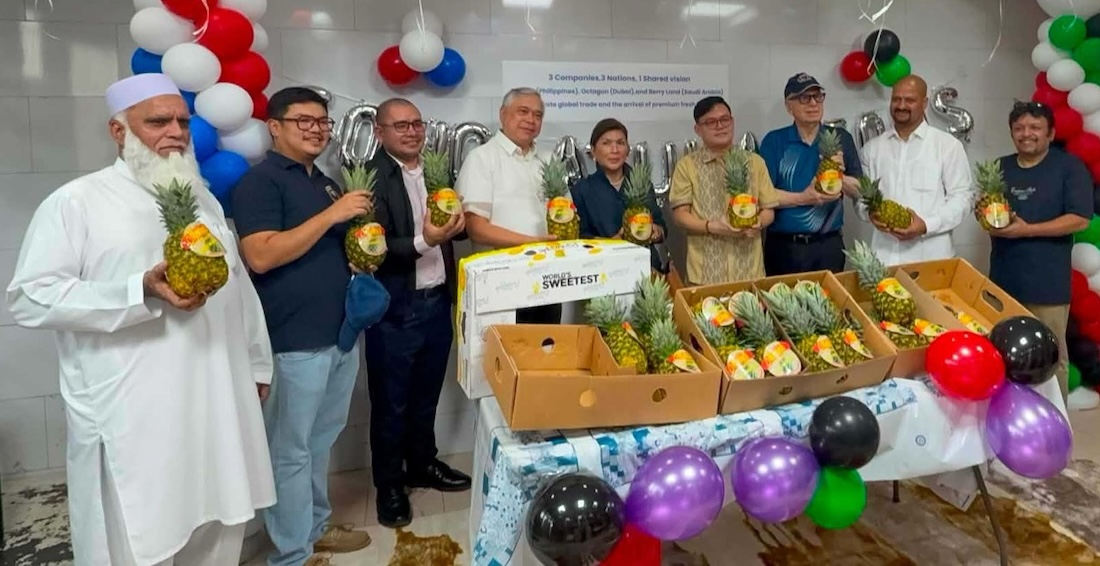
The Philippines’ Department of Agriculture has confirmed the arrival of the first commercial consignment of Philippine MD2 pineapples in the United Arab Emirates, opening a regular fresh produce export lane into the Gulf.
The shipment comprised 18 metric tonnes of fresh pineapples, packed into 1,500 boxes and sourced from farms in Tampakan, South Cotabato. The cargo left the Philippines on 6 June, arrived through the Port of Khor Fakkan on 28 June, and was formally launched at Dubai’s Al Aweer Fruit and Vegetable Market.
The consignment was organised by Davao-based Mensch Fil-Am Trading in partnership with Avante Agri-Products Philippines. UAE distribution is being handled by Octagon General Trading, which also works across Gulf markets for Philippine tropical fruits including bananas, mangoes, durian, and pomelo.
Regular shipments are expected every two weeks, signalling sustained commercial demand rather than a one-off promotional movement. Fresh produce trade lanes gain value when growers, exporters, forwarders, port handlers, importers, and wholesale markets can repeat the same process reliably across packing, sailing, clearance, temperature management, and onward distribution.
The MD2 pineapple variety is a premium export product, and its movement into Gulf markets places pressure on post-harvest handling. The product must arrive with enough shelf life to support wholesale distribution and retail sale after international transit. Farm-level coordination, consistent packing, route timing, customs readiness, and controlled handling through the arrival gateway all sit inside the commercial result.
The use of Khor Fakkan and onward distribution through Dubai’s Al Aweer Fruit and Vegetable Market reflects the way Gulf fresh produce logistics relies on port access and regional trading hubs. Dubai’s wholesale market connects inbound consignments with retailers, traders, foodservice buyers, and regional customers, giving imported fruit a wider distribution path after clearance.
The lane also reflects the commercial direction created by the Philippines-UAE Comprehensive Economic Partnership Agreement. Trade agreements do not move cargo by themselves, but they can give exporters and importers a framework for testing new routes, consolidating demand, and developing repeat movements.
Food logistics is increasingly judged on process control rather than transport alone. In the UK, Pall-Ex’s BRCGS AA rating at Watford Gap showed how storage, handling, and cross-docking standards are becoming commercially important for food-grade logistics. That development is covered at Pall-Ex gives Watford Gap food-grade logistics a BRCGS benchmark, and the same discipline applies to fresh tropical fruit moving into the Gulf.
Fresh produce routes are particularly unforgiving because failures appear quickly. A missed vessel, poor temperature discipline, slow customs clearance, weak documentation, or delayed market distribution can convert export value into waste. The tighter the delivery rhythm, the more important it becomes to build dependable schedules and contingency planning into the lane.
The fortnightly shipment plan gives Philippine exporters a platform from which to build volume, but it also creates a requirement for reliable supply. Farms must produce consistent quality. Exporters must consolidate cargo in the right condition. Logistics providers must protect timing and handling. Importers must move product through the market quickly enough to preserve value.
Gulf markets gain another source of premium tropical fruit, supporting diversification of supply and offering wholesalers and retailers more choice during seasonal demand peaks. Philippine growers and exporters gain access to a high-value region with established fresh produce distribution channels, hospitality demand, and a large expatriate consumer base.
The first shipment is modest in tonnage, although the operational value sits in the repeat schedule. Regular movements allow exporters to refine packing standards, improve forecasting, negotiate better transport terms, and build buyer confidence. A fortnightly rhythm also makes it easier to align farm production with market demand rather than relying on opportunistic shipments.
The lane will now be judged on consistency. If quality holds, documentation flows smoothly, and arrival handling protects shelf life, Philippine pineapple exporters will have a stronger route into the UAE and potentially wider Gulf markets.