IN Brief:
- The Philippine Department of Health, University Research Co., and PTC Logistics have agreed a vaccine-distribution pilot.
- Five local government units will test improved cold-chain integrity and last-mile delivery.
- PTC Logistics will provide technology, operational support, and shipment insurance without cost to the health department.
The Philippine Department of Health has formed a vaccine-distribution partnership with University Research Co. and PTC Logistics, establishing a pilot programme intended to strengthen product availability, cold-chain integrity, and last-mile delivery.
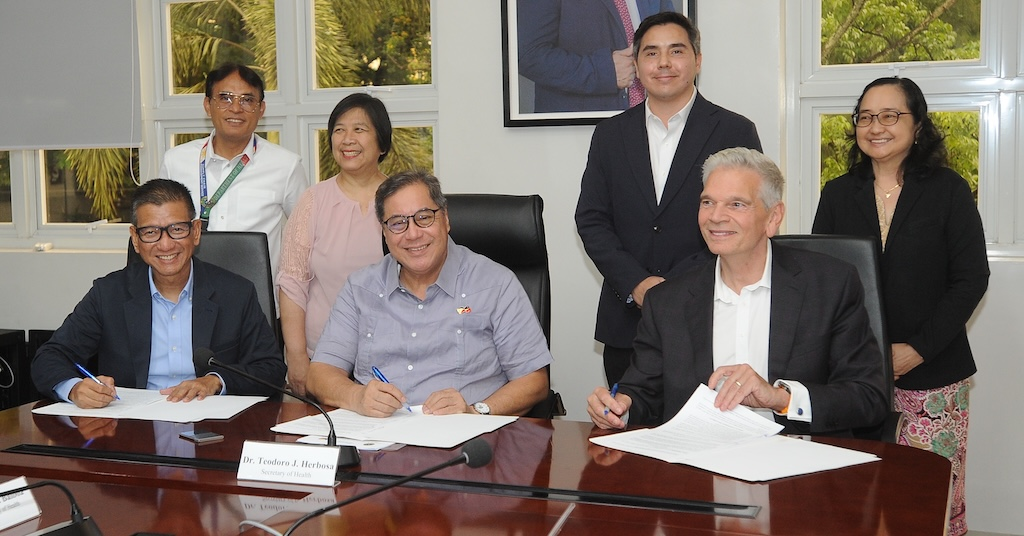
Under a memorandum of agreement signed on 30 June, five local government units will be selected by the Department of Health’s Disease Prevention and Control Bureau and Supply Chain Management Service. The locations will test a more coordinated approach to storage, transport, environmental control, and delivery into communities with differing infrastructure and healthcare capacity.
PTC Logistics will provide cold-chain technology, operational expertise, and logistics support, while University Research Co. will contribute health-system and programme-delivery experience. PTC will also insure the participating shipments and provide its services without charge to the Department of Health during the pilot.
Geographically isolated and disadvantaged areas will receive particular attention because distance, island geography, road conditions, unreliable power, and limited local storage can make vaccine delivery substantially more difficult than distribution into large urban centres. The final kilometres frequently contain more operational uncertainty than the much longer movement between national and regional facilities.
Depending on the product, vaccines can be damaged by excessive heat, freezing, light exposure, or prolonged movement outside a validated temperature range. Environmental control must therefore continue through storage, transport, handover, temporary holding, and administration rather than ending when a consignment leaves a central warehouse.
The pilot combines those stages within a single operating design, reducing the fragmentation that can arise when national stores, carriers, regional health offices, local facilities, and clinical teams manage separate sections of the journey. Accurate custody records and environmental data should allow each participant to see the condition and status of stock before accepting the next handover.
Cold-chain control reaches the last mile
Investment across temperature-controlled logistics is moving beyond additional warehouse capacity towards closer control of individual consignments. Sensors, connected packaging, route visibility, predictive warnings, and intervention teams are increasingly being deployed alongside refrigeration, particularly where one delayed or mishandled shipment can carry a high replacement cost.
National and regional warehouses can usually support validated cold rooms, backup power, trained staff, formal quality systems, and scheduled maintenance. Smaller health facilities may depend on portable containers, limited refrigeration, intermittent power, and staff who divide responsibility for stock management with wider clinical duties.
Monitoring equipment can identify a deviation, although detection alone does not preserve the product. Data must reach someone authorised to intervene, operating procedures must define the available response, and replacement transport or storage must be accessible before a temporary problem becomes a permanent loss.
Using five local government units will allow the partners to compare distinct operating conditions rather than treating the Philippines as a uniform delivery environment. Route density, ferry dependence, road access, seasonal weather, facility capability, and population distribution can vary sharply between provinces and municipalities.
A delivery model that performs reliably within an urban network may consequently fail when applied to mountainous districts or island communities. Packaging duration, vehicle selection, replenishment frequency, intermediate storage, departure times, and the size of each shipment may all require adjustment.
The insurance element introduces an additional level of commercial discipline, because claims involving temperature-sensitive healthcare products depend on evidence showing where custody passed and whether the consignment remained within specification. Reliable sensor records can distinguish a compromised shipment from one that experienced a delay without breaching its validated limits.
Even where the monetary value is recoverable, product loss can leave a clinic waiting for replacement inventory, disrupt an immunisation schedule, and consume scarce transport capacity. Prevention therefore remains preferable to compensation, particularly where replacement stock must travel through the same difficult route.
Certified pharmaceutical capacity is also expanding at major regional gateways, including new investment around Hyderabad, but the Philippine programme addresses the opposite end of the chain. Large hubs provide controlled consolidation and international connectivity; local delivery determines whether those products ultimately reach the communities for which they were procured.
Public-sector health requirements and private logistics capability can be difficult to align because quality controls, procurement rules, route economics, and local service needs do not always fit neatly together. A small pilot allows procedures to be tested, revised, and documented before national expansion creates more complex contractual and technical dependencies.
Performance will be judged through product integrity, delivery completion, data quality, operating cost, and the ability of local teams to use the system consistently. Those results should indicate which parts of the model can be standardised and which must remain adaptable to local geography.
Should the pilot produce a repeatable operating framework, the partners will have a basis for wider deployment across a national health system whose logistics challenge is defined as much by its dispersed final destinations as by the scale of its central vaccine requirement.