IN Brief:
- Strauss and DHL Supply Chain have completed a six-month logistics integration in Columbus, Ohio.
- The operation combines storage, distribution, embroidery, printing, and customised B2B fulfilment.
- Current capacity reaches 1.3 million units annually and can scale with Strauss’s US expansion.
Strauss and DHL Supply Chain have started an integrated logistics and product-personalisation operation in Columbus, Ohio, creating a central fulfilment platform for the workwear company’s expansion across the United States.
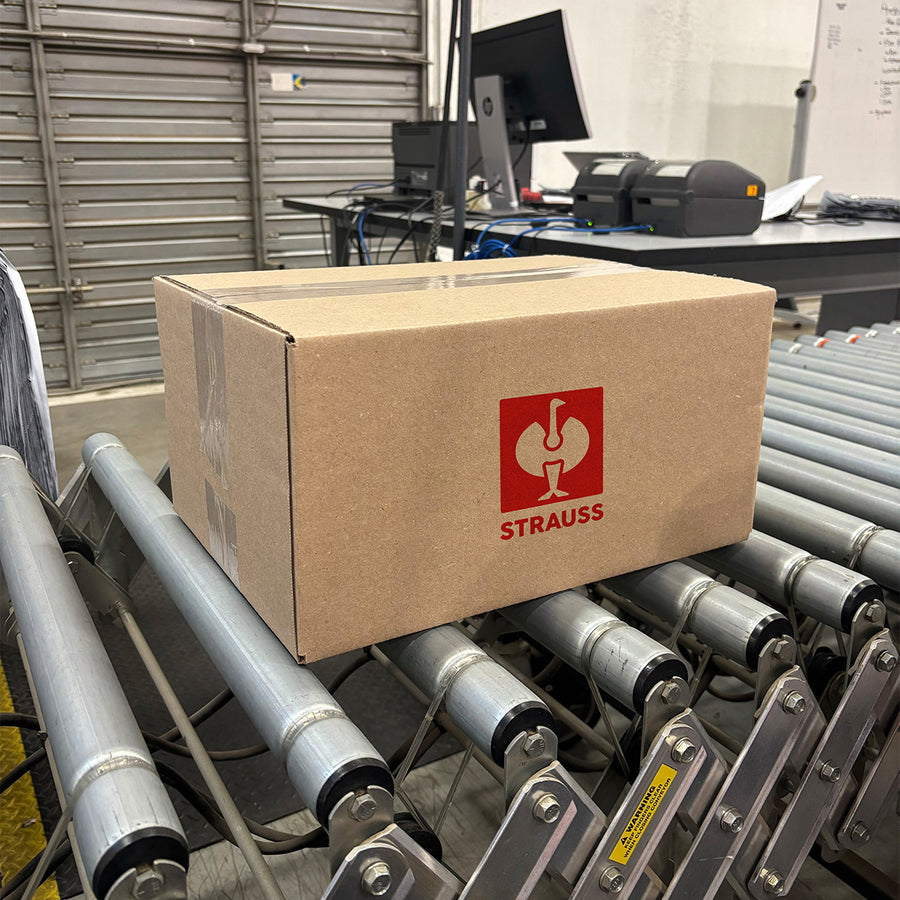
Following six months of systems and process integration, the operation combines warehousing, inventory handling, distribution, embroidery, and printing within one facility. Current capacity reaches 1.3 million units annually, while up to 775,000 outbound packages can be processed each year.
Workwear can now be picked, customised, checked, packed, and dispatched through a single operating sequence. The arrangement removes the need to transfer stock between a general warehouse and a separate embroidery or print facility before final delivery.
The first parcel left the DHL hub when the operation went live on 24 June. Columbus will serve as Strauss’s central US logistics base and support a new American headquarters scheduled to open later in 2026.
Strauss is also updating its US business-to-business online store so customised orders can pass more directly from customer selection into production and fulfilment. Garment, size, colour, logo, placement, quantity, and delivery information will need to remain connected throughout the process.
Matthias Fischer, chief operating officer and treasurer at Strauss, said the partnership would allow US business customers to receive customised workwear more quickly and efficiently. Patrick Bennett, chief financial officer at DHL Supply Chain North America, described the operation as the logistics foundation for the brand’s expansion.
The warehouse becomes a finishing operation
Workwear orders frequently include company logos, employee names, departmental identification, or role-specific markings, turning the final stage of fulfilment into a light-manufacturing process. Once a garment has been embroidered or printed, it becomes customer-specific and may have little resale value if an error occurs.
Separating personalisation from warehousing adds inventory transfers, custody handovers, transport, and reconciliation. Stock may be picked in one building, sent to a specialist, returned for packing, and then passed into a parcel network, with each movement creating another opportunity for the product and customer instruction to become separated.
Co-location shortens that route but requires tighter control. Order-management systems must send accurate design files and placement instructions, while embroidery and print equipment must be scheduled around garment type, colour, thread, ink, and setup requirements.
Small batches complicate that balance because B2B customers may order many combinations in relatively low quantities. Grouping compatible work can improve equipment utilisation, although excessive batching can extend lead times and undermine the speed gained by integrating the operation.
Quality checks also become inseparable from fulfilment accuracy. The warehouse must confirm not only that the correct size and quantity have been selected, but that each logo, name, and placement matches the customer instruction before the parcel is sealed.
DHL is expanding this type of specialised contract logistics across several sectors. Its operation for Metso in Brisbane combines industrial parts, oversized mining equipment, and round-the-clock service support, while the Strauss facility applies the same broader strategy to apparel customisation and parcel fulfilment.
Both arrangements place sector-specific processes around a common warehouse platform. The 3PL supplies facilities, labour, systems, inventory control, and distribution capability, then adds the technical activity required by the customer’s product and service model.
B2B buyers increasingly expect digital ordering, availability information, customisation, rapid delivery, and parcel-level tracking comparable with consumer ecommerce. Those expectations are extending into protective clothing, uniforms, safety footwear, and other categories that once relied more heavily on catalogue ordering and lengthy batch production.
Postponing customisation until an order has been received preserves inventory flexibility because the same base garment can serve several potential customers. The model works only when the final finishing operation has enough capacity to meet the promised delivery window.
Inventory accuracy becomes especially important under that approach. A digital record may show a standard garment as available, but the physical unit must also be in the correct location and free from defects before a custom order can enter production.
For Strauss, the DHL partnership creates a scalable US base without requiring every logistics capability to be built internally during the early stages of market expansion. DHL provides infrastructure and operating capacity, while Strauss retains control of product design, brand, and the customer proposition.
Performance will be measured through order accuracy, customisation quality, turnaround time, and the ability to absorb growth without creating queues around the finishing equipment. Throughput of 1.3 million units offers considerable capacity, but each unit must retain its relationship with the correct customer instruction.
By placing embroidery and printing inside the fulfilment flow, the partners have made the warehouse the final production stage. The operation can shorten lead times and reduce handovers, provided that digital order data, physical inventory, finishing, inspection, and despatch continue to move as one process.