IN Brief:
- The Port of Huelva handled more than 14.4 million tonnes during the first half of 2026, down 0.4%.
- Liquid bulk increased 2.15% to 10.8 million tonnes and represented almost three-quarters of total volume.
- Container traffic exceeded 60,400 TEU, while vehicle handling rose 74% to more than 26,500 units.
The Port of Huelva handled more than 14.4 million tonnes of cargo during the first half of 2026, limiting its year-on-year decline to 0.4% as higher liquid-bulk and vehicle volumes offset weaker activity elsewhere.
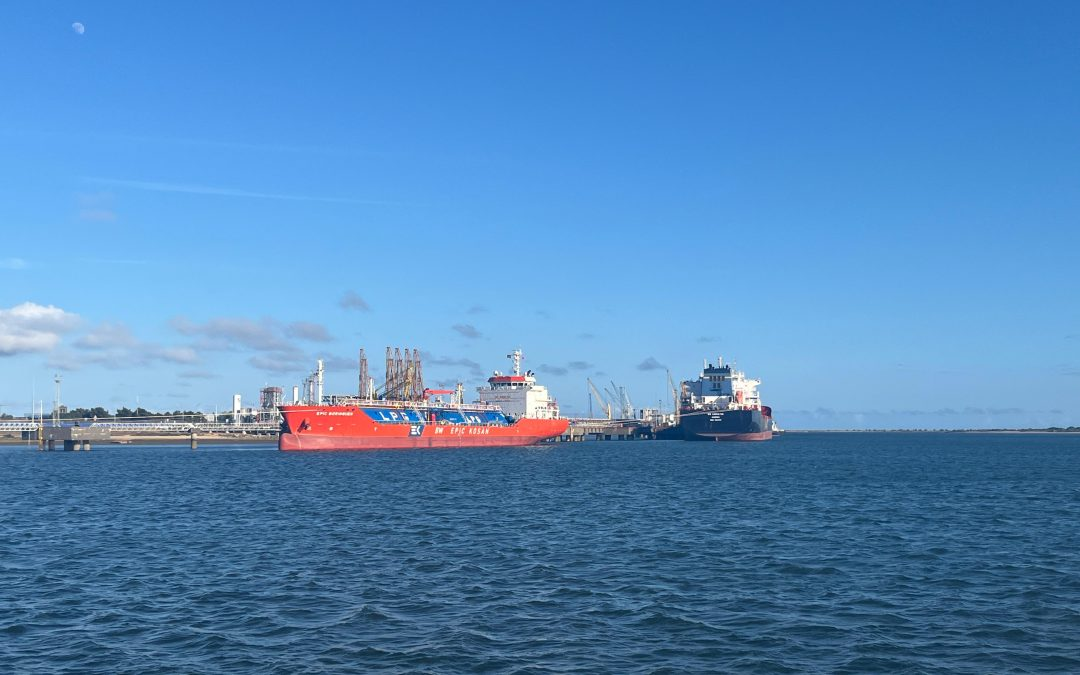
Liquid bulk increased 2.15% to 10.8 million tonnes, supported by fuel traffic, and represented almost three-quarters of total port throughput. The segment remains the principal source of volume across Huelva’s energy and industrial cargo base.
Dry-bulk traffic fell 7.6% to 2.5 million tonnes amid volatile commodity and geopolitical conditions, while general cargo declined 8.2% to just over 885,207 tonnes. The diverging performances left the overall tonnage figure broadly stable despite a weaker result in two substantial categories.
Container handling exceeded 60,400 TEU during the six-month period, and roll-on/roll-off intermodal freight units passed 14,400. Vehicle traffic produced the strongest percentage increase, rising 74% to more than 26,500 units.
Planned investment in general-cargo and liquid-bulk infrastructure is intended to strengthen Huelva’s position across several cargo markets. The port already serves energy, chemicals, mining, metals, and process industries, while container and vehicle activity provides a more diversified unitised freight base.
Aggregate tonnage can conceal significant differences between terminal operations. Liquid bulk moves in large parcels through specialised berths, pipelines, and tank storage, whereas containers, vehicles, and general cargo depend on different yards, equipment, labour, and inland transport arrangements.
Rising fuel volumes do not therefore compensate every operator affected by lower general cargo, just as additional vehicle units create demands that are only weakly reflected in total tonnes. Each cargo segment consumes capacity differently and produces a distinct pattern of road, rail, warehouse, and terminal activity.
The 74% increase in vehicle handling is particularly demanding on land use because finished vehicles require extensive storage space, damage controls, inventory tracking, inspection, and coordinated dispatch. Yard capacity can tighten rapidly when vessel arrivals exceed the rate at which road or rail carriers remove vehicles from the port.
Container growth creates a different operating profile, centred on service frequency, crane productivity, equipment supply, customs processing, reefer connections, and inland transport. Huelva can attract selected cargo corridors without matching the scale of Europe’s largest container hubs, provided its services remain predictable.
Its industrial hinterland gives the port a substantial base in cargo generated by production rather than consumption alone. Raw materials, energy products, chemicals, minerals, and manufactured goods require specialist handling, and their volumes can change quickly with industrial output, maintenance cycles, and commodity-market conditions.
Energy transition adds another layer to Huelva’s development. Existing liquid-bulk infrastructure, pipelines, storage, industrial land, and specialist expertise could support emerging fuels and feedstocks, although future products may require different materials, safety systems, segregation, and operating procedures.
Ports must invest before every future volume is contractually certain, creating a balance between preparing for new energy markets and maintaining the assets serving established cargo. Infrastructure built too narrowly may become difficult to adapt, while overly speculative capacity can remain underused for years.
General-cargo investment could help rebalance Huelva’s portfolio and reduce dependence on one dominant segment. New capacity alone will not create traffic, however, so service development, shipping-line commitments, inland connections, and nearby storage remain central to utilisation.
The integration of storage and customs activity close to the quay is becoming increasingly prominent across European gateways. GEODIS’s port-side hub at Le Havre combines those functions with transport connections to reduce fragmented handovers after discharge.
Huelva’s competitiveness will likewise depend on how quickly cargo moves beyond the berth. Quay depth and terminal equipment provide the initial capacity, but road congestion, rail frequency, inspection, documentation, and warehouse availability determine the final dwell time.
Container and ro-ro traffic also expose the port more directly to schedule reliability. Bulk vessels often operate around large individual parcels, while regular liner and ferry services rely on repeat calls whose commercial value declines when congestion or inland delay becomes persistent.
The 0.4% overall reduction represents a relatively stable first half, but the weaker dry-bulk and general-cargo results show that stability is uneven. Industrial demand, commodity pricing, geopolitical disruption, and carrier-routing decisions can alter individual cargo streams more rapidly than the headline figure suggests.
Operational planning therefore needs separate scenarios for each terminal and commodity group. Bulk facilities may face large, irregular vessel parcels, while container and vehicle operations require high yard turnover and precisely timed inland transport.
Huelva enters the second half with a strong liquid-bulk base, more than 60,400 TEU handled, and sharply higher vehicle movements. Converting planned infrastructure into sustained diversification will depend on attracting services and ensuring that inland networks absorb the additional cargo without extending dwell.