IN Brief:
- Average import-container dwell time at Chattogram increased from 7.8 days in 2023 to 8.3 days in 2024.
- Customs officials want bills of entry submitted within ten hours of cargo arrival, although some declarations are lodged more than a week later.
- New terminal capacity will remain constrained unless customs, documentation, storage, and inland transport improve alongside berth infrastructure.
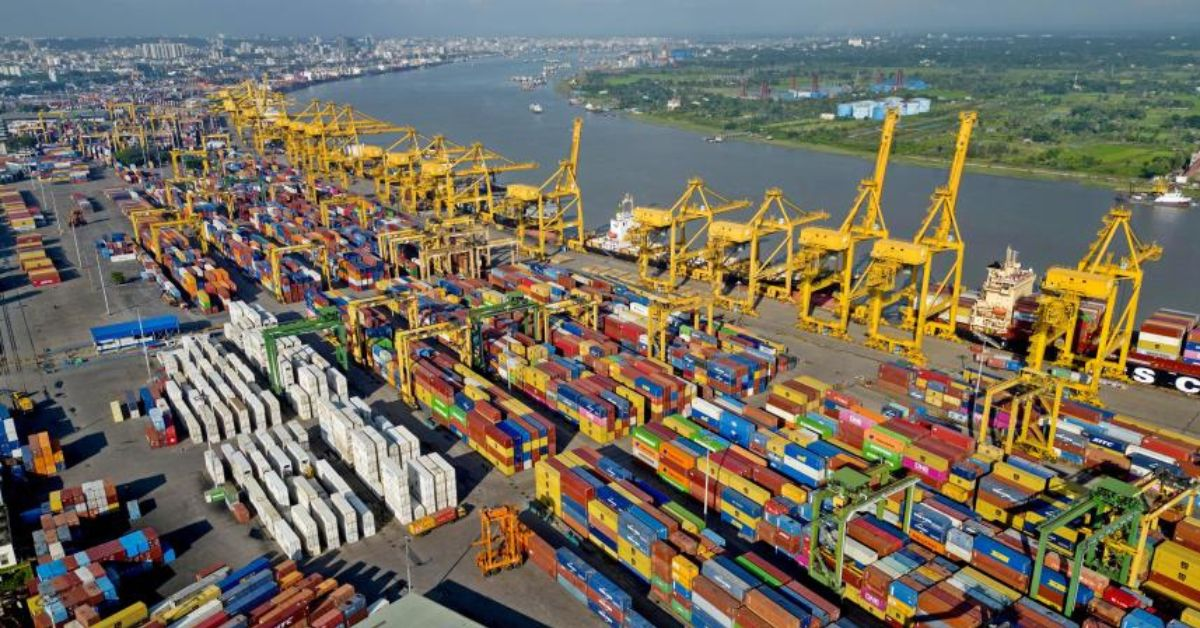
Chattogram Port Authority is facing renewed pressure to accelerate cargo release after import containers continued to remain inside Bangladesh’s principal maritime gateway for more than a week on average.
Average import-container dwell time increased from 7.8 days in 2023 to 8.3 days in 2024, while customs officials have indicated that clearance periods remained above 11 days during 2025. Digitisation and procedural reform have reduced some administrative work, but they have not resolved the delays that accumulate before, during, and after formal customs assessment.
Chattogram Customs House has asked importers to submit bills of entry within ten hours of a vessel’s arrival. Some declarations are still lodged more than a week later, leaving containers occupying terminal space before assessment, duty calculation, inspection, and release can begin.
Late declarations do not arise from one process alone, since importers may still be waiting for original bills of lading, invoices, certificates, permits, or other documentation from overseas suppliers and shipping agents. Where scanned documents are not accepted, the physical arrival and reconciliation of records can determine when customs work starts.
Further delay is created by uncertainty over the statutory five-day clearance period, because existing provisions do not clearly establish whether the countdown begins when the goods arrive or when the bill of entry is submitted. Customs may complete its own assessment quickly after receiving a correct declaration, yet the container can already have spent several days inside the port.
Congestion extends beyond the customs desk
Chattogram handles more than 80% of Bangladesh’s international trade, placing its release performance at the centre of the country’s industrial and export economy. Machinery, chemicals, food ingredients, packaging, pharmaceuticals, intermediate goods, and finished products compete for space within the same port and inland transport system.
A container held inside the terminal generates costs well beyond storage and demurrage. Manufacturers may delay production, increase safety stocks, pay for urgent replacement freight, or leave vehicles and drivers waiting for collection windows that cannot be predicted accurately.
Vessel performance is affected in parallel, with container ships spending roughly half their total port time at anchor, compared with around one-third across the wider global sample. Slow cargo evacuation reduces available yard capacity, increases rehandling, and makes it harder to maintain a stable berth and crane sequence for arriving ships.
The planned Bay Terminal is intended to add deeper-water capacity, accommodate larger vessels, and reduce the physical limitations of the existing port area. A US$650m World Bank investment is supporting the programme, with potential economic savings estimated at around US$1m a day once the wider port system is operating effectively.
Additional quay capacity cannot release a container whose documentation remains incomplete, however, nor can it move cargo when an importer lacks suitable storage, a truck cannot secure a slot, or an inland destination is unable to receive the load. The value of new infrastructure will depend on customs, port-community systems, depots, rail links, roads, and receiving operations advancing together.
Full-scale operations at the Patenga Container Terminal have already increased the port’s available handling infrastructure, but the broader cargo journey still depends on the coordination of documents, inspections, vehicles, and inland facilities.
Shared timestamps would expose the delays
Electronic systems can create a reliable audit trail, provided that every participant records events consistently. A common sequence covering vessel arrival, document receipt, declaration submission, customs intervention, payment, release, truck booking, gate collection, and final departure would separate the stages now concealed within one overall dwell figure.
Importers, agents, customs teams, terminal operators, carriers, and hauliers could then identify whether a delay arose from missing paperwork, inspection capacity, payment, unavailable transport, terminal congestion, or an inland receiving problem. Without those distinctions, dwell data identifies poor performance without showing where labour, technology, enforcement, or infrastructure should be applied.
Warehousing and cold-chain provision outside the port also require further development, particularly where importers cannot remove goods until suitable storage becomes available. Perishable food, agricultural produce, seafood, and pharmaceuticals need controlled facilities and dependable onward transport rather than extended residence in general container stacks.
Moving more inspection, storage, consolidation, and distribution activity into appropriately equipped inland locations would release scarce terminal land for vessel transfer and short-duration container handling. That transition needs secure data exchange and customs control so that congestion is not merely transferred from the quay to another poorly connected facility.
Chattogram’s performance will ultimately be judged by the interval between vessel arrival and usable inventory. Bangladesh is investing heavily in maritime capacity, but the commercial return will remain diluted while paperwork, customs decisions, storage, and inland cargo movement proceed at different speeds.