IN Brief:
- A barge carrying 540 tonnes of Assam-produced methanol has left Bogibeel Terminal in Dibrugarh for Bangladesh.
- The roughly 1,300km journey combines National Waterway-2 on the Brahmaputra with the Indo-Bangladesh Protocol Route.
- The sailing is the first international cargo movement from upper Assam since Indian independence and will test the route as a commercial freight corridor.
India’s Ministry of Ports, Shipping and Waterways has opened a new international river freight movement from upper Assam, with 540 tonnes of methanol leaving Bogibeel Terminal in Dibrugarh for Bangladesh.
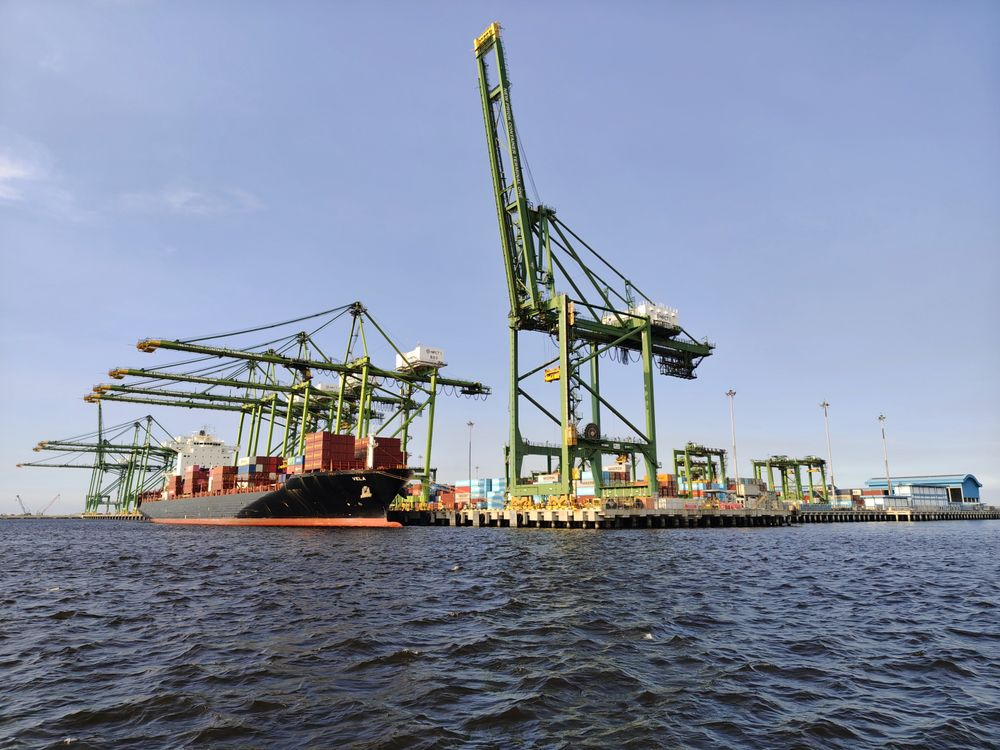
The cargo, produced by Assam Petro-Chemicals Limited at Namrup, is travelling aboard the barge DLB Patkai, pushed by the tug Kushal Konwar. Its destination is Pangaon Port in Dhaka, reached through National Waterway-2 on the Brahmaputra and the Indo-Bangladesh Protocol Route.
Covering roughly 1,300 kilometres in total, the movement uses approximately 768 kilometres of Indian inland waterway before continuing through the bilateral protocol route towards Dhaka. Indian authorities describe it as the first international cargo movement from upper Assam since independence.
Dibrugarh’s river ghat ceased regular activity during the 1950s, leaving road and rail to carry much of the region’s subsequent freight growth. Reintroducing international waterborne freight gives producers in northeast India another route towards overseas markets without requiring every consignment to move first towards a distant coastal seaport.
The commercial case will depend on whether the corridor can handle repeated cargoes reliably rather than one inaugural sailing. River depth, seasonal conditions, terminal handling, border processes and onward connections all influence whether the physical advantage of water transport translates into a competitive logistics service.
Methanol provides a substantial first cargo because the shipment can move as one bulk consignment rather than being divided across a large number of road vehicles. Inland waterways tend to be most effective where significant volumes can tolerate longer transit times in exchange for the ability to move more material in each transport unit.
That advantage weakens if cargo waits for handling or documentation at intermediate points. The current journey will therefore provide operating evidence across several parts of the chain, including the performance of Bogibeel Terminal, navigation on the Brahmaputra and the transition into the Indo-Bangladesh Protocol Route.
The bilateral protocol already gives India and Bangladesh an established framework for cross-border inland-waterway movements. Extending practical use of that system into upper Assam increases the reach of a corridor that can connect industrial producers in India’s northeast with markets further downstream.
Bogibeel becomes a critical interface within the route because the value of the waterway depends on cargo reaching and leaving the river efficiently. Production sites are not located on the terminal itself, so road and other inland movements still have to connect factories with the vessel.
The route therefore reduces one section of the overland journey rather than replacing multimodal logistics altogether. Its performance has to be judged across the complete movement from production site to final destination, including any transfer costs created at the terminal.
Assam Petro-Chemicals’ involvement gives the sailing a direct industrial basis. The methanol originated at its Namrup operations, meaning the freight was generated by an established producer rather than assembled solely to demonstrate the route.
Repeat traffic will depend partly on whether industrial volumes can be aggregated consistently enough to support further sailings. A waterway can provide substantial carrying capacity, but irregular cargo demand can make vessel scheduling and terminal utilisation difficult to sustain commercially.
Pangaon provides an inland terminal close to Dhaka at the other end of the movement, allowing cargo to travel further by water before final distribution. That can reduce the distance covered by road, although handling and onward transport remain part of the total logistics cost.
Administrative performance will matter alongside physical capacity. Recent customs reforms at Chattogram have shown that digital processes alone do not guarantee faster cargo movement when documentation, responsibilities and physical handling remain misaligned.
River freight operates differently from containerised deep-sea trade, but the same constraint applies: infrastructure only creates useful capacity when cargo can move through the associated administrative and handling processes predictably.
Indian authorities are treating the Dibrugarh shipment as a practical test of the Brahmaputra’s role in international freight. One successful voyage establishes that the route can be used, while repeated commercial sailings would provide firmer evidence on transit time, seasonal reliability, cargo handling and cost.
Other commodities from Assam and the wider northeast could follow where shipment size and delivery requirements suit water transport. Petroleum products, agricultural cargoes and manufactured goods all present different handling requirements, so the route will not be equally attractive to every shipper.
The significance of the current movement lies in putting the complete chain back into operation. An industrial cargo has left upper Assam by river, crossed into an international protocol route and begun a journey towards Dhaka, creating a live test of whether this historic transport corridor can support modern commercial supply chains.