IN Brief:
- Marshall’s Transport has extended its UK pallet-distribution contract with Lucart beyond seven years.
- The relationship began when Marshall’s deployed a replacement fleet on the day Lucart’s former carrier withdrew.
- Marshall’s now manages Lucart’s nationwide pallet movements through its shareholder membership of Pallet-Track.
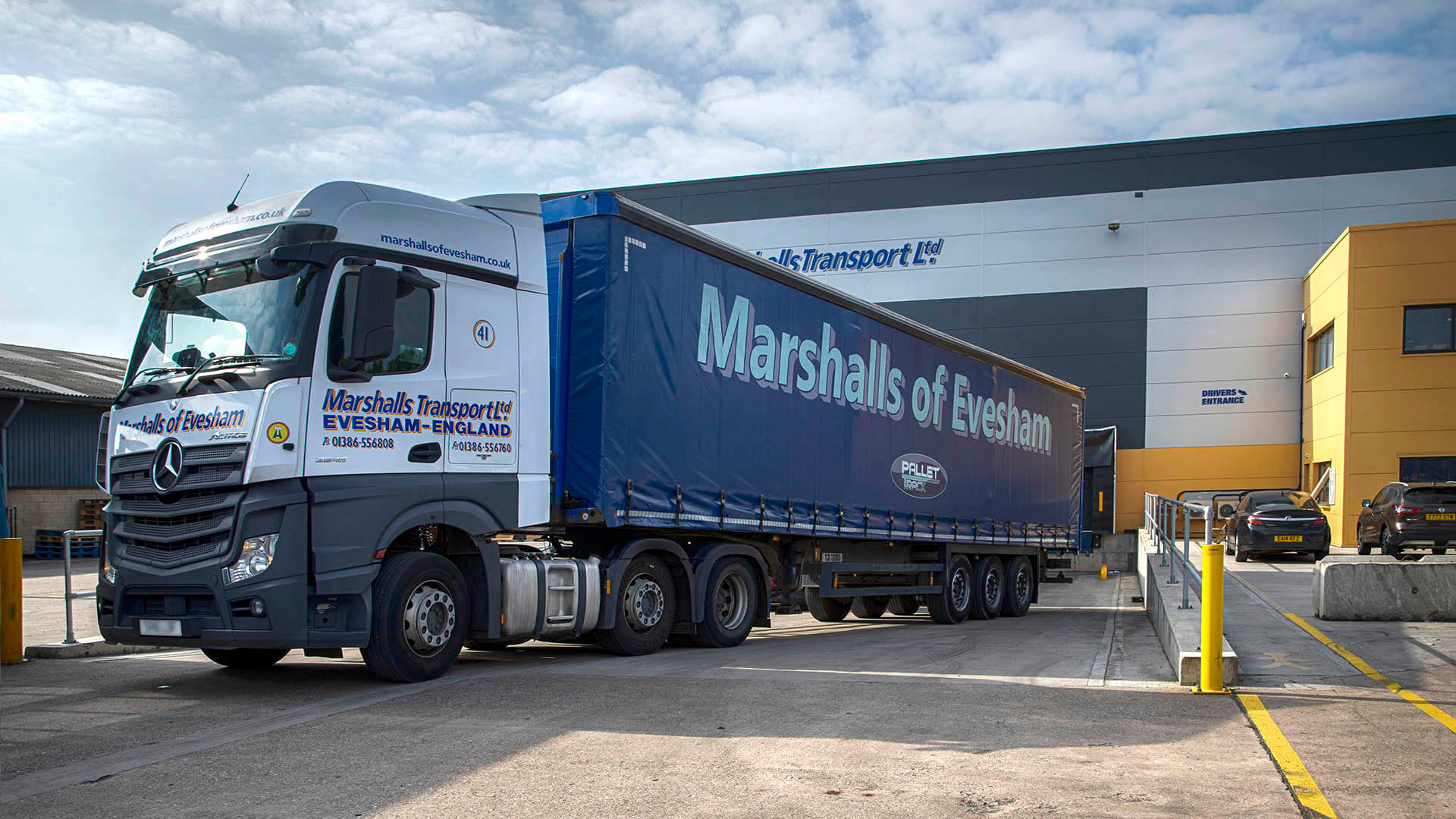
Marshall’s Transport has renewed its nationwide pallet-distribution contract with hygiene-products manufacturer Lucart, extending a relationship established more than seven years ago.
The companies began working together in 2019 after Lucart’s previous haulage provider withdrew its services with almost no notice. The sudden loss of transport capacity placed UK customer deliveries at risk and required a replacement operation to be assembled immediately.
Marshall’s organised a full vehicle fleet on the day it received the request, allowing Lucart’s palletised products to return to the road with limited disruption. What began as emergency cover subsequently developed into a contract encompassing all of Lucart’s UK pallet-distribution requirements.
The service is delivered through Marshall’s shareholder membership of the Pallet-Track network, combining the haulier’s own collection and customer-management operation with national hub sorting and destination-depot coverage.
Lucart manufactures tissue-paper products and dispensing systems supplied to offices, restaurants, healthcare facilities, industrial sites, and other professional environments. Its distribution profile ranges from larger stocking points to customers with constrained receiving areas and tightly defined delivery windows.
Brian Simpson, operations director at Marshall’s Transport, said: “On the same day the request was received, we organised a full fleet of vehicles to handle Lucart’s UK pallet distribution. This rapid response ensured Lucart’s goods were quickly back on the road, allowing deliveries to continue with minimal disruption to customers.”
Emergency cover becomes a national operation
The original intervention restored immediate transport capacity, while the renewed contract reflects the daily performance required once the disruption had passed. Collections, hub transfers, local deliveries, tracking, claims handling, and exception communication must remain consistent across a network involving several operating companies.
Pallet networks give regional hauliers national reach by consolidating freight through shared hubs and member depots. Manufacturers can access broad geographical coverage without one carrier operating every route directly, while destination members retain local knowledge and delivery capability.
Every handover introduces a control point, since a pallet may be collected by Marshall’s, trunked to the central network, sorted, transferred to another member, and delivered on a separate vehicle. Labels, scans, dimensions, packaging, service codes, and exception data must remain accurate through each stage.
Lucart’s tissue products are relatively light compared with many industrial pallet loads but can consume substantial trailer cube. Vehicle utilisation therefore depends on balancing volume as well as weight, while load security and packaging condition require careful handling through hubs and local depots.
Damage to outer packaging may affect customer acceptance even where the product itself remains usable, particularly when goods are destined for hygiene-sensitive or customer-facing environments. Dry storage, secure loading, careful transfer, and rapid reporting remain central to service quality.
Flexible support is also required when production schedules, customer priorities, or volumes change at short notice. Additional collections, revised delivery sequences, alternative vehicles, storage, and coordination with destination members may all be needed to protect urgent orders.
Julie Rhodes, customer service manager at Lucart, said: “Their willingness to adapt and respond quickly to our needs has played a key role in helping us meet and exceed customer expectations.”
Pallet networks broaden their operating scope
UK pallet networks are extending beyond hub-and-spoke transport as customers seek storage, shipment visibility, transport-management technology, exception control, and flexible capacity alongside the physical pallet movement.
Pallet-Track’s integration into the northstarr group has brought the network together with warehousing, transport-management software, and flexible logistics services, giving shareholder members additional options where customer requirements exceed a standard collection-and-delivery movement.
Marshall’s remains the principal operational relationship for Lucart even when a destination member completes the final delivery. During weather, traffic, vehicle failure, depot congestion, or customer closure, the manufacturer requires one clear account of the pallet’s position and the action being taken.
Scan data increasingly determines how quickly those exceptions can be resolved, showing whether freight has arrived at the hub, moved to the correct bay, departed on the planned trunk, reached the destination depot, or entered final delivery.
Efficient consolidation can also improve vehicle utilisation compared with multiple dedicated part-load movements, although the final environmental performance depends on hub mileage, network balance, failed deliveries, vehicle efficiency, and empty running.
The partnership extends beyond commercial transport, with Marshall’s providing a Luton van for Lucart’s Christmas Tree charity campaign during the past two years and sponsoring employees taking part in skydiving and canoeing initiatives.
Lucart’s original loss of a carrier demonstrated how quickly an established distribution plan can fail. The renewed agreement retains access to Marshall’s local operation and Pallet-Track’s national network, with consistent communication and flexible capacity carrying the relationship well beyond its emergency beginning.