IN Brief:
- The 6000 Series creates an above ground loading position without a conventional dock pit.
- Models support capacities from 5,500lb to 15,000lb across several handling equipment types.
- Positioning and anchoring the lift can reduce construction work at existing industrial buildings.
Advance Lifts is promoting its 6000 Series Top of Ground Dock Lifts as an alternative to excavated loading pits at warehouses, factories, distribution centres, retail sites, and other industrial buildings.
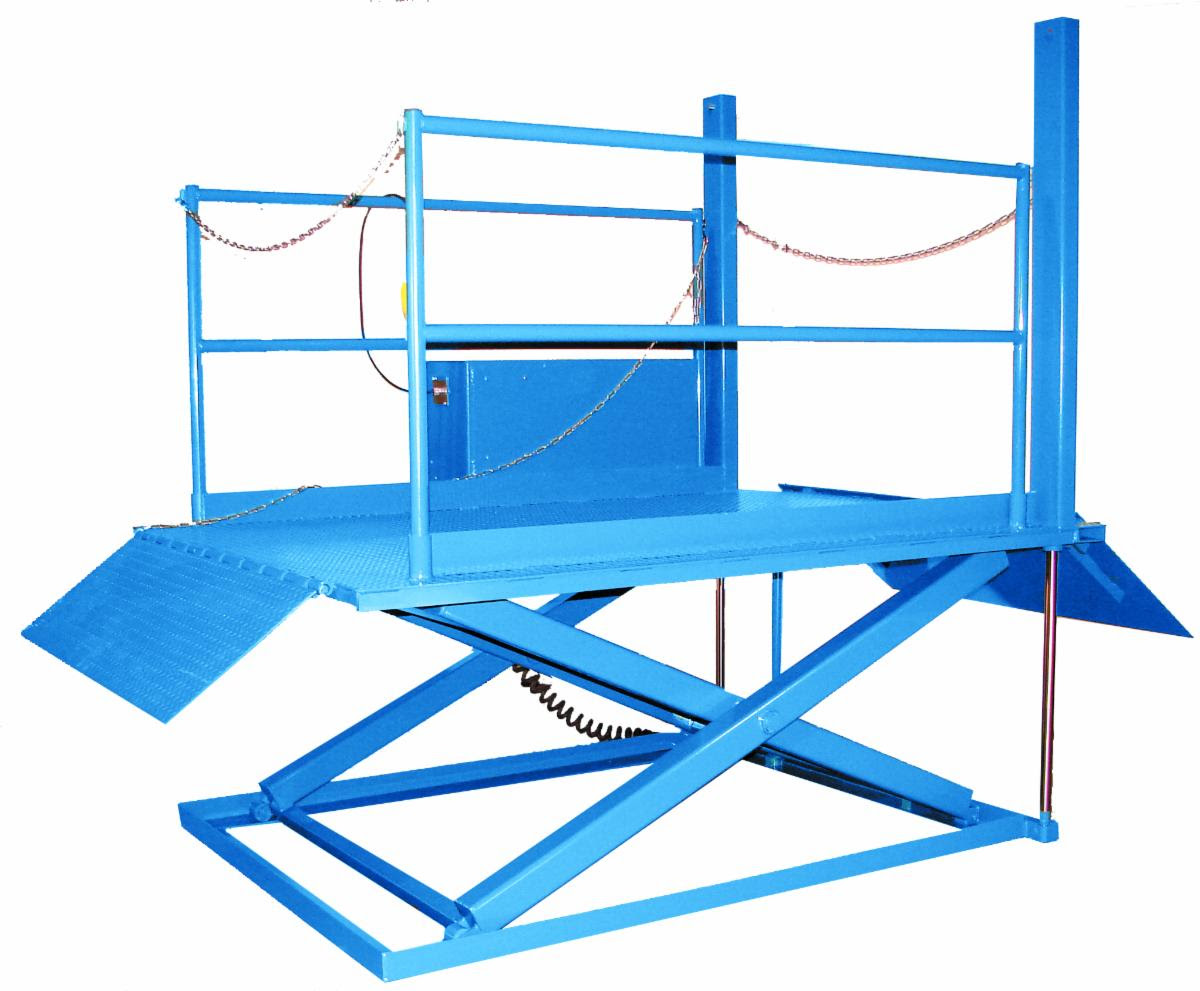
The units are positioned on an existing surface, anchored in place, and connected to an electrical supply. An approach ramp allows handling equipment to enter from ground level before the platform rises to the deck height of a waiting vehicle.
Available models carry rated loads from 5,500lb to 15,000lb, with platform dimensions extending from approximately 6ft by 8ft to 8ft by 12ft. Configurations can accommodate manual pallet trucks, powered pallet trucks, straddle stackers, small lift trucks, and heavier forklifts.
The platforms rise to a maximum height of 58in, while lowered heights are approximately 5in or 6in depending on the model. Smaller units use 5hp power systems and larger models use 7.5hp equipment, with lifting speeds ranging from about 10ft to 13ft per minute.
A hinged bridge spans the gap between the lift platform and vehicle deck, while a pull back chain allows the bridge to be repositioned. The system also incorporates an approach ramp, wheel control features, and electrical assemblies approved by Underwriters Laboratories.
Hydraulic components include machine grade cylinders, double wire braid pressure hoses with JIC fittings, clear return lines, and mild steel reservoirs. Units rated up to 8,000lb use two cylinders, while the larger 10,000lb, 12,000lb, and 15,000lb models use four.
The steel structure receives a phosphoric acid wash before priming and application of a baked enamel finish. The range is designed to conform with applicable ANSI requirements and is intended for routine industrial loading duties.
Installing a lift above the existing surface can reduce excavation, drainage, reinforcement, and concrete work. That approach is particularly useful where underground services, building structure, lease terms, or project timescales make a conventional dock pit impractical.
Older industrial buildings often lack enough dock positions for present delivery volumes, yet a complete redevelopment may be commercially unrealistic. An above ground unit can add receiving capacity while leaving the main structure largely unchanged.
The reduced construction scope comes with a greater requirement for clear floor area. A recessed lift can sit flush when lowered, whereas an above ground installation requires space for the ramp, platform, barriers, equipment approach, and vehicle alignment.
Site planning must therefore account for forklift turning circles, pedestrian routes, storage positions, trailer movement, visibility, and emergency access. A lift placed in the wrong location can replace one loading constraint with congestion inside the yard or warehouse.
Capacity selection must include the combined weight of the truck, operator, attachment, pallet, and cargo rather than the payload alone. Wheel positions, axle loads, duty cycle, and load concentration also need to match the selected platform.
A unit handling manual pallet trucks several times each day faces a different operating profile from a lift carrying a heavy forklift throughout a continuous shift. Selecting only against maximum load can leave the hydraulic and structural system poorly matched to the frequency of use.
Loading dock investment is expanding across both equipment and service businesses. Johnson Equipment’s recent acquisition activity has widened its coverage across dock installation, maintenance, doors, and warehouse safety systems.
Automation is also moving towards the vehicle interface. A powered trailer loading demonstration at MODEX showed how automated movement can reduce manual handling inside the vehicle, while the 6000 Series addresses the structural connection between yard level and trailer deck.
That interface remains among the more hazardous areas of a logistics site. Trailer movement, premature departure, damaged bridge plates, uneven deck heights, poor communication, and conflicts between people and forklifts can interrupt loading and cause serious injury.
The lift should therefore operate alongside wheel restraints, vehicle control signals, barriers, traffic procedures, inspection schedules, and driver communication. Installing the equipment does not remove the need for a complete dock safety system.
Hydraulic hoses, cylinders, hinges, electrical controls, and bridge components also require preventative inspection. Leaks, wear, corrosion, or alignment problems can remove a loading position from service at short notice if maintenance is deferred.
The 6000 Series provides several sizes within the same above ground concept, allowing the installation to be matched to equipment, vehicle frequency, and available space. Where those conditions align, avoiding a pit can shorten the construction programme and bring additional loading capacity into use with less disruption to the existing building.