IN Brief:
- Five weekly Boeing 777 freighter flights now connect Guangzhou directly with Sydney.
- Selected shipments from seven Asian markets can reach Australia up to one day faster.
- The route adds controlled capacity for heavy, urgent, and high-value inbound freight.
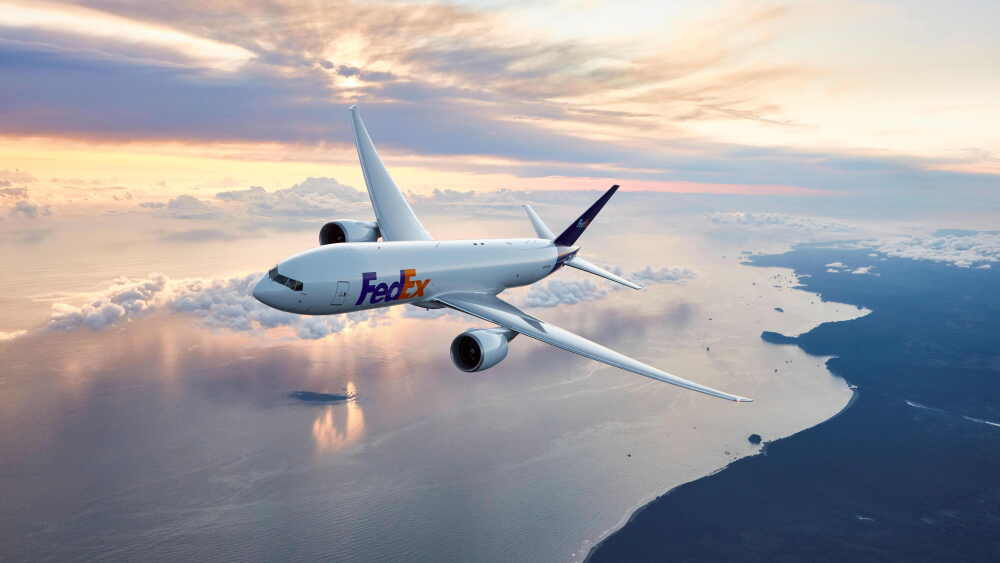
FedEx has opened a dedicated non-stop freighter service between its Asia-Pacific hub in Guangzhou and Sydney, adding five weekly Boeing 777 flights into Australia. The route gives selected shipments from seven Asian markets a more direct path into the country, with eligible services reaching their destination in as little as two business days. The scheduled frequency gives shippers several weekly recovery options when routine plans fail.
The company says consignments originating in southern mainland China, Hong Kong, Japan, South Korea, Malaysia, the Philippines, and Thailand can arrive up to one day faster. The improvement applies to selected FedEx International Priority, International Priority DirectDistribution, and International Priority Freight services, subject to capacity, commodity restrictions, and local operating conditions.
Guangzhou already consolidates traffic moving across the FedEx network in Asia. A direct Sydney flight removes an intermediate network step after freight reaches the hub, while the Boeing 777 provides main-deck capacity for pallets, dense consignments, and larger shipments that cannot be accommodated efficiently in passenger aircraft belly space.
The service is likely to attract cargo where delay costs more than the transport premium. Electronics, industrial components, medical products, machinery spares, and launch stock can become expensive inventory problems when a shipment misses a production window or maintenance slot. A one-day reduction does not alter every supply chain, but it can reduce the buffer stock required to protect operations against uncertain transit.
Five weekly departures also give shippers a more usable operating pattern than occasional charter capacity. Freight can be spread across the working week, while forwarders gain another option when an order misses a cut-off or has to be rebooked. The frequency is important because air freight reliability depends on collection timing, export clearance, hub processing, uplift, import handling, and final distribution aligning around the aircraft schedule.
The route serves more than Guangzhou-origin traffic. Shipments from North and Southeast Asia can feed into the Chinese hub before moving to Sydney, allowing FedEx to consolidate several origin markets onto one trunk service. That arrangement can improve aircraft utilisation and widen access to the direct flight, although its performance will still depend on feeder reliability and the amount of time freight spends inside the hub.
Heavy freight forms a substantial part of the proposition. Express networks are commonly associated with parcels, yet industrial customers also use time-definite services for pallets and production-critical consignments that would otherwise move through conventional forwarding arrangements. Dedicated freighter capacity gives the carrier more flexibility over size, density, and handling, provided shipments remain within aircraft, station, and dangerous goods limits.
The new connection forms part of a wider expansion of FedEx’s intra-Asia network. The carrier has also added a Guangzhou–Penang service, increased freighter links between Guangzhou and Bangkok, and strengthened an outbound connection from Hanoi to South Korea. The pattern points to denser regional feeds supporting larger international gateways rather than isolated route additions.
Faster linehaul will only improve the end-to-end result when documentation and receiving operations keep pace. Incomplete customs data, biosecurity intervention, or unavailable domestic transport can consume the time gained in the air. Importers using the service will still need accurate classification, advance information, compliant packaging, and a receiving plan capable of acting on the earlier arrival.
The route also gives procurement teams another choice between routine ocean freight and emergency air movements. It will not replace sea transport for regular high-volume goods, where unit cost remains decisive. Its stronger role sits in replenishment, recovery stock, urgent replacement parts, and products whose value, shelf life, or operational importance can justify faster movement.
Capacity between Asia and Australia can tighten quickly during peak retail periods, severe weather, and production surges. A scheduled five-flight service creates another channel for urgent demand, but the published transit advantage will need to hold during those more difficult periods. Hub congestion, aircraft utilisation, and downstream delivery can erase a nominally shorter schedule if any part of the chain loses control.
Factories and customers remain spread across several countries despite years of discussion about regionalisation. FedEx is adding physical capacity across one of those established corridors, linking a major southern Chinese hub with Australia’s largest air-cargo market. The route will earn its place in customer networks if the additional frequency translates into fewer missed deadlines, lower emergency costs, and more predictable inbound supply.