IN Brief:
- Van Der Mierden Transport has taken a DAF XD Electric into day-to-day milk collection and dairy transport.
- The 4×2 tractor uses a 350kW driveline and 525kWh battery pack, with DAF claiming more than 500km range depending on application.
- The deployment tests battery-electric heavy haulage in a predictable but payload-sensitive food supply-chain duty cycle.
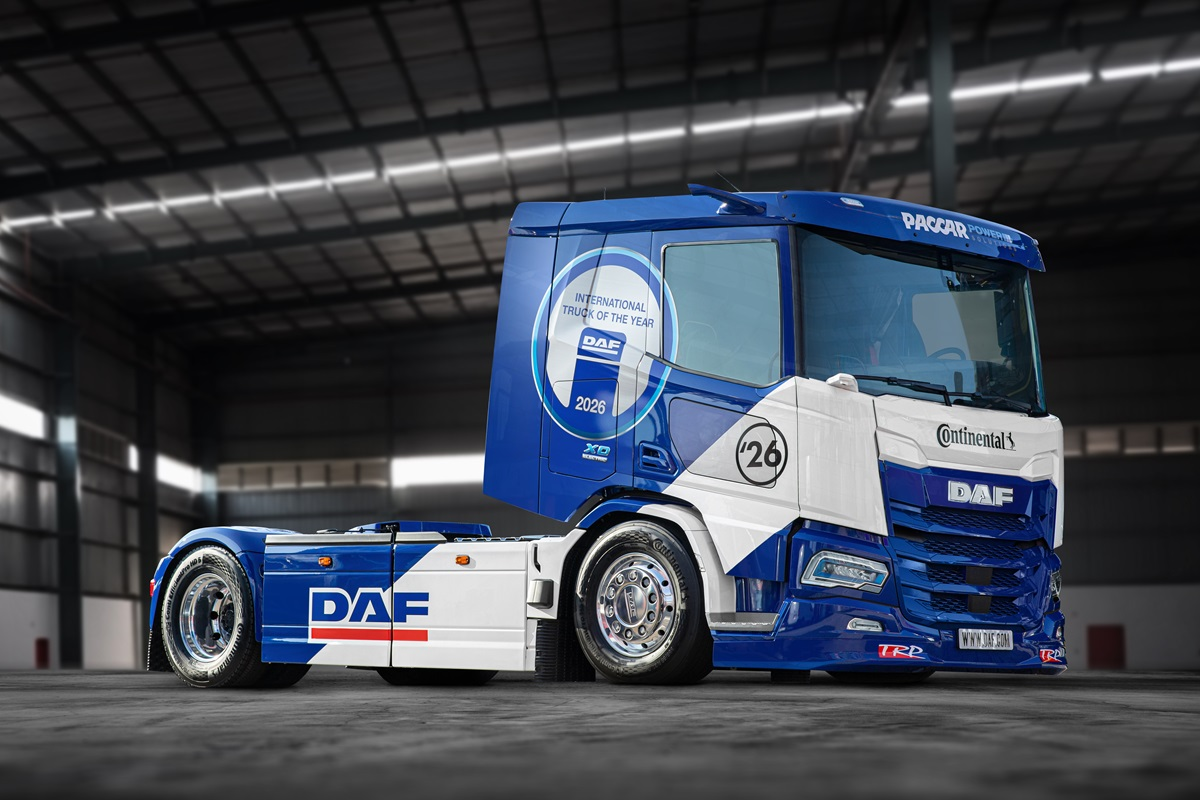
DAF Trucks has delivered an XD Electric tractor to Van Der Mierden Transport for milk collection and other dairy movements, putting a battery-electric heavy truck into a regular logistics operation rather than a demonstration route. The XD 350 FT 4×2 combines a 350kW electric driveline with a 525kWh battery pack and a claimed range of more than 500 kilometres, depending on the application.
The vehicle was specified by DAF Netherlands and supplied through Truckland. Its appearance takes cues from DAF’s 1990s racing trucks, but the more useful detail for fleet operators is the work it will perform: collecting milk and supporting dairy transport using insulated tank trailers.
Van Der Mierden Transport has operated in the sector for more than 60 years and today carries fresh milk, dairy raw materials, semi-finished products, and finished goods in the Netherlands and internationally. That gives the electric tractor a more demanding operating case than short urban delivery, while retaining some characteristics that can make electrification easier to plan.
Milk collection tends to follow defined routes and customer schedules, giving fleet managers a clearer view of expected daily distance than highly variable spot haulage. The vehicle can also return regularly to known operating locations, making charging easier to plan around the transport cycle than on long-distance international routes where public charging availability becomes more critical.
Predictability does not make the duty simple. Tank operations are sensitive to gross weight and axle loading, while fresh-milk collections have to fit processing schedules and product-handling requirements. A vehicle that needs an unplanned charging stop can therefore disrupt more than the tractor’s own timetable if its arrival is linked to collections or production at a dairy facility.
The 525kWh battery pack is intended to give the XD Electric enough usable range to cover substantial daily mileage. DAF’s figure of more than 500 kilometres is explicitly application-dependent, so actual performance will vary with payload, route profile, weather, driving style, auxiliary consumption, and the amount of recoverable braking energy available.
That makes route data more important than a manufacturer’s maximum-range figure. Operators considering similar vehicles need to know how often their existing diesel tractors exceed the electric truck’s practical working range, how much time vehicles spend stationary, and whether those dwell periods occur where sufficient charging power is available.
Charging infrastructure has become one of the main constraints on the wider European transition to zero-emission heavy vehicles. The EU’s current CO2 standards require a 43% reduction for relevant new heavy-duty vehicle fleets from 2030 and a 90% reduction by 2040. A targeted amendment adopted in March introduced temporary flexibility around manufacturers’ 2030 compliance path but left the long-term targets unchanged.
The amendment specifically acknowledged the slow rollout of public charging infrastructure along motorways. That makes depot-based and predictable regional operations especially important during the early stages of heavy-truck electrification, because fleets able to charge at their own sites are less dependent on a fully developed public network.
Dairy logistics offers precisely that sort of operating case if route length and charging opportunities align. A truck completing repeat collection work can potentially charge between planned shifts or during existing idle periods, provided the depot has enough grid capacity and chargers can deliver the required energy without extending vehicle downtime.
The economics are more complicated. Battery-electric tractors typically require a higher initial capital outlay than diesel equivalents, and infrastructure may add substantial project cost. Against that, electricity, maintenance, road charging, taxation, and regulatory incentives can change the lifetime comparison, particularly where vehicles accumulate high annual mileage on routes suited to electric operation.
DAF has not published Van Der Mierden’s charging strategy, energy consumption, annual mileage, or total-cost calculations, so the announcement does not establish the commercial case for this specific deployment. Nor does one vehicle demonstrate that bulk dairy fleets can be electrified wholesale.
It does provide a useful operational step beyond controlled testing. Milk collection combines scheduled transport, significant payload, food-industry requirements, and daily utilisation, giving the XD Electric a duty cycle in which poor range or charging assumptions would become visible quickly.
The more relevant evidence will therefore emerge after the truck has accumulated working mileage. Energy consumed per route, achievable payload, charging time, vehicle availability, and whether the tractor can complete normal collections without special operational concessions will matter far more than its one-off racing-inspired appearance.
If those figures prove workable, dairy transport would join a growing group of repeat-route applications where heavy electric vehicles can be deployed before public charging becomes ubiquitous. The Van Der Mierden truck will now have to demonstrate that proposition with milk in the tank rather than assumptions on a specification sheet.