IN Brief:
- Kenco's new 30,000-square-foot Innovation Lab is three times the size of its original testing facility.
- GreyMatter coordinates robots, other automation equipment, and warehouse employees through common fulfilment workflows.
- A live Kenco deployment reports 20% lower transport costs, 30% fewer pallets per order, and doubled case-picking throughput.
Kenco is using GreyOrange’s GreyMatter orchestration software inside its new 30,000-square-foot Innovation Lab, giving customers a working environment in which to test how automation from several vendors performs as one warehouse operation.
The Chattanooga facility is three times the size of Kenco’s original laboratory and has been designed to accommodate larger and more complex logistics technologies. Retailers, distributors, manufacturers, and other customers can examine automation before committing capital to a live distribution-centre deployment.
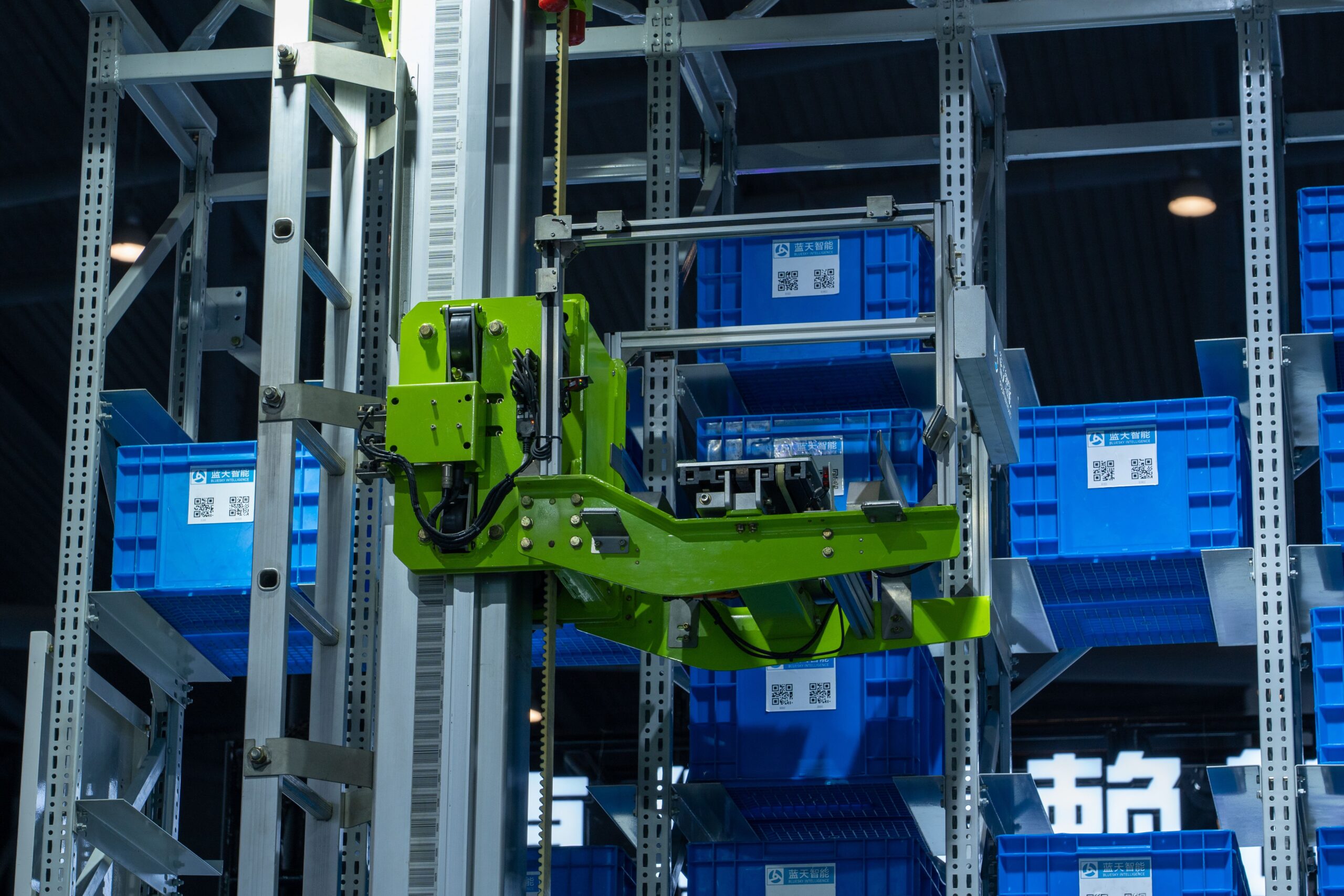
GreyMatter operates as an orchestration layer across several systems in the lab. Demonstrations include goods-to-person picking, outbound sortation, point-to-point material movement, and case-picking workflows, with the software coordinating equipment from multiple vendors alongside warehouse employees.
Kenco has worked with GreyOrange since 2024 and is already using GreyMatter across a growing number of distribution centres. At one live site, the companies report a 20% reduction in transport costs, a 30% reduction in pallets per order, and twice as many cases picked per hour after orchestration was introduced.
Those supplier-reported figures are specific to one operation rather than a general performance guarantee, but they give the laboratory programme an operational reference point. The underlying issue is how several pieces of warehouse equipment behave when they share the same orders, inventory, workstations, and shipping deadlines.
Automation fleets are becoming increasingly mixed. A distribution centre may contain autonomous mobile robots from one supplier, sortation from another, conventional conveyors, packaging systems, forklifts, and existing warehouse machinery installed over several investment cycles. Each system can improve an individual process while creating congestion elsewhere if priorities are not coordinated.
Orchestration software attempts to manage that layer above individual machines. An order can require inventory retrieval, movement to a workstation, picking, consolidation, packing, sortation, and dispatch. Where several technologies contribute to that journey, the controller needs to understand queues, equipment availability, labour, and shipping priority well enough to decide which resource should act next.
The expanded lab gives Kenco somewhere to test those interactions before reproducing them at customer sites. Its predecessor covered 10,000 square feet, while the replacement provides 30,000 square feet for larger equipment and more complex workflows. Kenco says the centre is intended to support hands-on testing by both customers and equipment manufacturers.
The facility does not eliminate the need for site-specific engineering. Order profile, SKU velocity, building geometry, peak demand, workstation layout, fire strategy, labour availability, WMS architecture, and customer service levels still determine whether an automation design will perform in production.
The lab can, however, expose integration problems earlier. A robot may meet its quoted travel or picking rate while a packing station becomes the limiting step; a sorter may perform well until an upstream system releases work in the wrong sequence; or a warehouse-management system may provide data too slowly for orchestration software to react to changing conditions.
That matters particularly in third-party logistics. A 3PL can operate different customers inside the same building, each with separate inventory rules, peak seasons, service levels, and order characteristics. Equipment that fits one contract may become restrictive when the account changes or another customer is introduced.
Vendor-agnostic orchestration offers one route to retaining flexibility, but it depends on the interfaces exposed by each machine. Different vendors use different APIs, status messages, operating states, and safety logic, while older equipment may provide less information than a new robotic system. The orchestration layer can only coordinate what it can monitor and control reliably.
People remain part of the same workflow. Damaged goods, unusual items, maintenance events, blocked locations, and other exceptions still require manual intervention. Poor task allocation can simply move congestion from a robot queue to a human workstation, so the complete process has to be measured rather than the fastest piece of equipment.
Kenco announced the new lab in August and planned its opening for September, with GreyOrange now one of the vendors operating inside the expanded site. The facility gives customers a place to test technology against real material flows before those assumptions become fixed into a live warehouse.
Warehouse automation no longer lacks individual machines capable of moving totes, pallets, cartons, or shelves. The harder engineering problem is coordinating several systems, software layers, and employees so that the order moves through the building at the required rate. Kenco’s expanded lab is designed to make that system-level problem visible before the capital is committed.