IN Brief:
- VILLOID has awarded StrongPoint a contract worth approximately NOK17 million for a new Pio warehouse automation installation.
- The system will be twice the size of VILLOID’s existing Pio operation and use AutoStore-derived cube storage technology.
- Installation is scheduled for completion in Q2 2027 as VILLOID transfers fulfilment to a larger facility.
StrongPoint has secured a contract worth approximately NOK17 million to design and install a larger automated fulfilment system for Norwegian online fashion retailer VILLOID, doubling the scale of the retailer’s existing Pio operation as it moves distribution into a new location.
The installation is scheduled for completion in the second quarter of 2027. VILLOID already operates Pio technology and is expanding the system as part of a wider fulfilment-centre move, with StrongPoint saying the completed installation is expected to become the largest Pio facility deployed to date.
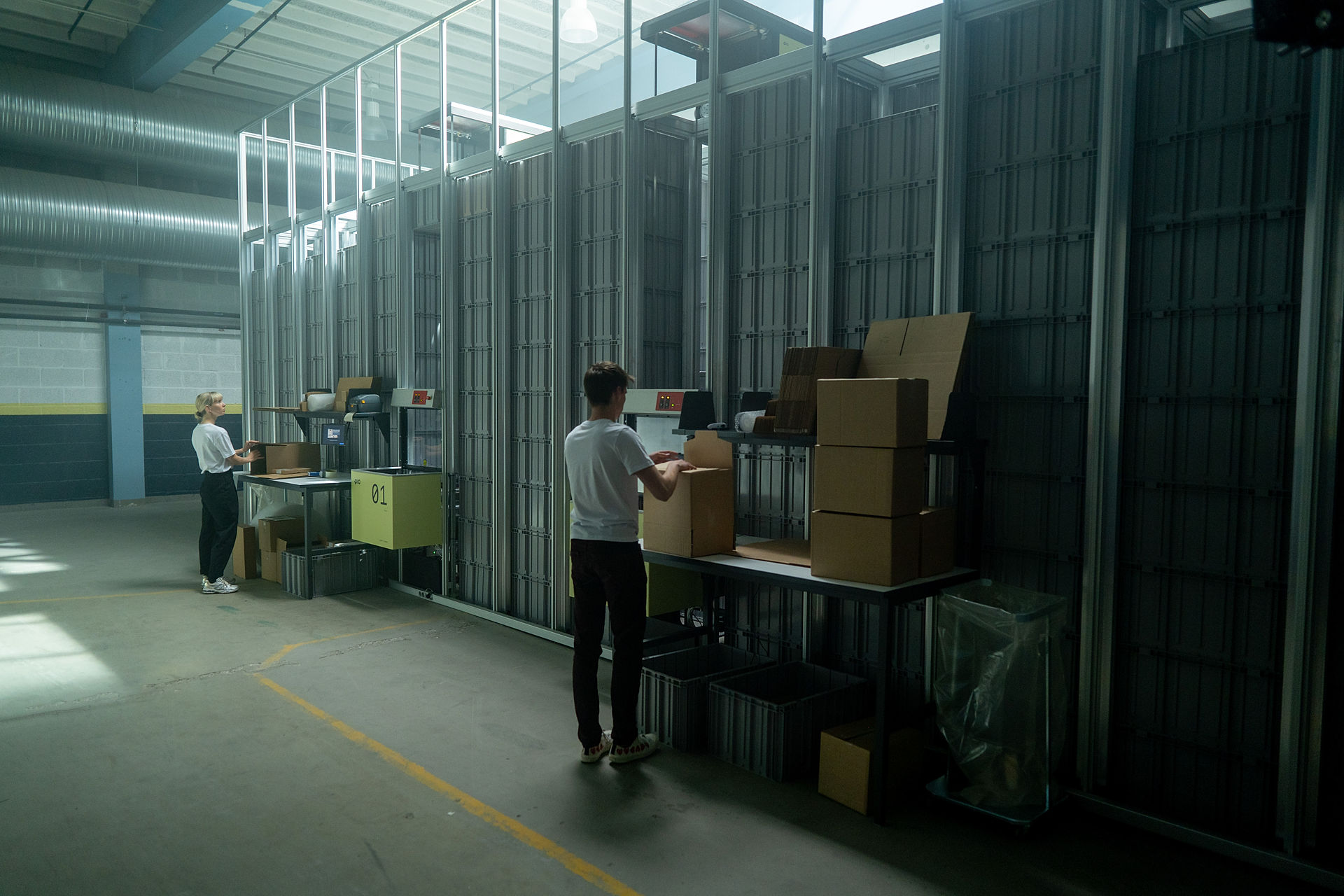
Pio was created by AutoStore as a simplified application of its cube-storage technology for smaller and mid-sized warehouse operations. Inventory is held in bins inside a grid, with robots travelling across the top of the structure to retrieve bins and present them at workstations. The layout concentrates storage within the available footprint and turns much of the walking and manual retrieval associated with conventional shelving into a goods-to-person process.
For VILLOID, the latest project expands an established automated operation rather than introducing automation for the first time. The retailer says it has used Pio for several years and is now transferring fulfilment into larger premises as order volumes increase. StrongPoint will design and install the new system, while Pio supplies the underlying AutoStore-derived platform.
The relocation adds more complexity than a straightforward capacity extension. Inventory has to be transferred between sites while customer orders continue to move, and the new operation needs to align storage, picking, packing, returns, replenishment, carrier handover, and software integration before the old facility can be retired. Each of those interfaces can constrain output even when the automated grid itself is operating as designed.
Pio systems connect with e-commerce platforms, ERP systems, and warehouse management software through APIs and established integrations. Accurate order, inventory, and replenishment data remain central as the installation grows. Dense storage can reduce travel and improve retrieval speed, but poor stock accuracy or delayed replenishment still appears downstream as missed picks, packing delays, or manual exception handling.
VILLOID was founded in Oslo in 2015 and currently offers around 250 brands. StrongPoint says the retailer has a community of about 500,000 customers and has used same-day delivery as part of its service proposition. The new facility is therefore being commissioned against an established fulfilment operation with existing service expectations rather than a warehouse still proving its basic order model.
The project also shows how cube-storage systems are moving further into mid-sized e-commerce operations. AutoStore positions Pio as a route into automation for companies that do not need the scale of a major national distribution centre from day one. Modular grids, robot fleets, and workstations can be expanded as inventory and throughput requirements change.
Modularity still depends on disciplined capacity planning. Warehouse output is shaped by peak order demand, average utilisation, SKU growth, replenishment volume, returns, packing capacity, and carrier cut-off times. Increasing retrieval capacity without expanding packing or despatch can simply shift the constraint further downstream.
VILLOID’s decision to double its Pio footprint therefore combines storage growth with a wider operating redesign. The larger grid creates more automated capacity, but the commercial return will depend on whether the surrounding process can convert that capability into more orders shipped through the same working day and whether the move can be completed without prolonged dual-site inefficiency.
Labour planning also changes when a goods-to-person system expands. Fewer hours may be spent walking aisles, while more work is concentrated around workstations, replenishment, packing, maintenance, and exception handling. That can make staffing more predictable, but it also increases dependence on equipment availability and on trained employees being positioned at the points where automation hands work back to people.
StrongPoint has been widening its warehouse-automation activity beyond its historic grocery-technology base, using established automation platforms alongside its own integration capabilities. The VILLOID contract gives it another reference project in e-commerce fulfilment, where order variability and returns place different demands on the operation from conventional store replenishment.
The Q2 2027 completion target provides a clear delivery milestone. Before then, the practical work includes fitting out the new premises, commissioning the grid and robots, connecting the software stack, transferring inventory, testing exception processes, and establishing the cut-over plan.
The size claim around the completed Pio installation will be easy to repeat, but operating performance will be determined by less visible measures: order cycle time, inventory accuracy, workstation utilisation, system availability, replenishment discipline, and the ability to absorb peaks without creating queues elsewhere in the building.
If those elements are aligned, the project gives VILLOID additional capacity without returning to a labour-intensive shelving model as order volumes grow. If they are not, a larger automated grid will only expose the next bottleneck sooner. The 2027 move will show how effectively the retailer can scale the whole fulfilment process, not just the storage technology at its centre.