IN Brief:
- TH Group handles plant investment, construction, and vehicle assembly, while GAC supplies CKD kits, technical standards, and technical support.
- The production-stage plant has a designed annual capacity of around 10,000 vehicles.
- GAC is moving its Cambodian operation from complete-vehicle imports towards a locally assembled supply model.
GAC Group has started local vehicle production in Cambodia through a knock-down assembly model, replacing part of its previous reliance on complete-vehicle imports. The plant in Kampong Chhnang Province is being operated with Cambodian partner TH Group and has a designed annual capacity of around 10,000 vehicles, according to the production-stage announcement.
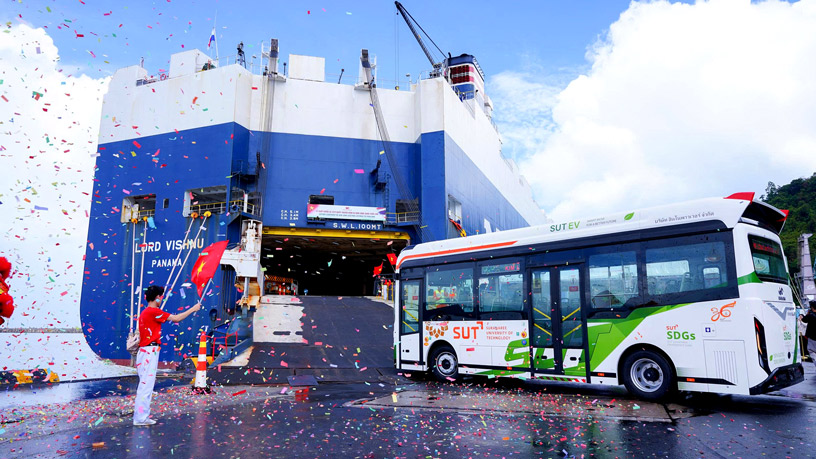
The arrangement divides responsibility across the supply chain. TH Group is responsible for plant investment, construction, and vehicle assembly, while GAC supplies complete knocked-down kits, technical standards, and technical support. International flows therefore shift from finished cars towards sequenced component sets that must arrive complete and in a form suitable for local assembly.
GAC and TH Group signed a cooperation agreement for the Cambodian KD operation in September 2025, after TH Automotive Manufacturing obtained an assembly and production licence. The latest step turns that market-entry structure into a live manufacturing flow, with imported kits feeding domestic assembly instead of vehicles arriving ready for sale.
CKD production is less forgiving of incomplete inbound flows than finished-vehicle importing. A delayed complete vehicle affects a sales order; a missing component can interrupt assembly across multiple units if it sits on the production critical path. Kit completeness, customs clearance, traceability, damage control, inbound scheduling, and buffer-stock policy become direct production-continuity issues.
GAC says its Cambodian business has expanded since 2024, and the plant adds local capacity as that sales footprint develops. Designed output is around 10,000 units a year. Actual throughput will depend on demand and the production ramp, but even lower utilisation establishes recurring flows for parts, packaging, returnable transport equipment, and production consumables that were not required when the market was served principally with imported complete vehicles.
The model also changes where inventory risk sits. Finished vehicles can be held at ports, compounds, or dealerships, whereas KD production pushes more stock into components and work in progress. That can reduce finished-vehicle inventory and allow specifications to be assembled closer to demand, but the plant remains exposed to ocean schedules, customs performance, supplier reliability, and the sequencing discipline of the kit operation.
Local assembly does not automatically produce local sourcing, particularly during an early ramp when quality, homologation, and production consistency favour established component suppliers. A stable assembly base can nevertheless create demand for locally or regionally sourced packaging, tyres, batteries, interior parts, service components, maintenance supplies, and third-party logistics. The rate at which those categories move closer to the plant will indicate how far localisation extends beyond final assembly.
GAC’s international logistics requirements are already becoming more distributed as the group enters new markets. In the UK, aftermarket infrastructure for the GAC-owned AION brand has been built around local warehousing and nationwide parts distribution. Cambodia uses a different model, but both operations depend on supply-chain infrastructure being established alongside the sales network rather than added after volumes arrive.
TH Group now has to turn a newly inaugurated plant into a repeatable production operation. Inbound kits need to reach Kampong Chhnang in the right sequence and condition, customs processes must support the production plan, and inventory must absorb normal transport variation without becoming an expensive substitute for reliability.
The same disciplines will shape any later increase in local content. Bringing more suppliers into the Cambodian operation would reduce some international transport exposure but introduce new qualification, quality, and scheduling requirements. The benefits of shorter supply lines depend on whether local and regional suppliers can meet the standards needed for serial vehicle production.
GAC’s next useful indicators will be actual production volumes, model mix, kit frequency, and the share of components sourced within Cambodia or neighbouring markets. Those measures will show whether the plant remains principally a final-assembly node for imported kits or develops into a deeper regional manufacturing base.
The logistics architecture has already changed. Cambodia is no longer being supplied only with finished GAC vehicles; it now has an assembly operation whose output depends on components arriving in the required quantity, sequence, and condition. That makes inbound reliability part of the manufacturer’s local market performance rather than a separate transport issue.
The designed 10,000-unit capacity also creates a defined ceiling against which transport and inventory planning can be sized. As production rises, inbound frequency can increase without relying on ever larger buffers, provided suppliers and freight partners can hold schedule performance. If volumes remain low, the opposite problem emerges: kit shipments become less frequent and inventory turns slow, increasing the amount of working capital tied up between port, plant, and line.