IN Brief:
- IAG Cargo, MASkargo, and Qatar Airways Cargo transported 11 tonnes of copper foil from Kuala Lumpur to Chicago.
- The freight travelled via Doha and Dublin, requiring operational handovers across all three partner networks.
- Their Global Cargo Joint Business is planned to provide access to more than 400 destinations across six continents.
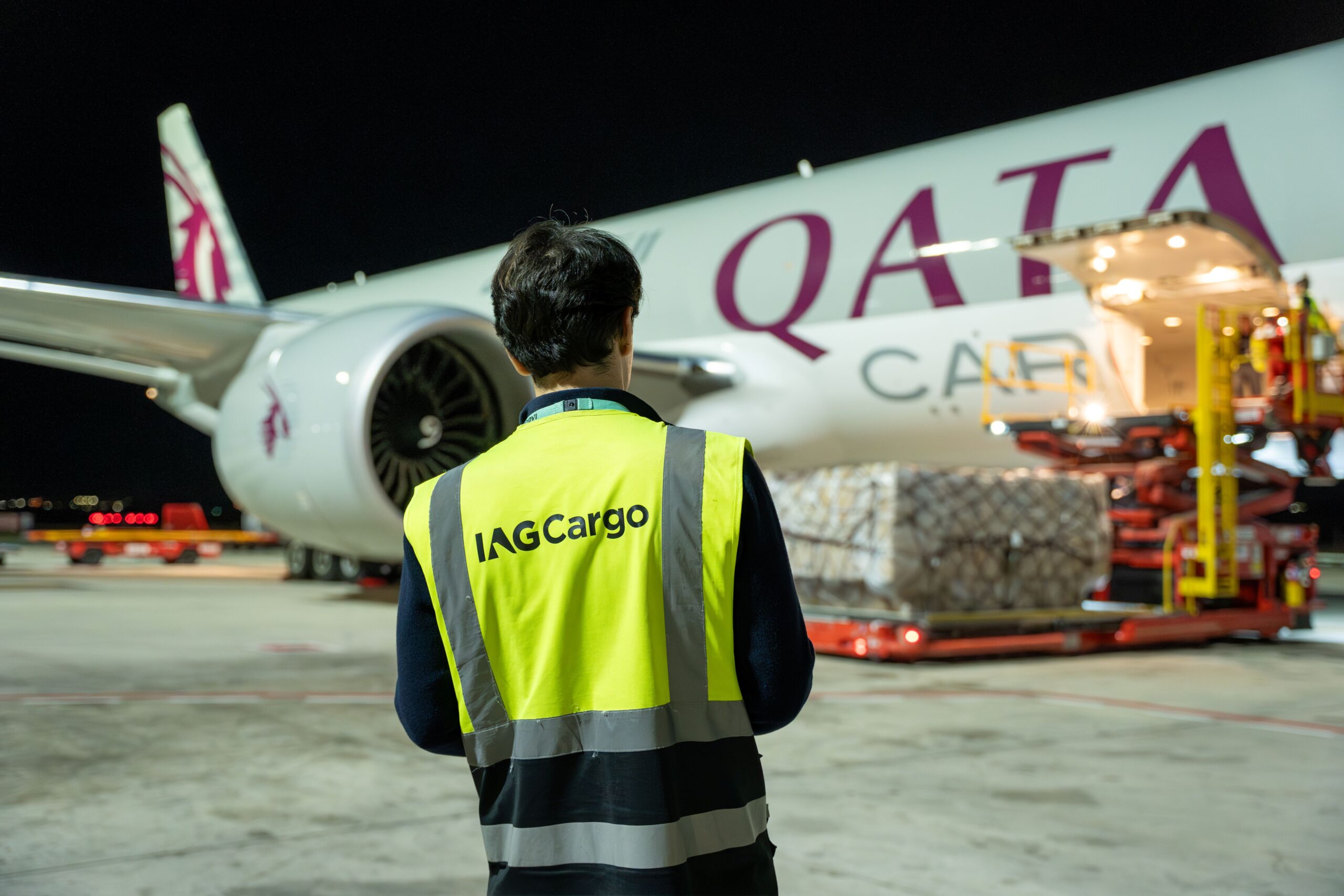
IAG Cargo, MASkargo, and Qatar Airways Cargo have completed the first customer shipment transported across all three carriers, testing the operating model behind their planned Global Cargo Joint Business before its full launch later this year.
The trial moved 11 tonnes of copper foil from Kuala Lumpur to Chicago O’Hare via Doha and Dublin. Freight therefore passed through several airline networks and hubs within one coordinated routing, putting the handovers required by the future partnership into an actual customer movement rather than a systems exercise.
Copper foil gives the trial a clear industrial supply-chain dimension. The material is used in advanced electronics and electric-vehicle battery production, linking Malaysia’s manufacturing base with demand in North America. Disruption to such inputs can affect production schedules disproportionately to the weight or transport cost of the cargo itself.
The three carriers announced the Global Cargo Joint Business in 2025. Once fully launched, it is intended to give customers access to more than 400 destinations across six continents by combining IAG Cargo’s European and transatlantic network, Qatar Airways Cargo’s Doha operation, and MASkargo’s position in Southeast Asia.
The first shipment tests more than route availability. Moving cargo from Kuala Lumpur to Chicago through Doha and Dublin requires booking information, acceptance rules, documentation, transfer timings, handling processes, and shipment status to remain aligned as responsibility moves between carriers.
Earlier integration work has concentrated on some of those physical interfaces. IAG Cargo was appointed as the ground-handling agent for Qatar Airways Cargo in Dublin and Madrid during 2026, while MASkargo handling operations were introduced at London Heathrow in 2025. Those arrangements establish some of the groundwork required before a multi-carrier itinerary can be sold as one connected proposition.
Regulatory approval is progressing alongside the operational work. Singapore cleared the joint business within its jurisdiction on 17 September, allowing the partners to coordinate relevant commercial activity there. The first trilateral shipment is a separate development because it tests how freight actually moves through the combined network rather than whether the commercial agreement can proceed in a particular market.
A larger combined network can give forwarders and shippers more routing options when direct capacity is limited or disruption affects the preferred path. Freight originating in Southeast Asia could move into Qatar Airways Cargo’s Doha hub before transferring into European or transatlantic capacity, while other shipments may use different combinations according to schedules and available space.
That flexibility is valuable only if the transfers remain dependable. An itinerary involving several airlines creates more connection points at which late arrival, capacity changes, documentation errors, or handling delays can affect the final service. A broader map does not automatically produce a more resilient network unless customers receive consistent visibility and the partners can recover disrupted cargo without restarting the booking process.
Capacity management presents another layer. IAG Cargo sells freight space across several passenger airline operations, Qatar Airways Cargo combines dedicated freighters with belly capacity, and MASkargo operates cargo capacity from Malaysia. Coordinating those resources could open routings none of the individual carriers can offer as efficiently alone, particularly between secondary production markets and long-haul demand centres.
The copper-foil shipment also demonstrates why industrial freight is a useful test. Manufacturers frequently need components to arrive within a production window rather than simply within a quoted number of transit days. When a shipment is transferred several times, visibility of connection status and the ability to recover a missed sector can matter as much as headline network size.
Customers can continue booking through the carriers’ existing online platforms while the partners complete further trials and integration work. That suggests the operating model will be introduced progressively, with existing commercial interfaces remaining in place while network coordination develops behind them.
One successful 11-tonne movement cannot establish reliability across more than 400 destinations. The more demanding measure will be repeated shipments across different origins, commodities, transfer points, and disruption scenarios, particularly where a delayed first leg requires capacity to be reorganised further down the route.
The first trilateral movement nonetheless takes the joint business beyond regulatory filings and network diagrams. Cargo has now moved through all three organisations on one customer journey; the remaining task is making that level of coordination routine enough that the customer experiences the network as one connected freight option rather than three airlines joined together manually.