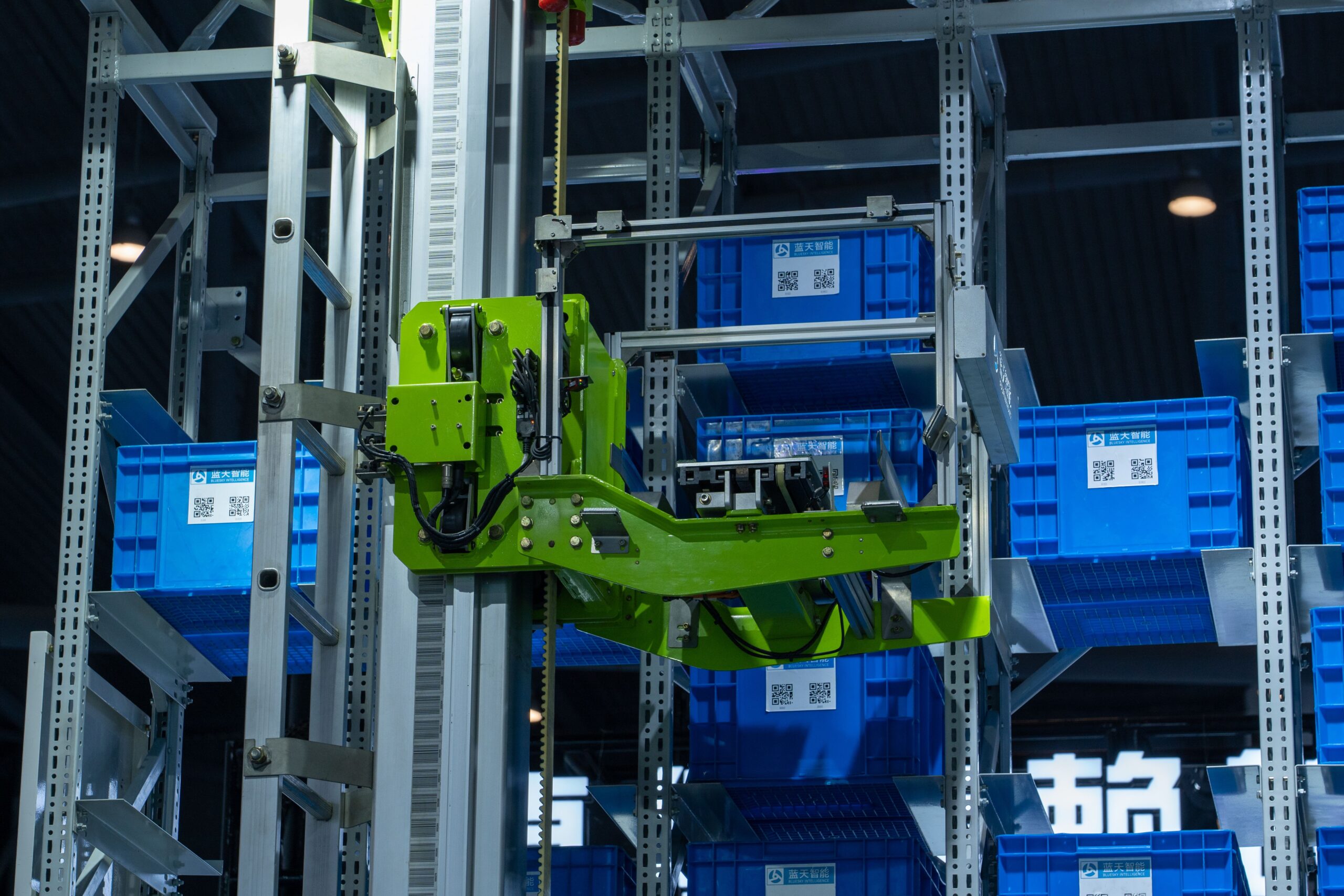
IN Brief:
- The September agreement builds on CJ Logistics’ earlier investment and 2025 cooperation with physical AI developer RLWRLD.
- CJ Logistics will define warehouse requirements and performance standards while RLWRLD develops the robot foundation model and physical AI software.
- Proof-of-concept work will target processes including picking, sorting, inspection, and packing before potential commercial and overseas expansion.
CJ Logistics and physical AI developer RLWRLD have signed a follow-up agreement to develop and commercialise logistics-specific robot foundation models, advancing an existing partnership towards defined warehouse trials and potential overseas deployment.
The agreement was signed on 18 September and announced on 21 September, building on a memorandum of understanding and equity investment completed last year. CJ Logistics will contribute operating data, logistics infrastructure, process requirements, and performance standards, while RLWRLD will lead development of the robot foundation model and associated physical AI software.
The companies will select logistics processes for proof-of-concept work inside operating facilities. Initial areas include picking, sorting, inspection, and packing, where robots have to identify and manipulate products or parcels that vary in size, position, presentation, and handling requirements.
One proposed task involves rotating parcel boxes so that shipping labels face upwards. The action is straightforward for a human operator but requires a robotic system to identify the package, determine its orientation, plan a safe grasp, and reposition it accurately without damaging the parcel or interrupting surrounding flow.
Robot foundation models are being developed to combine inputs such as vision, language, voice, and sensor information so a machine can interpret its surroundings and act with less task-specific programming. Conventional warehouse automation generally performs best when products, positions, and sequences remain predictable.
Physical AI is intended to cope with more variability. A model that can recognise unfamiliar object positions or transfer learned behaviour between related tasks could reduce the engineering work required whenever a warehouse introduces different products, layouts, or robot configurations.
CJ Logistics has already moved some humanoid technology into operating facilities. The company recently deployed two dual-arm humanoid robots at the Yangji Olive Young distribution centre in Yongin, where they insert cushioning material into boxes. It intends to extend that work into more complex handling processes as model capability improves.
The RLWRLD programme sits alongside CJ Logistics’ wider automation and software activity rather than replacing it. CJ Logistics is also expanding agentic AI across more than 40 North American warehouse operations, connecting warehouse-management, enterprise, sensor, and automation data.
Physical robotics introduces a different standard of failure. A poor software recommendation can be rejected or reversed, while a robot handling live stock can damage goods, obstruct a process, or create a safety incident. Model performance therefore has to be judged through physical outcomes as well as computational accuracy.
RLWRLD is developing foundation models intended to operate across different robotic hardware and tasks. Commercial adoption will depend partly on whether the model can transfer learning between processes without requiring extensive retraining or reducing reliability.
Warehouses contain large volumes of repetitive work, but they also contain long tails of exceptions. Packaging can be crushed or partially open, labels can be obscured, stock may arrive in unexpected positions, and work areas can become congested. Those exceptions determine whether a robot can maintain performance across an entire shift rather than during a controlled demonstration.
CJ Logistics’ operating network gives the programme access to varied warehouse data and physical processes. Models can be tested against different workflows and compared with existing labour or automation standards, allowing weaknesses to be identified before wider rollout.
The companies also intend to examine a broader Logistics as a Service model after early verification work. The concept would combine functions such as order processing, storage, picking, packing, delivery, returns, and data analysis within a more automated logistics environment.
Commercial deployment will require clear performance measures. Cycle time, intervention frequency, damage rate, task-completion accuracy, availability, and recovery from exceptions are likely to determine whether a robot produces useful operating capacity.
Hardware economics will matter alongside model performance. A highly capable robot can still struggle commercially if acquisition, maintenance, integration, and supervision costs exceed the labour or fixed automation it is intended to replace.
The September agreement moves the CJ Logistics and RLWRLD relationship from investment and early model development towards selected processes, site validation, and stated commercial objectives. The next evidence will come from the warehouse floor: which tasks enter testing, how frequently people have to intervene, and whether the same model can be transferred between facilities without extensive re-engineering.