IN Brief:
- Kodiak and DTL Transport began autonomous produce movements between Fresno and Los Angeles on 22 September.
- The approximately 225-mile route mainly uses California State Route 99 and Interstate 5, with a human safety driver remaining aboard.
- The work follows California's introduction of regulations allowing heavy autonomous trucks to be tested on public roads.
Kodiak AI and DTL Transport have begun autonomous truck deliveries of perishable freight between Fresno and Los Angeles, putting heavy vehicle automation into a live California grocery supply chain under the state’s recently introduced autonomous vehicle rules.
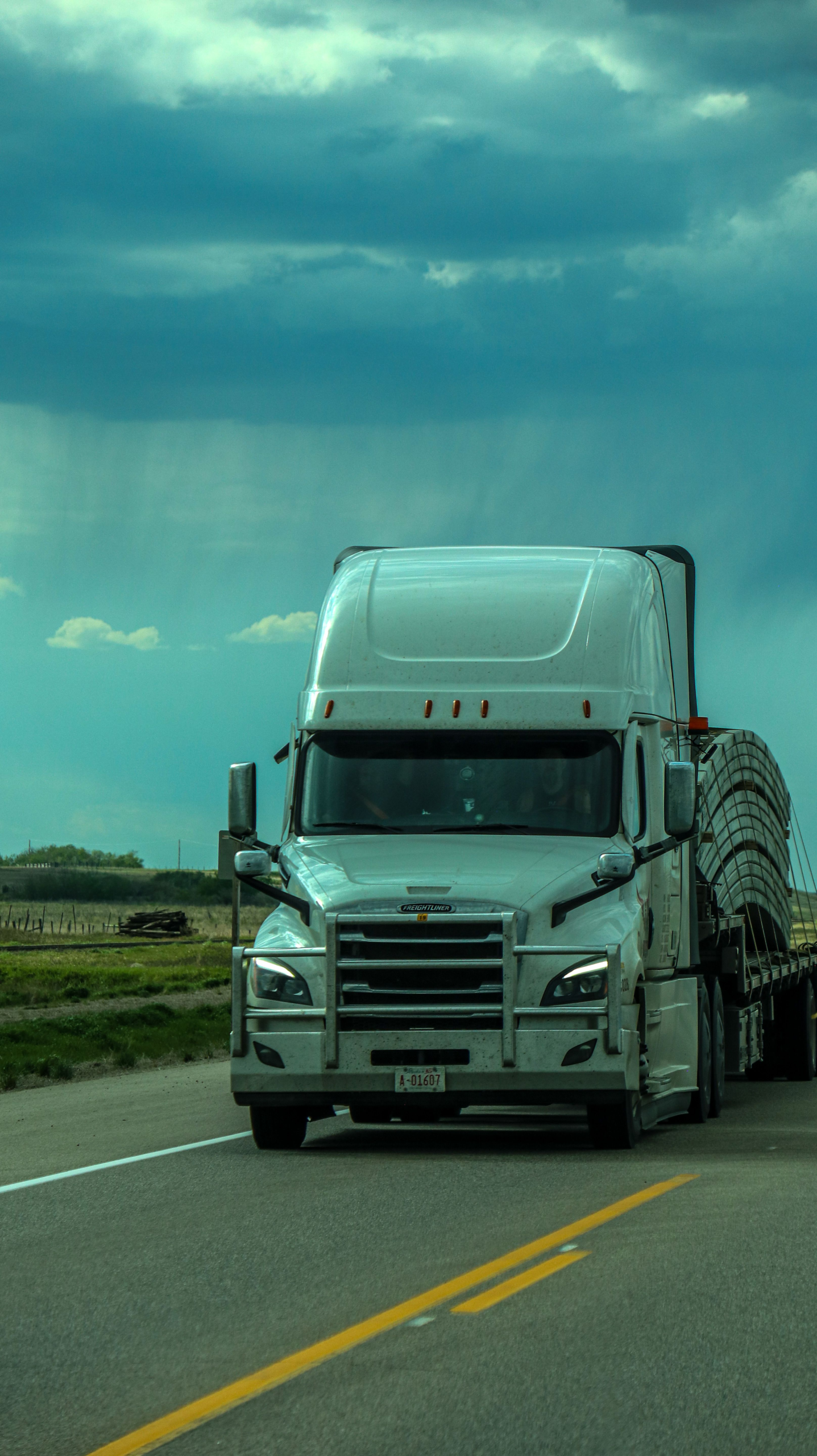
The collaboration started on 22 September and covers a route of approximately 225 miles, primarily using California State Route 99 and Interstate 5. DTL specialises in dry and refrigerated full truckload transport and is using Kodiak’s technology to haul time sensitive produce towards a Los Angeles distribution centre.
A human safety driver remains behind the wheel during the initial work. Kodiak received a heavy duty Autonomous Vehicle Testing permit from the California Department of Motor Vehicles in August after the state approved new regulations allowing heavy autonomous trucks to operate on public roads for testing.
California’s permitting approach progresses in stages, beginning with driver-in testing before later driver-out testing and deployment can be considered. The current DTL work therefore represents an operating trial with customer freight rather than a driverless commercial service.
Don Burnette, founder and chief executive of Kodiak, described the regulations as a “major unlock for freight innovation in our home state”. The practical change is that autonomous truck developers can now conduct more of their long haul validation inside one of the largest freight markets in the United States.
The Fresno to Los Angeles lane provides a demanding freight case because produce continues to lose commercial life while moving through the supply chain. Delays can reduce shelf life, create missed distribution centre slots, or force operators to recover time elsewhere in the journey.
Refrigerated transport also adds another operational system to the vehicle. Temperature control equipment has to remain within the required operating range regardless of whether the tractor is being driven conventionally or under automated control, while dispatchers still need visibility of the load, refrigeration status, delivery window, and traffic conditions.
Kodiak and DTL are examining transit time, cost, reliability, and produce shelf life during the pilot, but those remain questions for the programme rather than established benefits. Repeated performance across normal freight conditions will provide more useful evidence than a small number of successful journeys.
DTL operates more than 100 trucks and has spent more than three decades in dry and refrigerated full truckload transport. The company is looking at autonomy partly as a way to expand capacity when freight demand exceeds the vehicles or driver resources available within its conventional operation.
That use case is more specific than the broad claim that autonomous trucks will replace drivers. Long haul automation is developing around defined operating domains where road types, weather conditions, mapping, terminals, and regulatory permissions are understood. Collection yards, city streets, loading areas, maintenance, customer sites, and unusual road conditions can still require different processes.
The California route is relatively well suited to incremental automation because much of the journey uses major highways. Those stretches provide a more predictable operating environment than dense urban collection and delivery, although the truck still has to connect the motorway journey with a shipper and distribution centre at either end.
Those handovers determine whether autonomy improves the wider freight movement. If an automated truck saves time on the highway but then waits for a driver, trailer, dock, inspection, or dispatch process at the terminal, part of the theoretical utilisation benefit disappears.
Perishable freight makes that constraint harder to ignore. The value of a faster linehaul journey depends on the complete cold chain, including loading, refrigeration, dispatch, transport, receiving, and stock availability at the destination. Autonomy becomes useful when it fits those existing processes rather than forcing the customer to create a parallel workflow for one vehicle type.
California also demonstrates the regulatory fragmentation facing US autonomous freight operators. Kodiak plans to pursue driverless highway operations in Texas, where its commercial development has followed a different regulatory path. A vehicle platform may be technically capable of operating in several states while still being subject to different permits and deployment conditions in each market.
For freight operators, that limits the speed at which a national autonomous network can be assembled. Routes have to be matched not only with customers and freight density but also with permitted operating areas, service infrastructure, vehicle support, insurance, and procedures for human intervention.
California’s agricultural freight flows provide enough recurring volume to make those trials commercially relevant. State Route 99 and Interstate 5 carry large quantities of food and other goods between the Central Valley and Southern California, giving Kodiak and DTL a lane where improvements in equipment utilisation or transit consistency could be measured against a substantial conventional freight operation.
The present pilot still retains a driver and covers a defined route, so its importance lies in operational exposure rather than immediate labour removal. Kodiak’s system is being asked to carry actual perishable cargo through normal highway conditions under a live customer’s timetable.
The useful evidence will accumulate after the novelty of the first journeys has passed. If the trucks can repeat the work safely through changing traffic, customer schedules, freight volumes, and operating conditions, the case for broader deployment will rest on freight performance rather than the fact that an autonomous truck completed the route.