IN Brief:
- Aztek Logistics has secured FORS Gold accreditation for the twelfth consecutive year.
- Gold is the highest FORS level and requires evidence of continued safety, environmental, compliance, and operational improvement.
- The operator is also building practical experience of fleet electrification through its first DAF XB Electric HGV.
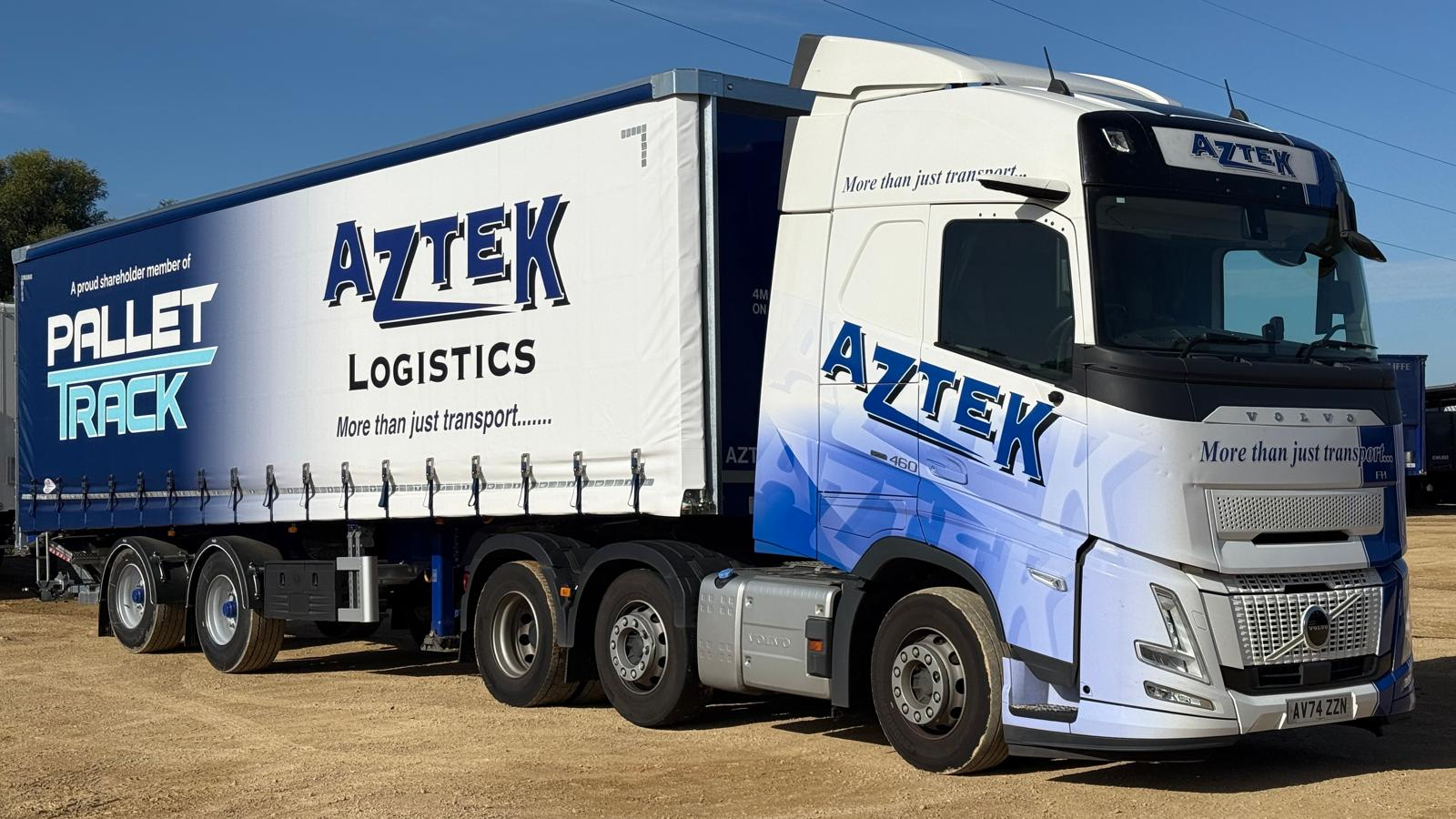
Aztek Logistics has retained Fleet Operator Recognition Scheme Gold accreditation for a twelfth consecutive year, extending a record at the scheme’s highest level that now spans more than a decade of changes in vehicle technology, compliance requirements, and fleet operating practice.
The Letchworth Garden City operator said the latest accreditation follows another detailed assessment of its fleet management, safety, environmental performance, staff development, and operational standards. Gold sits above Bronze and Silver within FORS and requires accredited businesses to continue demonstrating improvement rather than simply retaining systems that passed an earlier assessment.
Stuart Charter, founder and managing director of Aztek Logistics, said: “Retaining it is equally as tough, so to have extended this streak beyond a decade is a true recognition of consistent excellence and a commitment to the very highest standards.”
The length of the run matters because fleet accreditation is being maintained against standards that continue to change. FORS introduced version 7.2 of its Standard for audits from September 2026, covering driver management, vehicle safety, fleet operations, environmental performance, and legal compliance while retaining additional progression requirements for Silver and Gold operators.
At Gold level, businesses are expected to build on the requirements beneath them with evidence of year on year improvement, a decarbonisation strategy, staff development and retention measures, public commitment to best practice, and consistent standards across relevant sites and contracted operations.
That makes accreditation less separable from everyday fleet management than a certificate renewed around a fixed checklist. Driver training, collision performance, route planning, fuel use, vehicle specification, maintenance, subcontractor controls, emissions, and management information all contribute to the operating picture against which an established Gold fleet has to continue improving.
For Aztek, the latest renewal comes while the technology within its fleet is also changing. The company added its first battery electric HGV during 2025, introducing a 19-tonne DAF XB Electric for pallet network and local distribution work from its Hertfordshire base.
The truck uses a 190kW motor and 282kWh battery pack and is being operated as a practical test of electric heavy vehicle performance rather than as a symbolic fleet addition. Aztek has said it wants operational evidence around routes and charging before deciding how quickly similar technology can be expanded through the business.
That approach is particularly relevant for regional freight because electrification has to work around the duty cycle rather than the headline range of the vehicle. Payload, stop frequency, road conditions, weather, depot return times, charger availability, and the amount of contingency required for disruption all influence whether an electric truck can replace an established diesel duty without reducing service flexibility.
Aztek can charge the vehicle at its Letchworth headquarters, where solar panels installed across its high bay warehouse contribute electricity to the site. Bringing generation and vehicle charging together gives the operator a way to examine energy use alongside transport performance, although the wider economics still depend on when vehicles return, how long they remain at the depot, and how much charging is required before the next route.
The electric HGV also links naturally with the direction of FORS Gold requirements, which place increasing emphasis on fleet decarbonisation alongside safety and compliance. Accreditation does not dictate one propulsion technology, but operators working towards lower emissions have to understand where electric vehicles, alternative fuels, more efficient routing, driver behaviour, and other measures deliver meaningful improvements in their own operation.
That is more complicated for a logistics company than replacing a passenger car. Aztek provides general haulage, contract distribution, pallet network services, freight forwarding, groupage, and warehousing, with work extending across the UK and into Europe. Those activities create different route lengths, vehicle requirements, customer commitments, and loading patterns.
The company has been a shareholder member of the Pallet-Track network since 2010. Pallet networks depend on scheduled collections, depot cut-offs, trunk movements, and overnight hub transfers, leaving relatively little room for a vehicle to spend additional time charging if that process has not been designed into the route.
Fleet compliance also increasingly affects procurement rather than remaining an internal transport issue. Manufacturers, retailers, construction businesses, and other logistics buyers commonly ask transport suppliers to provide documented evidence covering safety, emissions, driver standards, insurance, training, and operating controls before work is awarded.
Long-running third-party accreditation can support that due diligence, although FORS itself is explicit that accreditation confirms the requirements demonstrated at audit and is not a guarantee that every legal or scheme obligation will automatically be met between assessments. Operators still have to maintain the systems and behaviours on which the accreditation was based.
That distinction is important after twelve years. The achievement is not that Aztek passed one demanding audit in the past and retained the badge indefinitely. Vehicles, people, customer expectations, emissions policy, technology, and the FORS framework have moved during the period, requiring the operation behind the accreditation to move with them.
The next useful measure will therefore be the same one that has underpinned the previous twelve renewals: whether the business can convert fleet investment and management systems into repeatable operating performance. As electric HGVs enter more routes and compliance expectations continue to increase, maintaining Gold will require Aztek to keep proving that improvement under normal freight conditions rather than on paper alone.