IN Brief:
- Reinert Logistics has placed Volvo Trucks' largest order to date for gas-powered vehicles.
- The 500 FH Aero trucks can operate on LNG or bio-LNG and offer ranges of up to 1,000km.
- Deliveries begin in 2027 after Reinert gained operating experience with an initial 50 gas trucks.
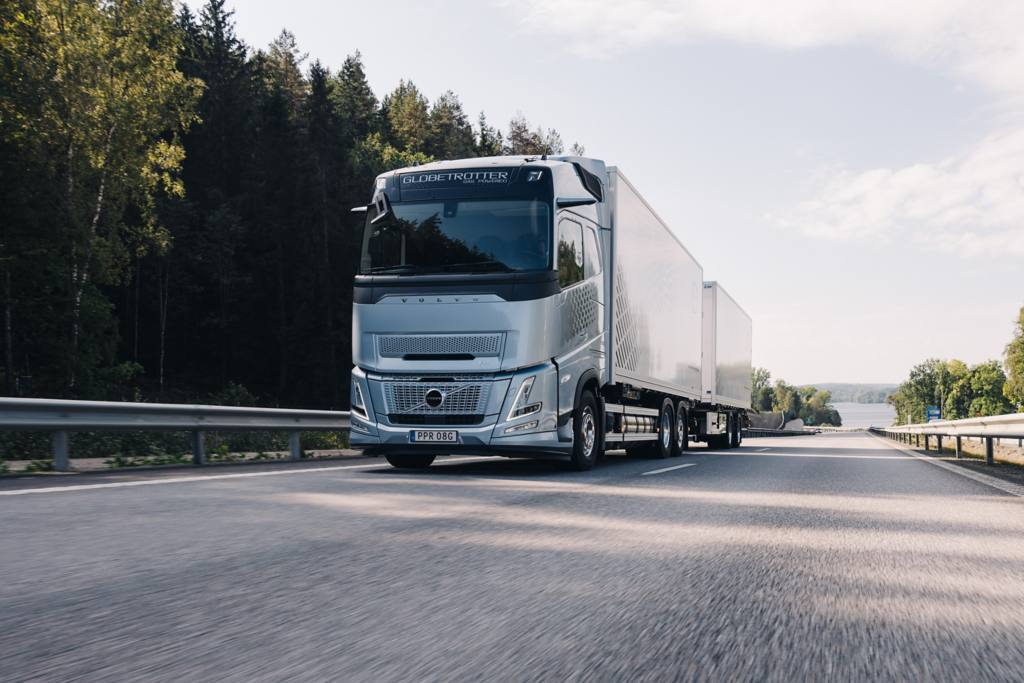
Reinert Logistics has ordered 500 gas-powered Volvo FH Aero trucks, giving Volvo Trucks its largest order to date for vehicles using liquefied natural gas and bio-LNG.
The German transport company signed the contract at IAA Transportation in Hanover after operating an initial fleet of 50 Volvo gas trucks. Deliveries of the new vehicles will begin in 2027, moving the technology from a limited fleet deployment into a much larger procurement programme.
Volvo says Reinert’s experience with the first 50 vehicles, including day-to-day operation and fuel prices, influenced the decision to place the larger order. The manufacturer has not published a delivery schedule beyond the 2027 start date, so the rate at which the 500 trucks will enter service remains undisclosed.
The FH Aero vehicles can run on conventional LNG or bio-LNG produced from organic waste. Volvo puts the maximum operating range at up to 1,000km on one tank, although it notes that range varies with weather, wind resistance, gross vehicle weight, and driver performance.
That specification gives the trucks a clear role in long-haul and regional distribution, where operators need sufficient range to complete established work without adding frequent refuelling stops. Reinert’s order is therefore not a short-haul trial around a depot; it is a fleet decision built around heavy-duty vehicles intended for regular transport work.
Fuel availability remains central to the operating model. Volvo points to Germany, Norway, Finland, and Sweden as markets with established gas filling networks and growing access to bio-LNG. In Germany, industry data cited by Volvo shows bio-LNG accounted for around 98.5% of the fuel sold at LNG filling stations during 2025.
The distinction between LNG and bio-LNG is important because the vehicle can use either fuel while the carbon outcome differs substantially. Volvo says bio-LNG can deliver well-to-wheel carbon dioxide reductions of up to 100% in favourable pathways, while conventional LNG remains a fossil fuel. The company presents renewable gas as the route to the largest emissions reduction from the same truck architecture.
Reinert founder René Reinert said the company had identified bio-LNG as the preferred solution because it could be produced locally from manure, organic waste, and other biogenic residues. The statement also pointed to daily operating experience and Volvo’s service network as factors behind the decision to expand the fleet.
The order places a large operational burden on fuel procurement as well as vehicle supply. A fleet of 500 additional gas trucks requires dependable access to the intended fuel on the routes where the vehicles are allocated, rather than occasional availability at a small number of stations. The trucks’ 1,000km maximum range gives planners some flexibility, but the network still has to support repeatable refuelling patterns.
Maintenance coverage is another practical requirement as the fleet grows. A 50-vehicle trial can be concentrated on selected routes and depots; a 500-truck programme reaches a scale where workshop capability, parts supply, driver familiarity, and service planning have to be integrated into normal fleet management. Reinert’s reference to Volvo’s service network indicates that support capacity formed part of the procurement decision.
Volvo has delivered more than 10,000 gas-powered trucks globally and offers gas engines across its FM, FH, and FH Aero heavy-duty ranges. The 500-truck Reinert agreement therefore sits within an established product programme, but it is substantially larger than the customer’s initial deployment and is Volvo’s biggest gas-truck order to date.
The manufacturer is pursuing several propulsion routes rather than presenting gas as a universal replacement for diesel. Its wider decarbonisation strategy includes battery-electric trucks, fuel-cell electric vehicles, and combustion engines using renewable fuels. That reflects the different operating demands across long-haul, regional distribution, construction, and other heavy transport work.
For Reinert, the new order commits a significant share of future fleet investment to one of those routes. The company has already tested gas trucks in normal operation, and the 2027 delivery programme turns that experience into a much broader deployment rather than extending the trial by a handful of vehicles.
The remaining operational detail will emerge as deliveries begin. Reinert has not disclosed how the trucks will be distributed across depots, which routes will use them first, or how the programme will affect the composition of its existing fleet. Those choices will determine how closely the 1,000km range and available bio-LNG infrastructure match the company’s day-to-day freight pattern.
What is already fixed is the scale of the commitment: 500 FH Aero trucks following an initial 50-vehicle fleet. For Volvo, it is a record order for the gas range; for Reinert, it is a move from proving the technology in service to managing it as a large fleet platform from 2027.