IN Brief:
- Arla has taken four additional DAF XD Electric 6×2 trucks for refrigerated dairy distribution in Denmark.
- Each vehicle uses a 350kW driveline and 525kWh battery pack, with DAF quoting up to 550 kilometres of range.
- A 480kW charging installation at Hobro will feed six charge points, with overnight depot charging expected to cover virtually all assigned transport work.
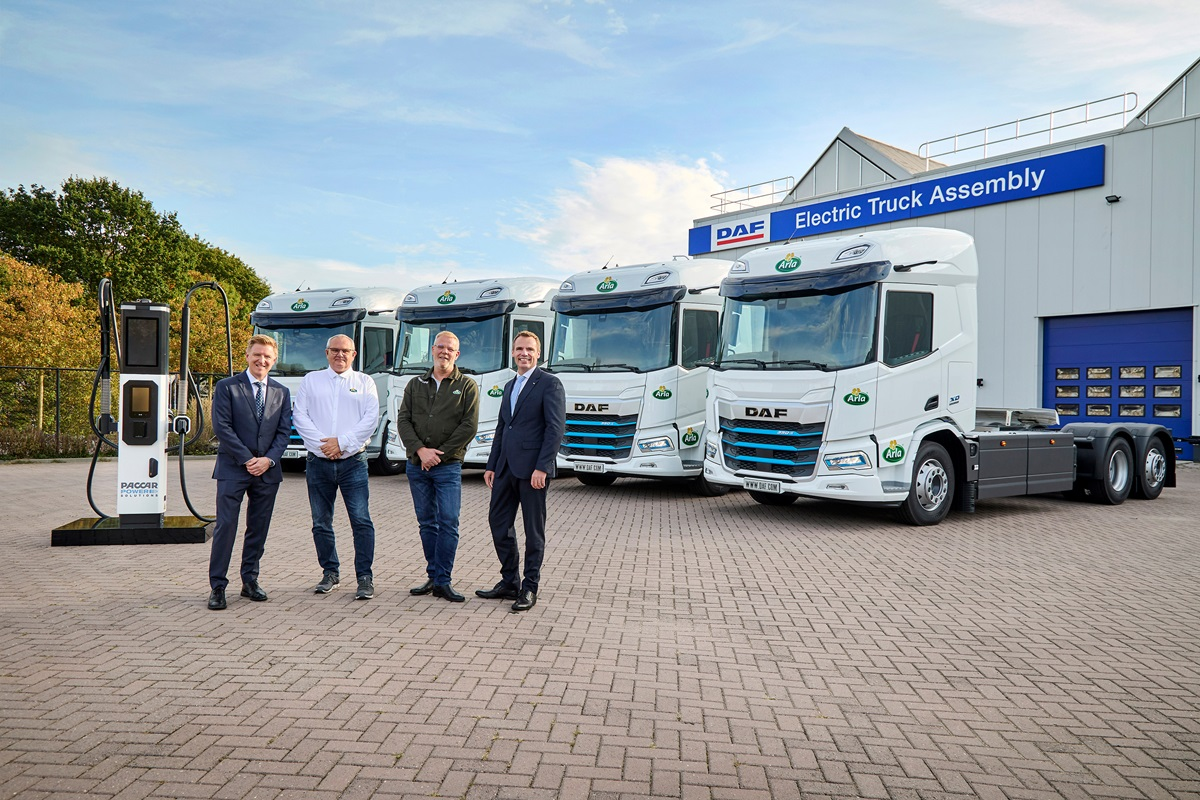
Arla Foods has taken four additional DAF XD Electric trucks into its Danish distribution operation and is pairing the vehicles with dedicated depot charging at its Hobro dairy, extending a battery electric programme that began with three trucks last year. The new 6×2 rigids will distribute refrigerated dairy products, while seven conventionally powered DAF XD vehicles are entering service alongside them, giving the fleet a mixed powertrain structure rather than forcing every duty onto the same technology.
Each electric truck uses a 350kW driveline and a 525kWh battery pack, with DAF quoting a range of up to 550 kilometres on a full charge. The Hobro installation centres on a 480kW PACCAR Power Solutions unit feeding six high-speed charging points rated at up to 400kW each, and analysis carried out for Arla indicates that overnight depot charging should cover virtually all of the transport work assigned to the electric vehicles.
Those specifications put the operating model ahead of the headline range figure, because the vehicles return to a known base where charging can be scheduled around normal dwell rather than inserted into the working day. Refrigerated distribution also gives planners relatively repeatable routes, delivery windows, and payload profiles, allowing expected energy use to be modelled against a fixed depot connection with more confidence than long-distance work built around changing destinations and public charging availability.
Refrigeration prevents the duty from becoming an easy electrification case, since the truck has to support temperature control as well as traction while payload, weather, traffic, auxiliary loads, and route profile all influence usable range. Arla’s second order therefore carries more operational weight than a one-off trial: three XD Electric trucks have already worked inside the fleet, and the follow-on vehicles are being introduced with permanent charging infrastructure rather than temporary arrangements built around demonstration activity.
A related DAF XD Electric deployment in Dutch dairy transport has placed the same 350kW driveline and 525kWh battery capacity into routine milk collection, giving the platform experience across two different parts of the dairy supply chain. Arla’s application moves refrigerated finished products rather than collecting raw milk, so the vehicle spends its energy budget against a different combination of payload, route timing, and temperature-controlled body requirements even though the underlying truck technology is similar.
Charging architecture will determine how easily the Danish fleet can grow beyond the first seven electric trucks, because six connectors rated at up to 400kW sit behind a 480kW site power unit and cannot all draw their individual maximum simultaneously. Power therefore has to be allocated according to departure time, battery state, and the amount of energy each vehicle needs before its next duty, turning charge management into part of fleet scheduling rather than a separate facilities task. Overnight dwell creates enough time to spread that load, which can reduce peak demand while preserving morning vehicle availability.
The seven diesel XD rigids entering service alongside the electric trucks show how route allocation is likely to develop during the transition. Duties that return reliably to Hobro and remain inside the electric vehicles’ usable daily range can be assigned to battery power, while less predictable, longer, or harder-to-charge work remains with conventional vehicles until charging access and operational evidence improve. A mixed fleet carries its own maintenance and planning complexity, although it avoids treating electrification as an all-or-nothing procurement decision.
Depot infrastructure also moves part of transport risk into the electrical system behind the vehicles. A truck fleet can absorb an individual vehicle failure through spare capacity or reassignment, whereas a charging fault, site power constraint, or poorly sequenced overnight schedule can affect several vehicles before the next shift begins. Monitoring charger availability, battery state, and planned departure times therefore becomes as important as monitoring fuel levels in a conventional operation, particularly where refrigerated loads leave little tolerance for missed delivery windows.
Arla’s additional order suggests that the first three trucks produced enough evidence on reliability, consumption, and route suitability to justify another investment cycle, while the Hobro charging installation gives the operation a more permanent base from which to evaluate utilisation. The useful measure over the next year will be the proportion of planned work the electric fleet completes without extra charging or diesel substitution, because routine utilisation, rather than nominal range, will determine whether battery electric distribution moves further into the dairy company’s Danish network.