IN Brief:
- Two quay cranes have arrived for London Gateway’s new all-electric Berth 5, with another pair due at Southampton.
- Each crane weighs more than 2,000 tonnes and can handle 24,000 TEU ships using tandem container lifts.
- London Gateway’s £1 billion expansion adds new berths and rail capacity, while Southampton’s four 2026 crane deliveries represent £60 million of investment.
DP World is adding four large quay cranes across London Gateway and Southampton, extending investment in the two UK container terminals as vessel exchanges continue to concentrate more boxes into each port call. The first pair arrived fully assembled at London Gateway on 25 September after sailing from Shanghai and will be installed at the new all-electric Berth 5, while another pair is due at Southampton after two similar cranes entered the terminal earlier in the year.
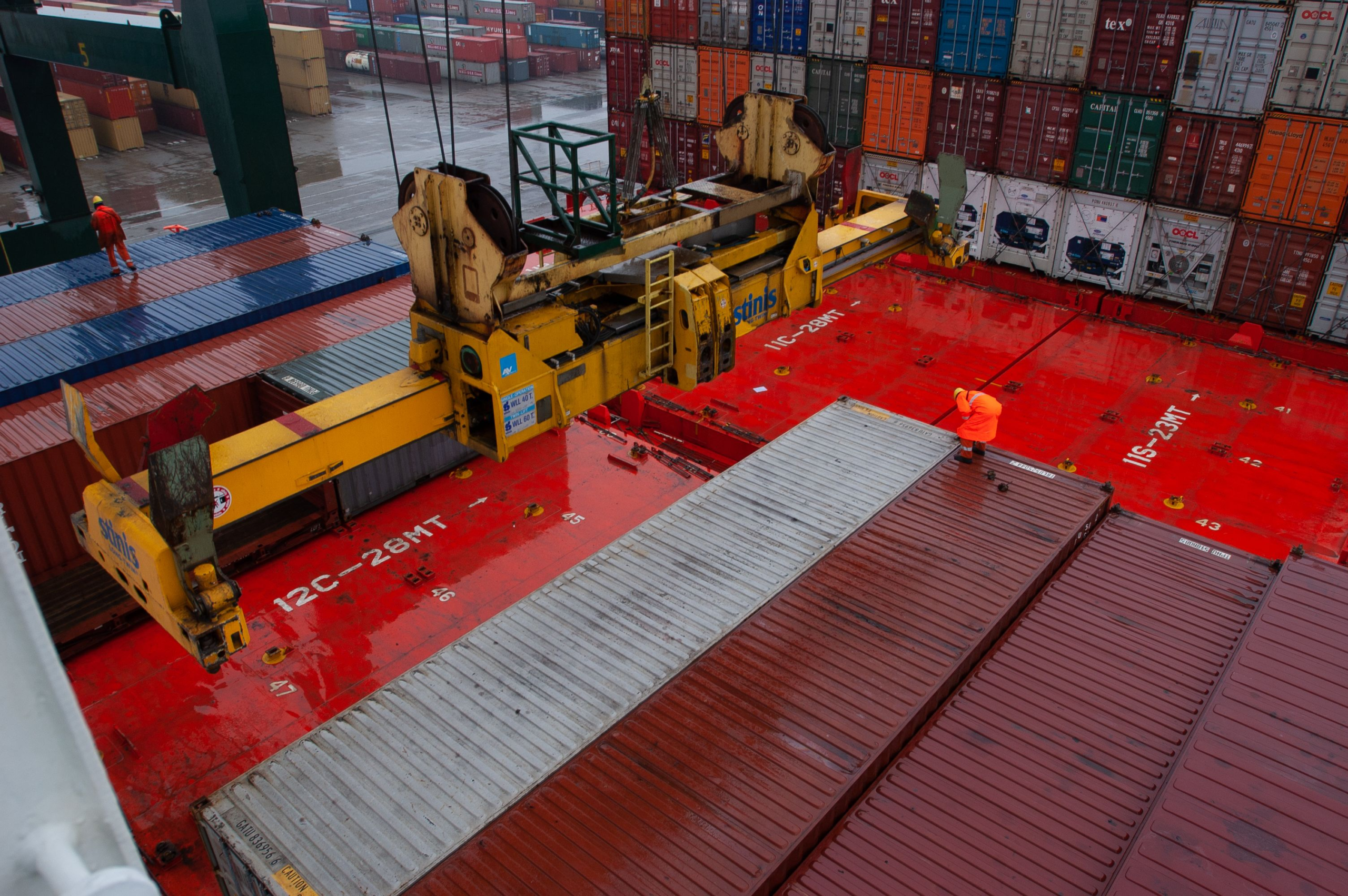
London Gateway’s new cranes each weigh more than 2,000 tonnes, stand almost 150 metres high, and are designed to handle ships in the 24,000 TEU class, including tandem lifts of two 40ft containers in a single cycle. Berth 5 forms part of the port’s £1 billion expansion and is scheduled to become operational in 2027, with a further two quay cranes due for the berth in the coming months as DP World adds two all-electric berths and a second rail terminal to the Thames-side hub.
Southampton is receiving the same scale of equipment through a separate £60 million crane programme, with four deliveries during 2026 taking the terminal to 16 quay cranes once the latest pair is installed. The investment follows the arrival of larger container ships on UK services, including CMA CGM Pantheon, a 24,212 TEU vessel that made its first Southampton call in September, and gives planners more crane capacity to work across vessels whose exchanges can place several thousand container moves into a relatively narrow berth window.
Ship-to-shore productivity only captures part of the operating challenge, because a faster crane cycle increases the rate at which containers enter or leave the yard and places corresponding pressure on straddle carriers, stacking systems, vehicle lanes, rail connections, and collection schedules. A terminal that accelerates the quay without enough landside capacity can shorten one queue while lengthening another, which is why London Gateway’s berth programme is being developed alongside additional rail infrastructure rather than as an isolated equipment purchase.
The concentration of volume at DP World’s two terminals raises the consequence of those capacity decisions. London Gateway and Southampton handled more than five million TEU during 2025, close to half of a UK market above ten million TEU, while DP World puts their combined share of UK containerised trade at 46%. London Gateway alone handled a record three million TEU, around 50% more than the previous year, leaving growth in terminal throughput dependent on how well berth, yard, gate, and rail capacity expand together.
Larger ships intensify that dependency even when annual throughput grows at a manageable rate, since carrier economics encourage more cargo to arrive in fewer vessel calls rather than spreading evenly across the week. A 24,000 TEU ship does not simply require sufficient outreach and lifting height at the quay; it can also create a pronounced peak in yard occupancy, haulier demand, reefer connections, and rail departures as imported containers move inland and export boxes are staged for loading. Additional cranes give the terminal more options to compress the berth exchange, although the benefit reaches the customer only when the rest of the system can absorb the faster flow.
Equipment redundancy also becomes more valuable as crane numbers rise, particularly at terminals serving several long-haul strings where delayed vessels can arrive in clusters. Maintenance, weather restrictions, and overlapping calls can reduce available crane hours without warning, so an expanded fleet allows planners to protect berth productivity while individual machines are unavailable or while one vessel requires more intensive working. The operational return therefore sits partly in peak capacity and partly in the ability to recover from schedule disruption without carrying delay into the next ship.
London Gateway’s all-electric berth programme adds an energy dimension to that expansion, because electrified cranes, automated yard systems, and rail handling shift more of the terminal’s capacity planning onto the electrical infrastructure behind the equipment. Higher throughput raises both the number of container moves and the energy required to perform them, making power availability, maintenance planning, and equipment utilisation part of the same capacity equation as quay length and crane outreach. DP World’s second rail terminal should also influence how much additional volume can leave the port without increasing pressure on road access around the site.
The latest cranes will be highly visible additions to both ports, but their commercial value will be measured through less conspicuous operating indicators: vessel turnaround, crane productivity, yard dwell, gate performance, and the proportion of boxes that can be transferred inland without creating a new bottleneck. London Gateway’s Berth 5 and Southampton’s expanded crane fleet increase the physical headroom available at the quay; whether that investment produces smoother flows will depend on the infrastructure behind the cranes keeping pace with the vessels in front of them.